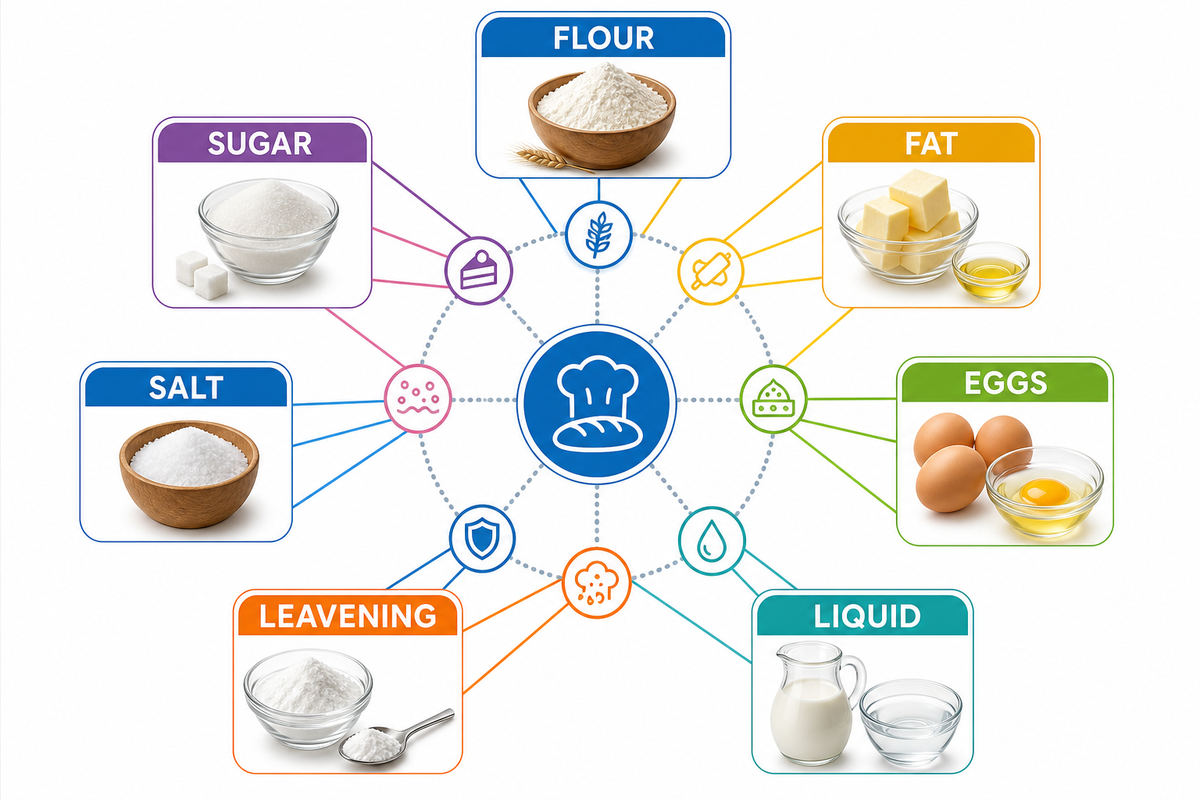
Baking Ingredients and Their Functions are easiest to understand as a connected system. Flour and starch build structure; liquids hydrate them; air, steam, yeast or chemical leavening agents create expansion; eggs help bind, emulsify and set; sugar and fat tune tenderness, spread, color and flavor; salt sharpens flavor and can change dough behavior. Baking method shapes texture and structure, while salt can change dough behavior and flavor. Changing an ingredient can cause many effects.
Quick answer: To understand the function of an ingredient in a specific recipe or bake, one has to know which other ingredients enable (or restrict) its function and at what step of the process the effect will be visible. This explanation is more useful than listing pantry ingredients and teaches the reader what makes a cake dense, what makes a cookie thin and how a wafer becomes sticky.
A seven-ingredient vocabulary for reading recipes
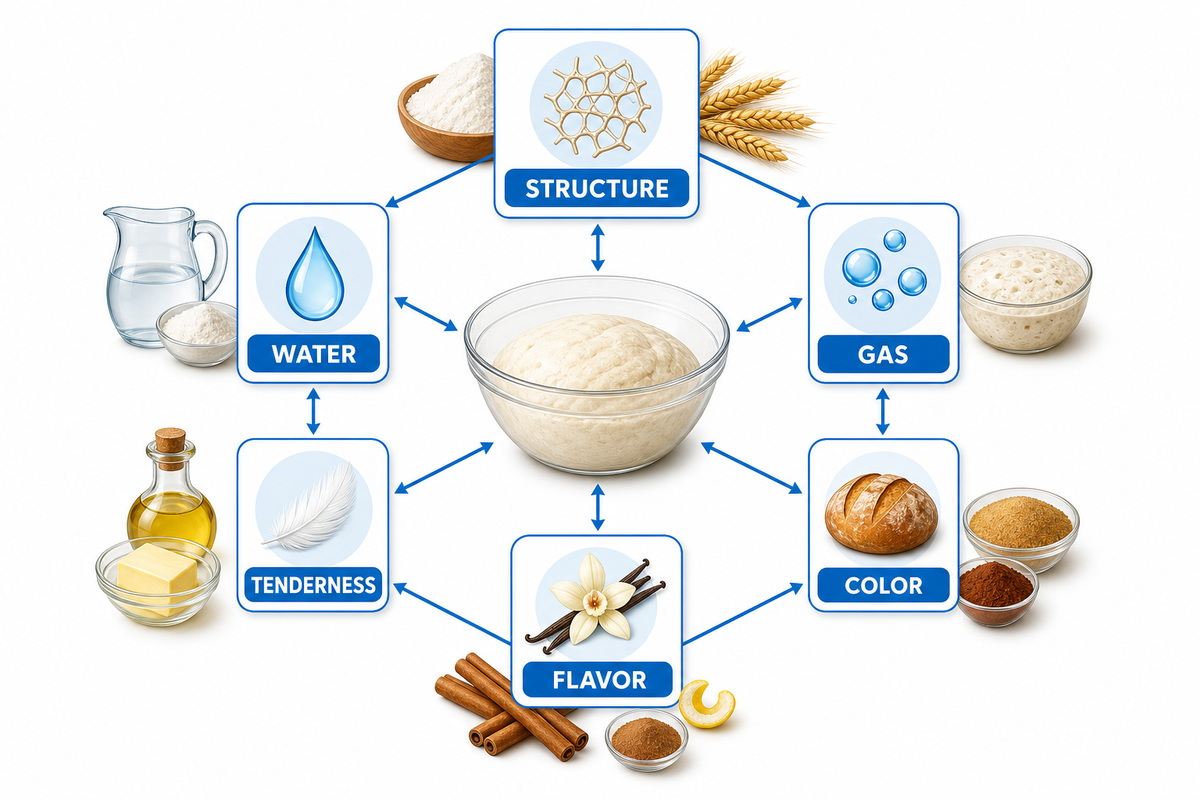
Flour, sugar, fat, eggs, liquid, leavening and salt are seven essential baking ingredients in this useful teaching vocabulary, not a mandatory recipe. Each of the names in the list can do several things. Read the recipe and think about what ingredient provides each of these things: structure, water, gas, tenderness, color and flavor, at each of the stages of the baking process.
Function vocabulary card
Structure: flour proteins, starch and egg proteins can contribute in different ways. Water: water, milk and egg hydrate dry material, while sugar and starch compete for it. Gas: air, steam, yeast and chemical leavening agents create expansion. Tenderness: sugar and fat can soften the structure. Color and flavor: sugar, proteins, fats, salt and heat all participate.
Products distribute those tasks differently. A pastry requires a different balance to a bread made with yeast, a quick bread or a crisp cookie. Some baked goods omit eggs or added fat; others use cocoa, dairy solids, starches, emulsifiers or inclusions. This list is a mechanism for describing a formula, but isn’t a complete formula. Colorado State University Extension illustrates that functional coverage can require a blend of flours, starches and binders rather than one ingredient name.
A baking ingredients list answers what to keep on hand; the search label “baking essentials ingredients” usually points to the same stocking question. A guide to bread baking ingredients and their functions is narrower because it centers gluten development and fermentation. This article instead follows function across several product types.
Why ingredients behave as a system, not a list
Each baked good is formed by the integration of six factors or controls: structure, water, gas, tenderness, color, and flavor. Gas can’t build stable volume without a structure formed by a system. A structure can’t form without water and mixing. Sugar and fat may soften the framework of other ingredients that harden it, such as the proteins and starch.
The peer-reviewed review of wheat starch in breadmaking describes dough as a dispersed system in which starch, proteins, water and added ingredients interact. The mechanisms are focused on bread and shouldn’t be transferred as numerical targets for cake, biscuits or wafers. The system principle does transfer: The same ingredient can support one structure and inhibit another.
This is the reason a correct looking formula behaves differently after a different lot of flour, a warmer batter, a longer mix time, or a different profile for baking. The ingredient list provides what went in the system; it doesn’t provide information about the system’s development. For a broader treatment of those interactions, see the baking science hub.
Flour and starch build the framework
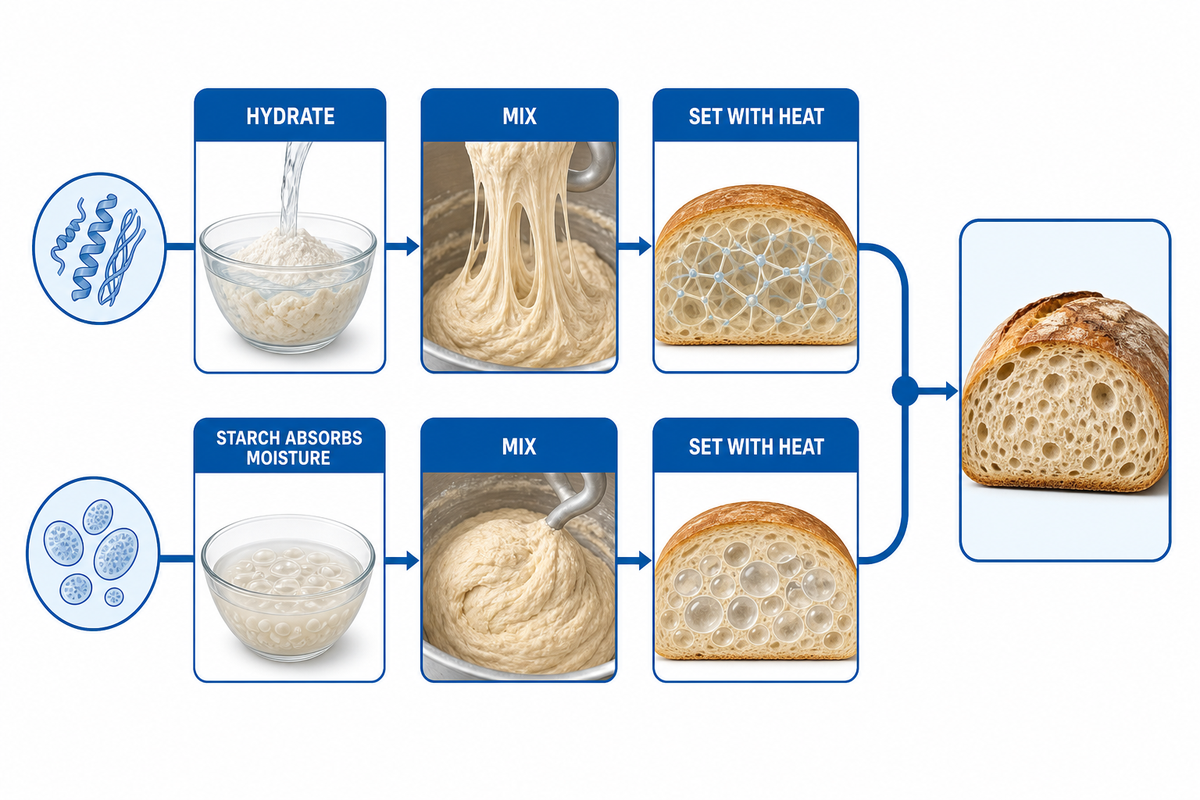
Wheat flour has a combination of both gluten forming proteins and starch. However, protein percentage isn’t a stand-alone quality score for flour. The protein structure needs to be developed through hydration and the mixing process, while starch holds its structure as it absorbs moisture and sets as it is exposed to heat. A quality flour is the flour that has the most appropriate structure, as opposed to necessarily the flour with the highest protein.
Colorado State University Extension describes how gluten helps dough maintain its shape and holds gas bubbles. It also explains why gluten free flour isn’t a simple cup for cup substitute: a blend may need to simulate protein, starch and fiber and provide flavor and texture. University of Maine Cooperative Extension describes the use of flour, starch, gums and egg replacement products in combinations rather than as one universal replacement.
Though all-purpose flour, bread flour and cake flour have targeted uses, they aren’t placed in a rigid quality hierarchy. With bread flour, a high protein content may help retain gas, but it can make pastry dough or cake batter chewy and less desirable. Rice flour can provide starch without providing gluten or a gluten structure to a system. Mixing can strengthen a gluten system in a hydrated wheat dough, but this may make a product too tough.
All flours should be evaluated based on how each of their respective properties impacts water absorption, mixing time, batter or dough temperature and consistency, etc. More egg isn’t a universal route to greater final volume or a tender crumb. For example, neither a higher protein content nor a lower protein content can predict how that flour will behave in a given recipe.
Sugar and fats tune tenderness, spread, color and moisture
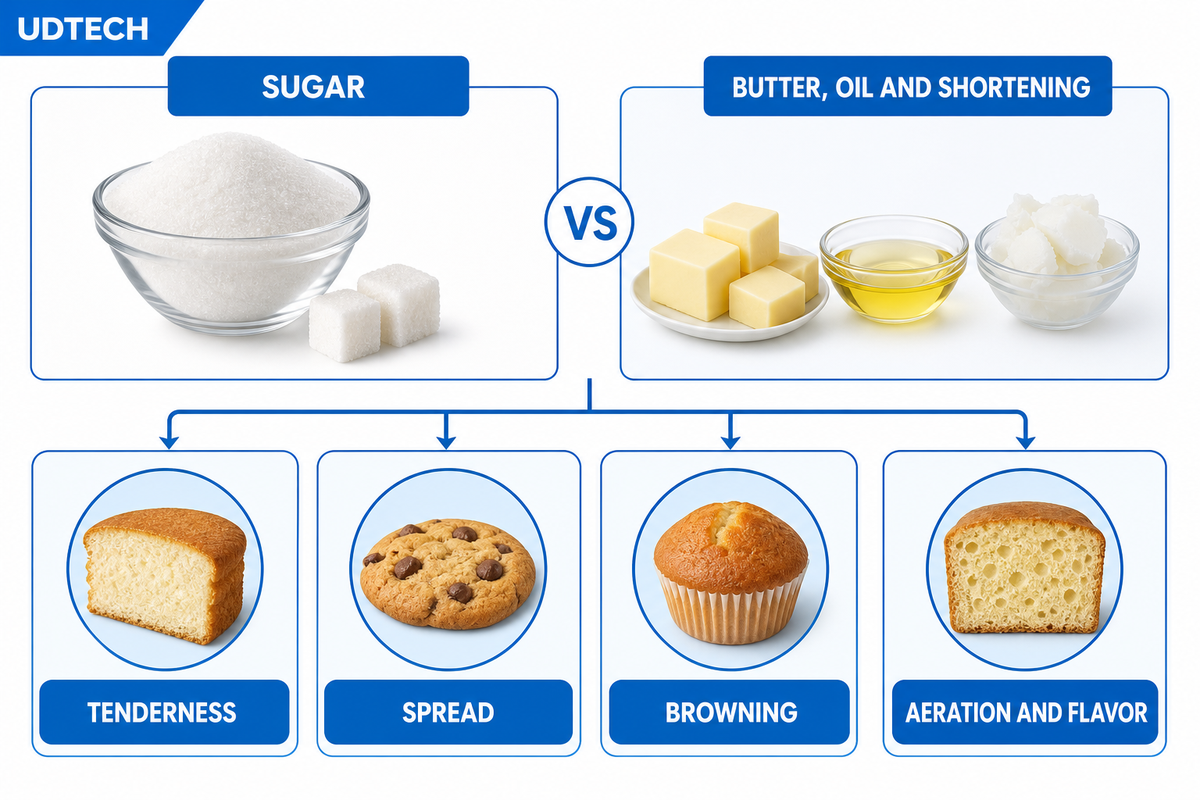
Sugar has roles beyond sweetness, and fat has roles beyond richness; both can soften structure. Sugar can help retain moisture, alter spread and texture, and undergo browning. Fat has different melting points and can carry flavor and assist formation of an aerated structure.
Granulated sugar and other sweeteners don’t behave the same with water and solids. Butter, for instance, has a water content and can trap air under appropriate conditions. Oil, however, is a liquid and doesn’t exhibit the same behavior. Shortening has its own melting and aeration profile. Calling all of these components “fat” hides the changes a baker will actually see.
Perceived moistness and measured moisture are not the same thing. Softer crumb may feel moist without proving a higher total water content, and neither observation is a water-activity result. The FDA water-activity guide treats available water as a distinct measurement and notes equilibrium and temperature considerations. The baking texture, browning and moisture guide connects those measurements to separate product outcomes.
Don’t try to address each symptom by introducing a new ingredient when a sugar or fat change affects color, spread or release. Revert to the base case and choose one axis to address. Observe the impact across the remaining axes.
Eggs and liquids connect structure, emulsification and hydration
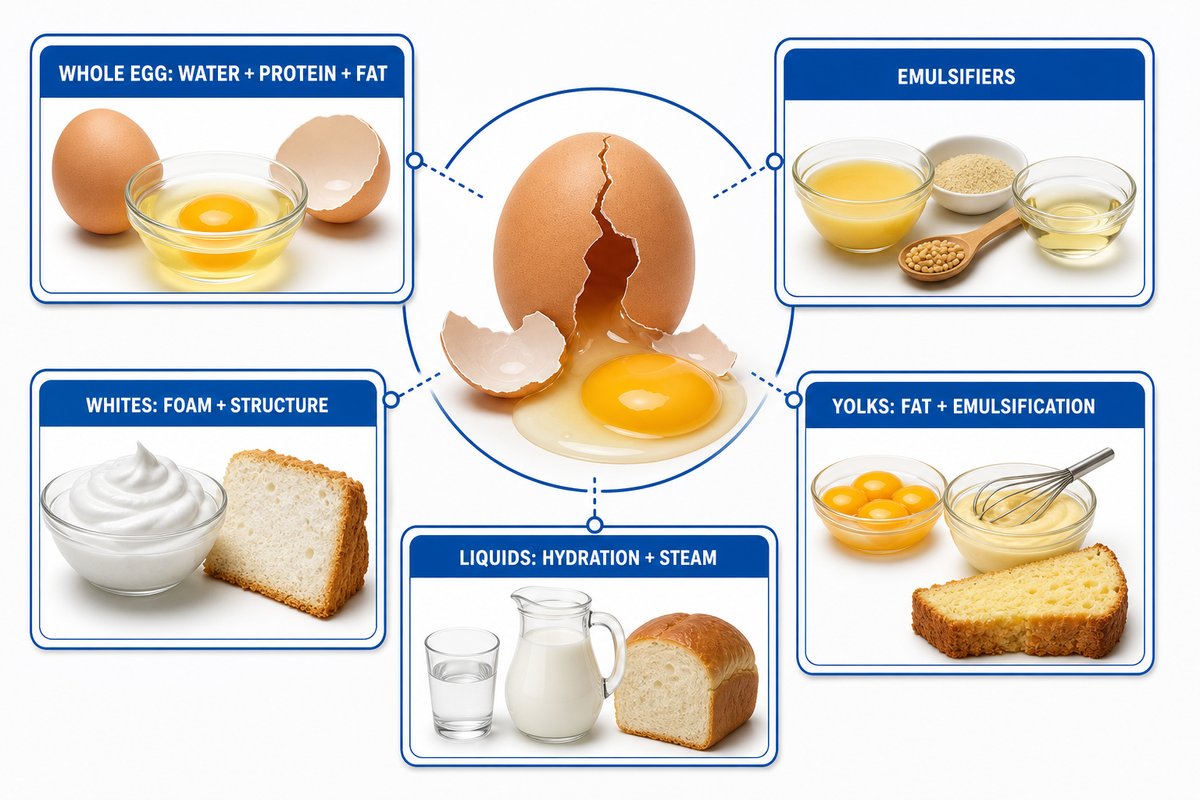
Whole eggs bring water, proteins, fat and emulsifiers into one input. Whites provide foam and protein structure. Yolks bring fat and emulsification. Water or milk hydrates flour and starch, dissolves ingredients and can create steam. The change in eggs affects multiple variables and can’t be considered as one isolated binding agent.
This generally explains the common question: whether to add one or three eggs in a cake. The change affects batter viscosity along with air-cell stability, water, protein-setting, and the richness and color of the cake. The impact depends on the rest of the recipe. Eggs in larger quantity don’t always provide aeration and softness in a cake.
Milk adds several components that water lacks. Milk may contribute solids and flavor and can influence browning. Therefore, a milk substitute must be considered in the context of the rest of the recipe. The University of Maine Cooperative Extension likewise describes replacement systems that combine flours, starches, gums and egg replacers. Consider the total liquid, the solids they contribute and their temperature while keeping the mixing method consistent.
Leaveners and salt control gas, timing and flavor
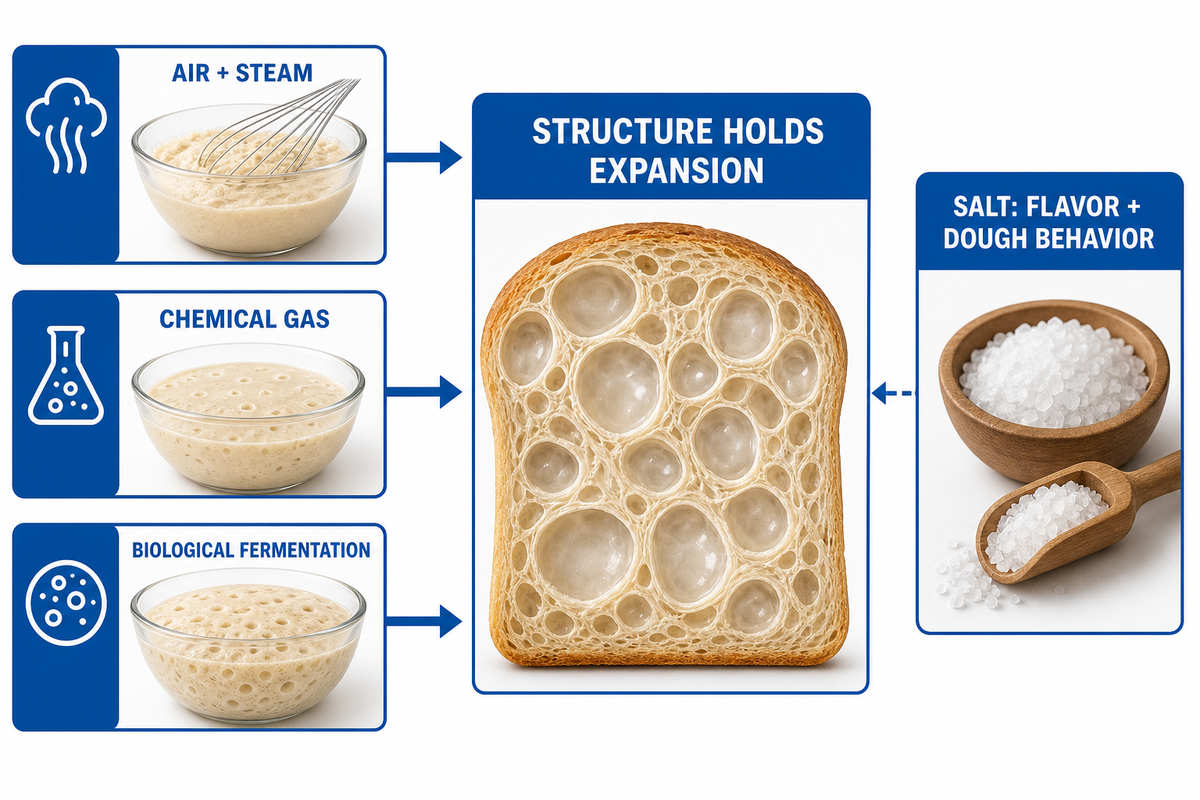
Leavening has three broad routes: incorporated air and steam, chemical gas generation, and biological fermentation. Baking soda requires an acid, while baking powder contains an acid-base system. Yeast is especially dependent on the recipe and method. No matter which route is used, the bake still needs a structure that can hold the expansion until heat sets it.
NC State’s food-science explanation breaks down sodium bicarbonate, baking powder and double-acting baking powder and shows how staged reactions occur. Because of that mechanism, baking soda and baking powder can’t be swapped spoon for spoon. In some cases, cream of tartar can act as an acid component, but the complete acid balance, timing of gas release and resulting flavor depend on the recipe.
Making bread adds another dimension of time-dependency to the system. While the structure of the dough changes along with the temperature, the fermentation process begins and is active. Physical leavening is equally complex, if not more; you need to retain the creamed air or steam for an extended period of time. Table salt contributes flavor and can alter dough behavior and yeast activity, so removing it has a broader impact than taste alone.
There are several reasons a cake may be dense. Adding more baking powder is just one of several potential explanations. Other factors can include loss of trapped air, weak structure, over-tenderization, delayed baking, or conditions inside the oven. For a batter-focused view, the batter texture guide separates consistency, mixing, depositing, baking, release and cooling observations.
Why one-for-one substitutions often fail
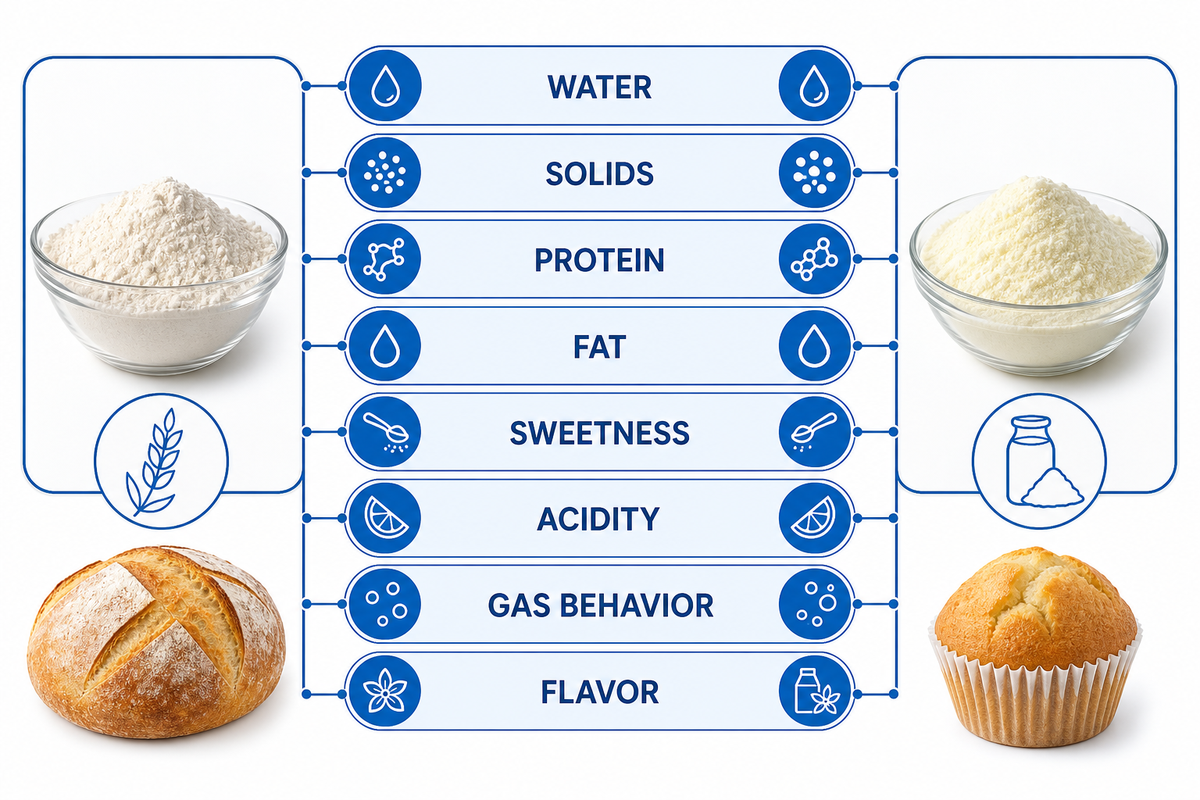
Substitutions shouldn’t be equivalent in cups or grams, but rather in function. Consider water, solids, protein, fat, sweetness, acidity, gas behavior and flavor. Where multiple interrelated changes occur, the substitute will likely change the recipe in several ways at the same time.
North Dakota State University Extension advises that substitutions may lead to changes in taste, color, moisture or consistency. Butter-to-oil illustrates the point: Equal fat weight doesn’t replace the water content, solid fat, and creaming capacity of butter, and illustrates the problem with substitutions. Sugar reduction, for example, can reduce sweetness, but may also change spread, browning, tenderness and water behavior.
Start with the original recipe. Identify every component that was added or removed with the substitute. Focus on the result of interest and make one bounded comparison. If an allergen is the reason for the substitution, a good texture doesn’t settle ingredient declarations or cross-contact.
Follow the Bake-Stage Lens from mixing to cooling
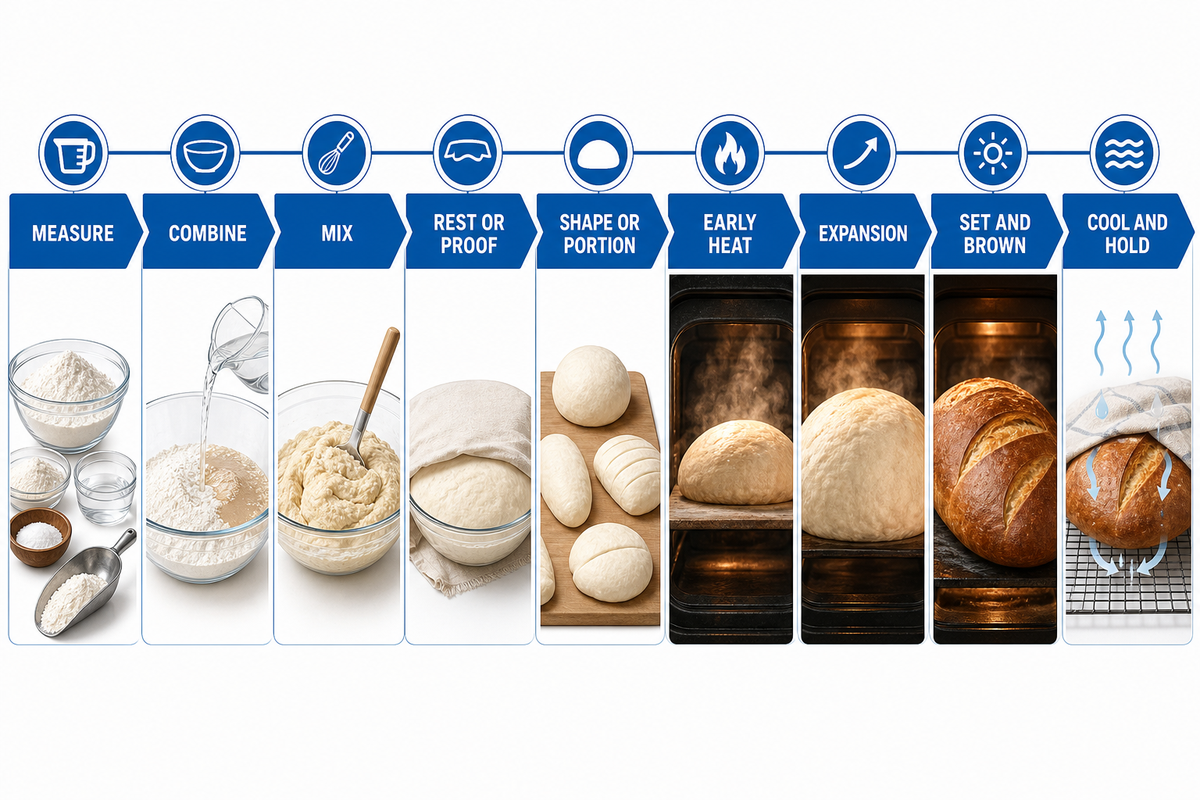
The Bake-Stage Lens asks when an ingredient’s function becomes apparent in the process. Water starts the process of hydration before the addition of heat. The structure of the mix changes through mixing, while air may be incorporated. During either the proofing or heating process, gas is formed. The proteins and the starch set. Browning begins. The Lens is a process description, not a recipe.
Bake-Stage Lens: follow the function through time
Stage category
What ingredients are doing
What the reader can observe
Measure
The formula fixes water, solids, fat, protein, acid and leavener relationships.
Ingredient identity and quantity
Combine
Liquids dissolve small ingredients and begin hydrating flour and starch.
Dry pockets, lumping, early viscosity
Mix
Air may be incorporated; gluten, emulsions and foams begin to develop.
Smoothness, elasticity, foam or batter body
Rest or proof
Hydration continues; yeast may produce gas; chemical reactions may begin.
Dough expansion or viscosity change
Shape or portion
The developed structure meets handling, spreading or depositing forces.
Spread, flow and shape retention
Early heat
Fats melt, dissolved gases expand, steam forms and leaveners react.
Rise, spread and surface change
Expansion
Gas cells grow while the surrounding structure must stretch and retain them.
Volume and cell pattern
Set and brown
Proteins set, starch gelatinizes, water leaves and browning reactions develop.
Firmness, crumb and color
Cool and hold
Steam escapes, moisture redistributes and the final texture continues to change.
Crispness, softness, condensation or staling
A list says that sugar affects browning. The Bake Stage Lens asks what stage of the baking process this becomes important and what else is happening at that time. The same logic keeps a flour discussion from ending at protein percentage and a leavener discussion from ending at gas generation. The peer-reviewed wheat-starch review supports following ingredient interactions through mixing and heating rather than treating one input value as the endpoint.
The same ingredient changes jobs across baked goods
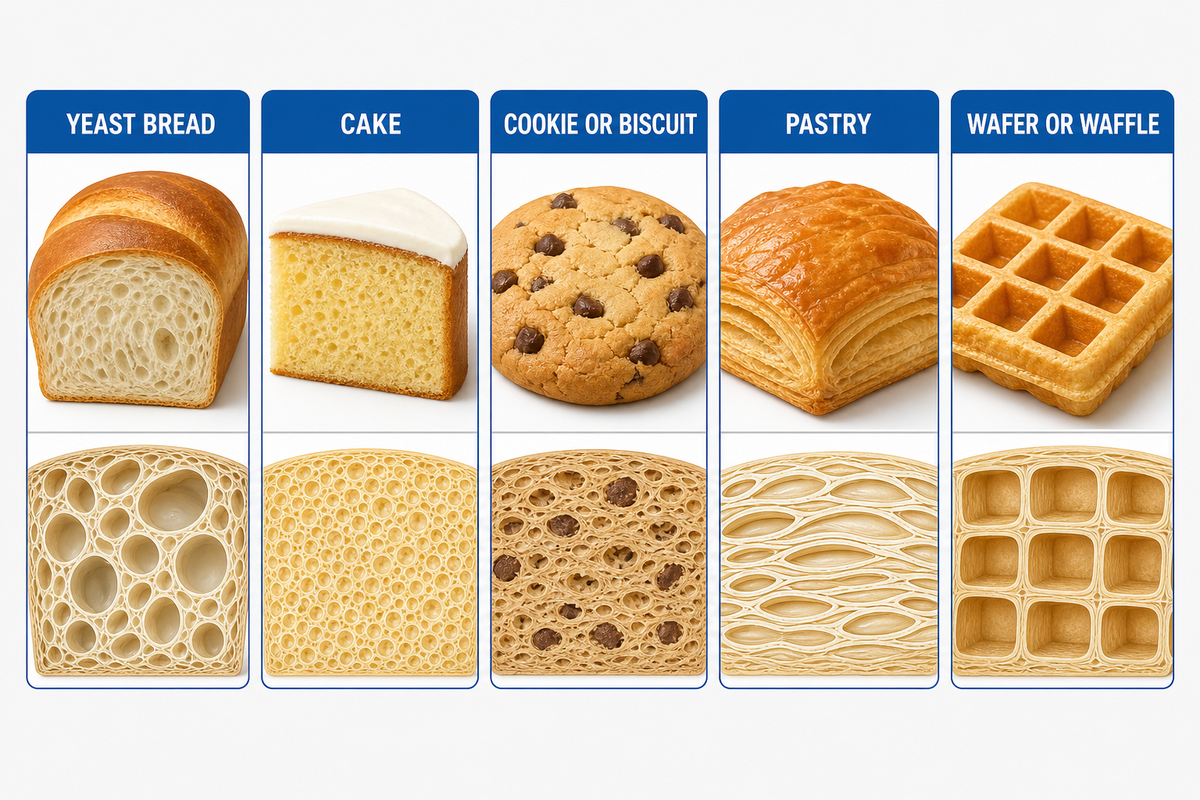
The ingredient may be the same in another product while its functional priority changes. For example, bread depends on a gas-retaining dough, cake balances expansion with a tender set, cookies manage spread and bite, and pastry manages layering and shortening. In addition, wafers and waffles must also release cleanly. The wafer-format guide explains how thin, filled and rolled products shift the process question.
Product category changes the functional question
Product category
Structure question
Expansion question
Texture question
Yeast bread
Can the dough stretch and retain gas?
How do fermentation and proofing align?
Is the crumb open, close or tough?
Cake
Will the foam or emulsion set without collapse?
When is air or chemical gas released?
Is the crumb tender but stable?
Cookie or biscuit
How much spread can the structure tolerate?
Is lift desired or restrained?
Should the bite bend, crumble or snap?
Pastry
How are layers or a short crumb preserved?
Does steam separate layers?
Is the result flaky, tender or crisp?
Wafer or waffle
Does the thin or molded structure set cleanly?
How does gas shape the cell pattern?
How do crispness and release develop?
A fresh egg-waffle study examined defined recipes and procedures. The stuck waffles and their baking test conditions should be studied together, and the results shouldn’t be generalized beyond those tests. These results shouldn’t be generalized to all waffles or to all pastries, breads or cakes. The primary lesson is that a product’s format changes its functional priorities.
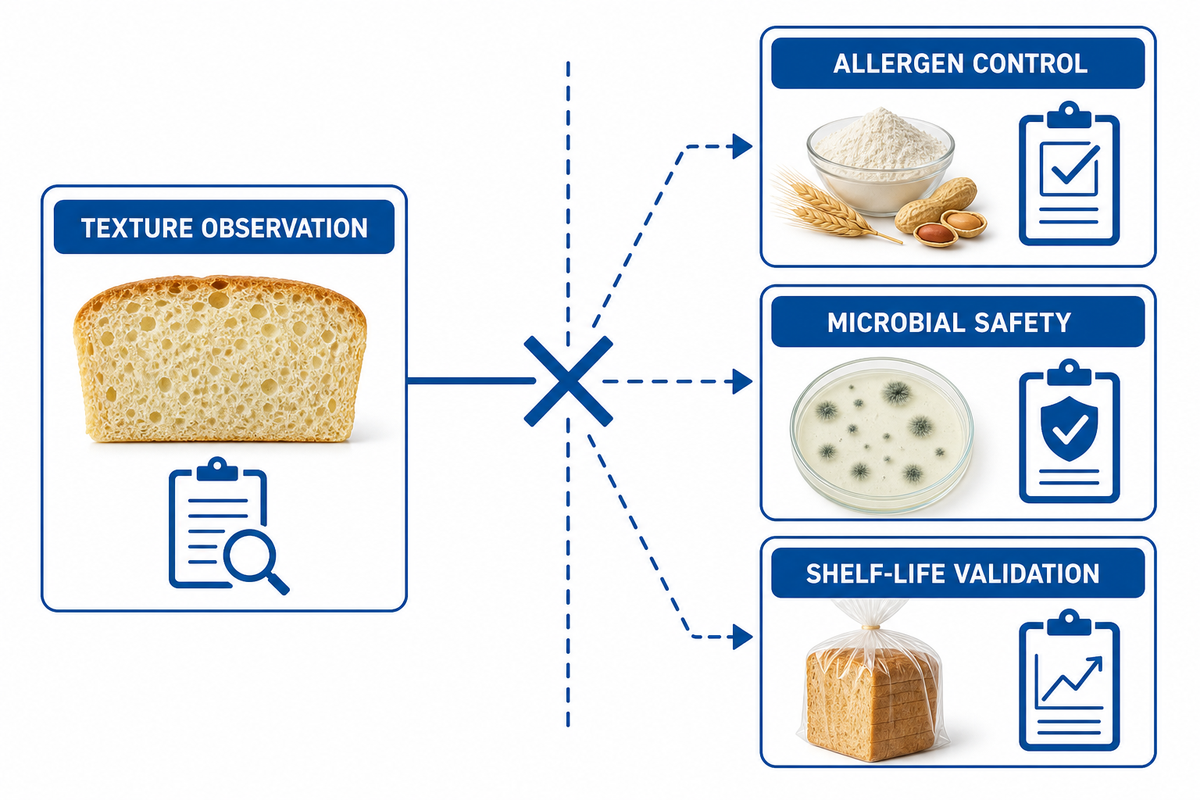
Keep allergens, food safety and shelf life separate from texture
Ingredient performance can’t guarantee control of allergens, microbial safety, or shelf life. Merely being crisp doesn’t guarantee safety and softness doesn’t guarantee lack of safety. Raw-batter handling, ingredient declarations, cross-contact, finished-product water activity and shelf-life validation are different questions that need separate answers and evidence.
FDA says most flour is untreated raw food and advises people not to eat or taste uncooked flour, dough or batter. Baking is the step that makes recipes containing raw flour and eggs ready to eat; visual texture alone does not demonstrate safety.
For the United States, the FDA food-allergen overview identifies nine major allergens: milk, eggs, fish, crustacean shellfish, tree nuts, peanuts, wheat, soybeans and sesame. While the questions ‘ingredient declarations’ and ‘cross-contact controls’ are related, replacing one ingredient does not answer both of these questions.
The Canadian Food Inspection Agency guidance states that the factors that impact the shelf life of a product are formulation, processing, packaging, storage, sensory properties, and the product’s microbiological safety. It won’t be presented as applicable to U.S. law. Don’t borrow another product’s shelf life or water-activity threshold.
Where this guide stops
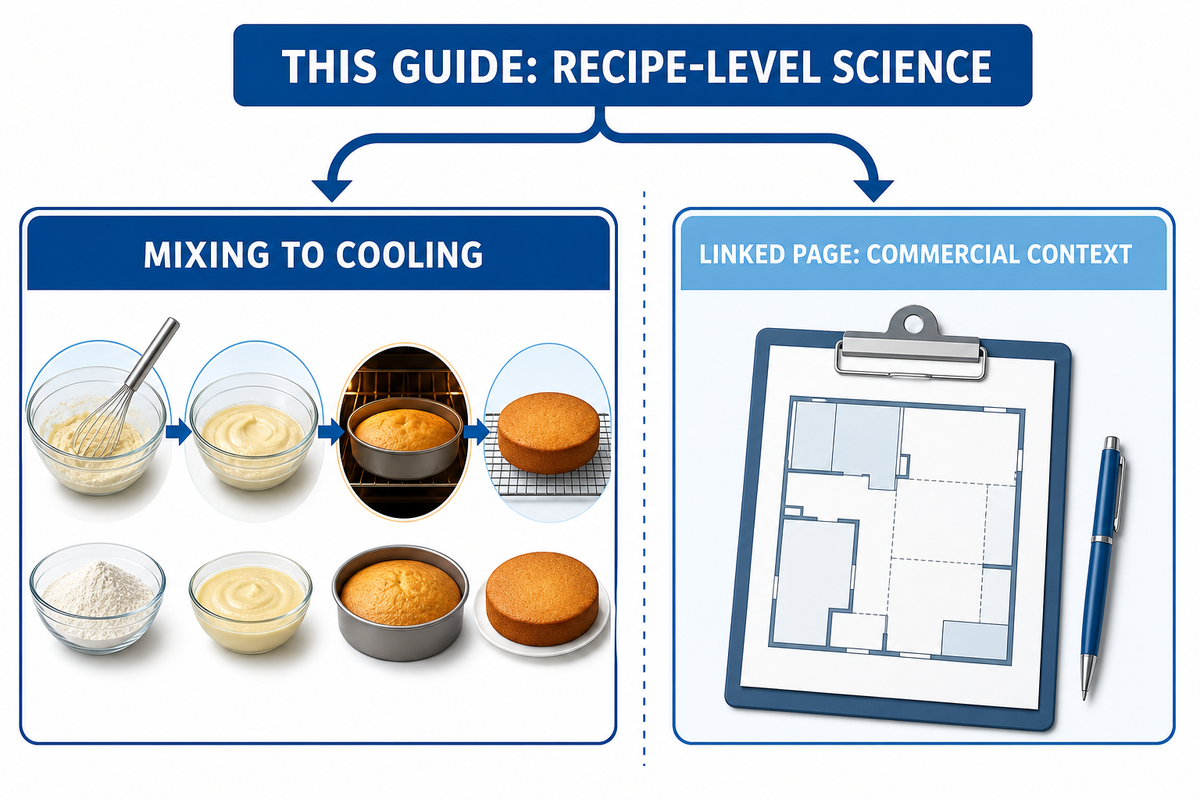
The baking ingredients guide synthesizes how common baking ingredients behave through mixing, heating and cooling within a recipe. Readers who want to extend the science to a broader commercial context can continue to the baking-ingredient solution, which provides additional breadth. The two resources respond to different questions. This article explains the science; the linked resource explains how to apply it in a broader commercial bread-making context.
Frequently asked questions
What are the 7 basic ingredients used in baking?
Read the answer
Basic teaching aids describe a simplified formula with the components: “flour,” “sugar,” “fat,” “egg,” “liquid,” “leavening,” “salt.” This shouldn’t be viewed as a definitive formula. Several products lack some of these components, while others include starches, emulsifiers, cocoa, or dairy solids. You need to know the functions that the product will need to fulfil and how the formula will satisfy those functions.
What does each ingredient do in baking?
Read the answer
Flour and starch build structure and set; sugar sweetens and affects water, tenderness, spread and browning; fats tenderize and add flavor; eggs provide water, protein, and aid in emulsification; liquids provide hydration along with steam; a leavening agent produces or expands gas; salt provides flavor and influences dough and fermentation. These functions overlap.
Why use baking powder instead of baking soda?
Read the answer
Baking soda is sodium bicarbonate and requires an acid in the formula. Baking powder is a more self-contained chemical leavening agent, as it consists of alkaline and acid components. The appropriate choice relies on the acidity, timing of gas production, flavor and the structure available to hold gas. They can’t be substituted for one another spoon for spoon.
What happens if I reduce sugar in a recipe?
Read the answer
Reducing the amount of sugar may make a recipe less sweet and may also affect spread, browning, tenderness and water behavior. Test a bounded reduction while holding the method constant.
Why can the same ingredient behave differently in two recipes?
Read the answer
Different functions can be observed at different times from hydration, mixing, resting, heating and cooling. Use the Bake-Stage Lens to compare where the recipes diverge and don’t assume an ingredient name suggests a particular result.
Key takeaway
The Bake-Stage Lens shows when in the baking process an ingredient hydrates, aerates, expands, sets, browns or changes during cooling. An ingredient name indicates what entered the bowl.
Editorial transparency: the Bake-Stage Lens is an editorial teaching framework assembled from the cited evidence. It isn’t an externally validated standard, food-safety plan or guarantee of a particular baking result.
WHY WE WRITE THIS
About UDTECH
UDTECH has been manufacturing food machinery since 2003. This is where we write down what we learn from product samples, trial runs and commissioning—the batter, the bake and the texture, rather than the sales sheet.
These guides help production managers, buyers and food entrepreneurs work through batter faults, sample runs, output targets and factory acceptance. When a question turns into an equipment question, the same enquiry form reaches our engineers.
OUR EXPERIENCE
Food machinery manufacturing since 2003, with practical experience from product samples, trial runs and commissioning across egg roll, wafer, waffle, biscuit and snack production.
OUR EXPERTISE
We work from real recipe and output conditions, covering process, product and machine specification questions. Technical enquiries are passed to the engineer responsible for that equipment.