Waffle Styles refers to culinary traditions and ways of eating rather than a fixed listing of iron shapes. On a café plate, a Brussels waffle suggests a different eating moment from a Liège waffle carried down the street, a Gouda syrup waffle served with coffee, or a Hong Kong egg waffle handed over warm. While their names offer some clues, the recipe, serving method and time since baking are just as important.
Quick answer: Some labels sound like a country, but the food base, the bite you want, how you will eat it and whether you will eat it immediately tell you more than just a country label. They’ll also guide you in asking the right question when a menu broadly labels its food as “belgian waffle” without any description of the food.
Why a style name alone does not tell you the eating experience
A waffle style name identifies a culinary tradition or familiar serving form, but it does not guarantee one recipe, topping or texture at the table. Look at the base, intended bite, serving format and time since baking before deciding what a menu description means.
“Belgian waffle” is a broad serving style label which, like many, fails to describe the specific food a café serves. What Visit Brussels says about Brussels and Liège waffles is that they’re distinct foods. However, a label alone won’t tell you what a particular café serves. Even in the case of a Belgian maker of irons, AmPi notes that the Brussels iron imprints have varied through the years. That grid pattern alone won’t answer the question.
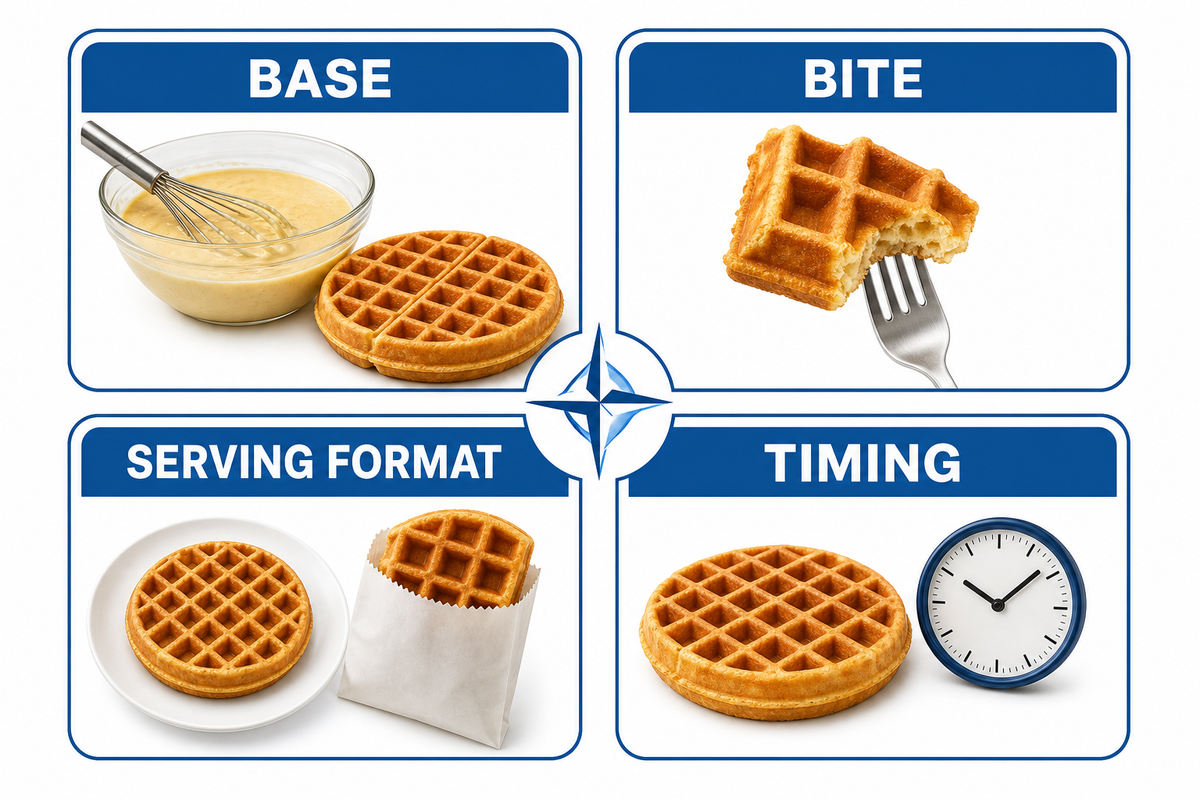
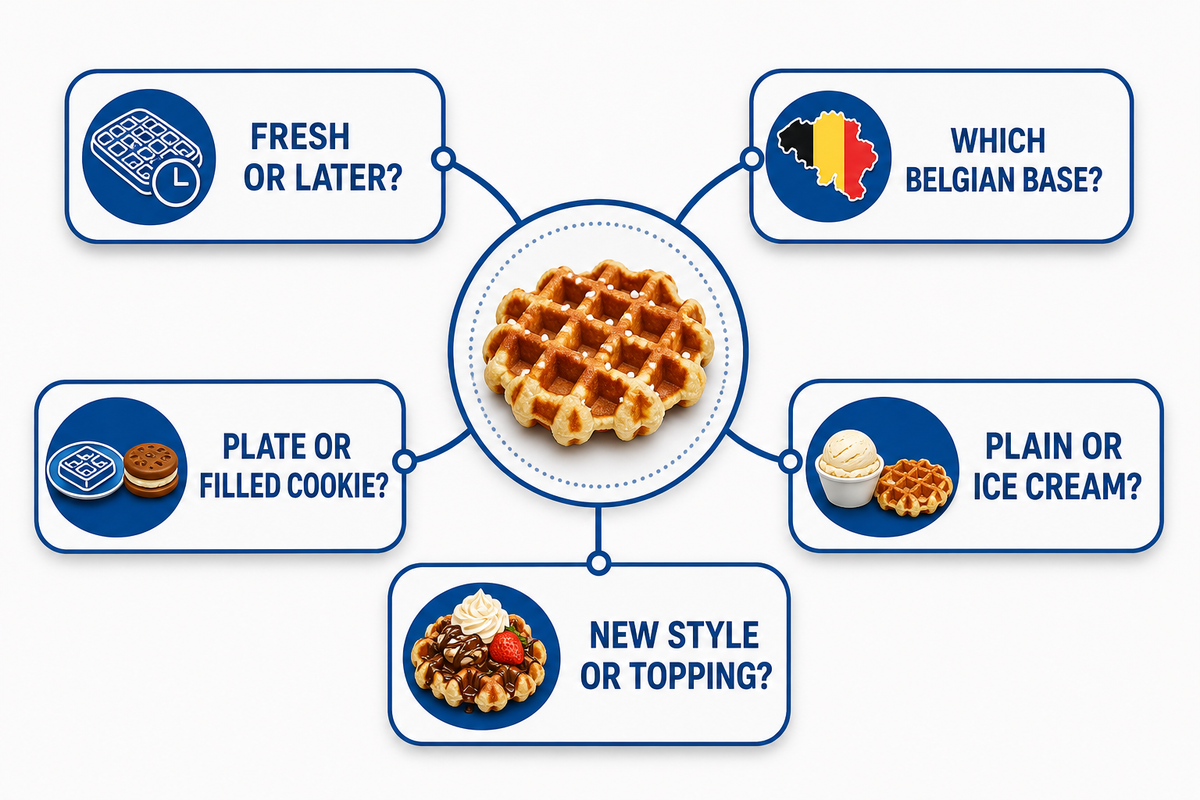
The 4-Cue Waffle Style Selector
The 4-Cue Waffle Style Selector is a type of editorial prompt that requires you to identify the base (batter, dough or filled layers), the bite you’re expecting, the serving format (plate, hand, or cookie), and the timing between baking and eating. Regional examples provide the descriptions; the four-cue method is our synthesis and not a definitive classification or a guarantee for every recipe.
Menu photos may show powdered sugar on two different waffles. The topping doesn’t make their bases the same. Relying on the type of waffle and on whether the food is from the iron is a better way to proceed than counting pockets or assuming all round waffles are from one tradition.
What happens to texture between the iron and the first bite
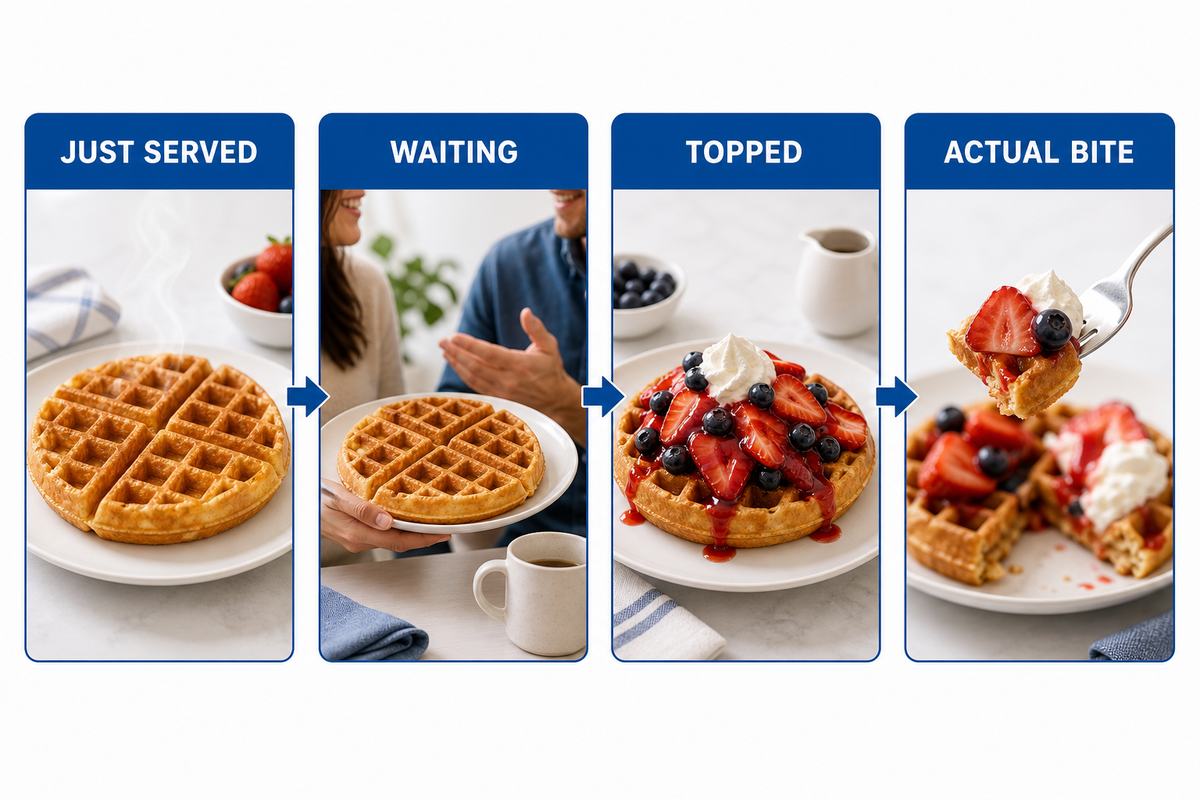
The texture of waffles can alter after they bake. This is because a finished food is still exchanging moisture with the atmosphere. Toppings and holding conditions also change the bite a diner experiences. Recipe and serving state both matter. Published waffle experiments show recipe-specific texture differences, but they do not establish a universal crispness clock for Brussels, Liège or other regional styles.
Two examples illustrate this limit. One fresh egg-waffle formulation study examined several starch and flour recipes and how waffles adhered to the iron. Another gluten-free crispy-waffle study examined substituting okara and assessed texture under that study’s recipe and storage conditions. Neither study was a regional waffle tasting. It does illustrate how results can change with a different base.
The public abstract of an Academic Press chapter on after-bake technology discusses moisture sorption in crisp wafers and loss of freshness in some soft waffles. Its full chapter is behind a paywall, so no exact holding time, starch mechanism or cross-style threshold follows from that abstract. “Crisp when fresh” is a useful expectation, not a fixed minute-by-minute guarantee.
Picture a waffle ordered for a shared dessert table. One is consumed as soon as it’s placed and the other is saved under fruit and sauce while people finish their coffee. Though both may have the same batter and waffle iron, the following bite may be altogether different. That first crunchy edge won’t guarantee a sauced portion stays crunchy. The prudent course is to eat the dessert in the condition under which it will be served. For a delayed service, ask the cook or provider what they’ve experienced with that recipe and topping, rather than applying a universal timing standard from another waffle type.
Key takeaway
A style name describes the starting expectation; the recipe, topping and time since baking determine the bite you actually get.
Brussels and Liège in culinary context
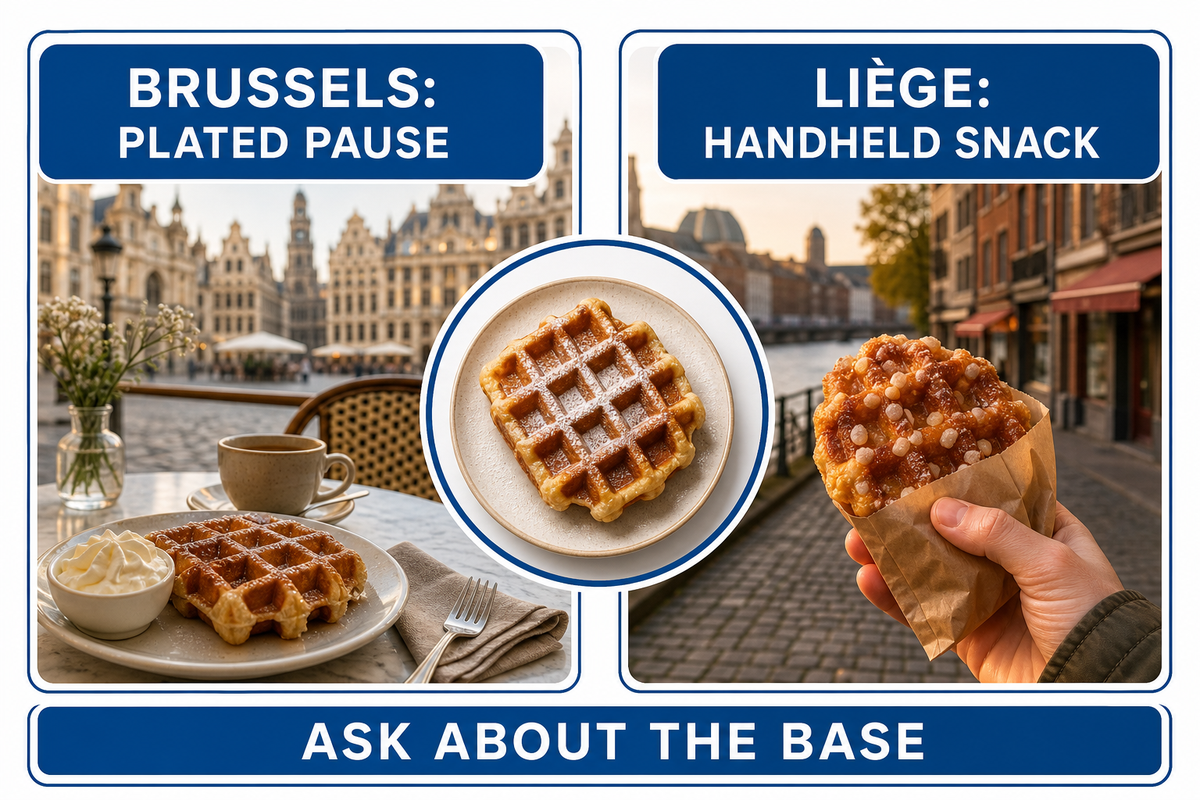
Brussels and Liège name two familiar Belgian waffle traditions with different customary eating experiences. Visit Brussels describes a lighter Brussels waffle and a smaller, softer Liège waffle with sugar crystals. A Belgian maker describes pourable Brussels batter and firmer Liège dough with pearl sugar. Actual café recipes vary.
For a plated pause, a Brussels waffle often makes sense. The open surface allows for the easy addition of fruit, whipped cream, or even a light dash of powdered sugar. A Liège waffle, sometimes listed on menus in English as “liege waffle,” has sweetened dough, so a warm one could be an appropriate handheld snack without a large topping. These are some suggestions that one might expect to see on a menu based on the culinary guide to the destination and the product descriptions found on AmPi’s site, and shouldn’t be taken as prescriptive formats.
Consider going for breakfast to a station cafe. Do you think “belgian waffle with berries” describes a dish that would need a fork and a plate or a sweet dough waffle that can be eaten on the go? Find out from the cafe what they mean by this and what you can expect to receive. Just having a deep grid won’t help determine this. Claiming that both dishes come from Belgium won’t explain if they both have the same history and/or baking method. At a restaurant, the risk is treating an iron imprint as a serving promise; because menu labels vary, ask about the base and toppings before ordering.
The two Belgian waffle styles displayed on various menus also bring about different styles of eating. In order to do a proper taste comparison, eat it the way it’s usually presented in the eating region. The comparison won’t try to see which region’s name is the best. A recipe or a topping can move the final bite away from the customary description.
Two different ways to eat a waffle: Gouda and Hong Kong
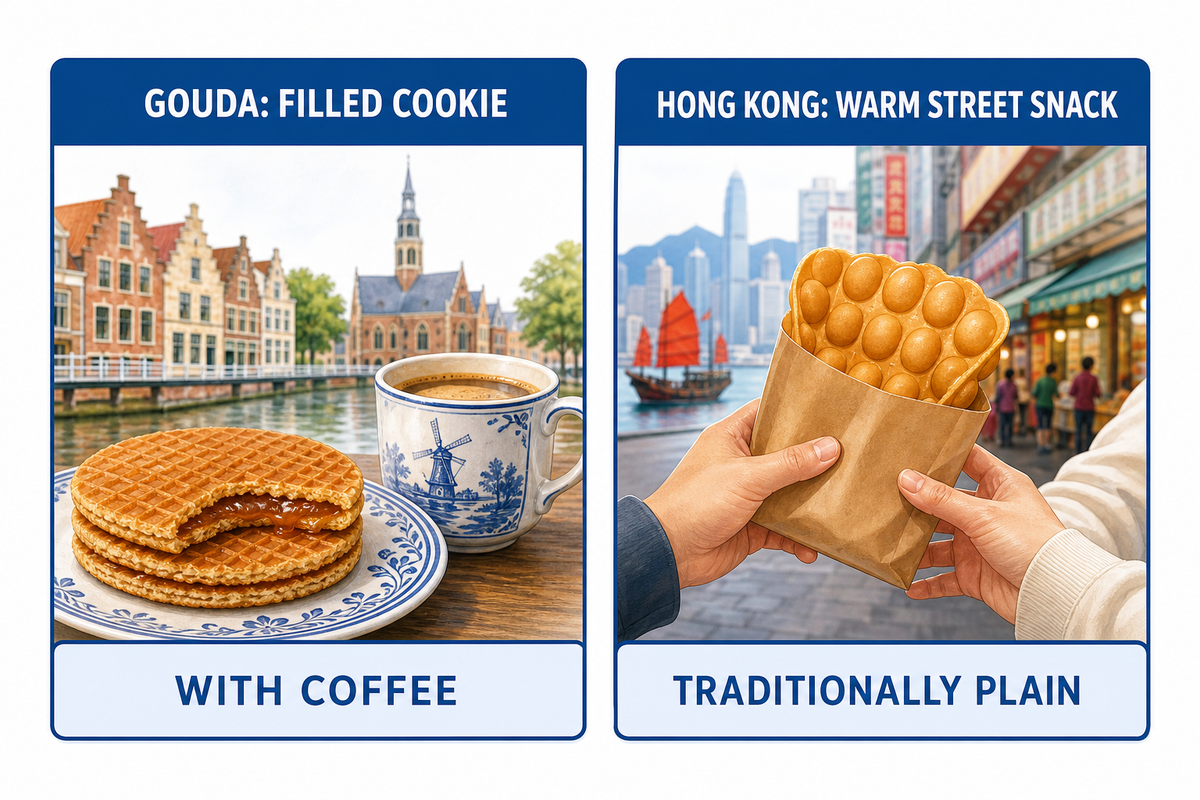
A Gouda stroopwafel and a Hong Kong egg waffle show a good example of how waffle can mean very different eating traditions. The Dutch example is a syrup-filled, layered cookie. The Hong Kong snack has connected, egg-shaped bubbles and is commonly bought warm. Having a shared name doesn’t mean they’re both the same breakfast choice.
The Dutch intangible-heritage inventory describes making a syrup waffle in Gouda and notes that its construction has changed: an earlier version joined two cookies, while a later method split a baked waffle and spread syrup inside. That history matters because “two layers” describes the finished filled food, not one unchanging assembly technique. The Open University’s food account also describes thin waffle layers with syrup between them.
With coffee, a stroopwafel offers a small filled bite rather than a large plated waffle breakfast. Warming a stroopwafel may alter the filling, but the syrup between layers makes it more cookie-like than a deep-pocketed breakfast waffle; that’s a serving distinction, not a universal rule about how all Dutch makers bake.
In Hong Kong, the tourist board’s account of Lee Keung Kee mentions egg waffles made to order, while the street-food guide explains the bubble shaped snack and a traditional plain snack. Later in the guide, soft serve and other flavors are mentioned. Soft serve with a bubble waffle may appeal to some diners, but the traditional plain street snack should remain the starting point for explaining the tradition.
“the humble egg waffles are traditionally eaten plain in Hong Kong.”
On a street-food walk, do you prefer to snack on connected bubbles from a paper bag, or do you want to stop for a filled cookie along with a drink? The topping can change either experience, but it doesn’t cross the regional identity of the base food.
Choose for the moment you will actually eat it
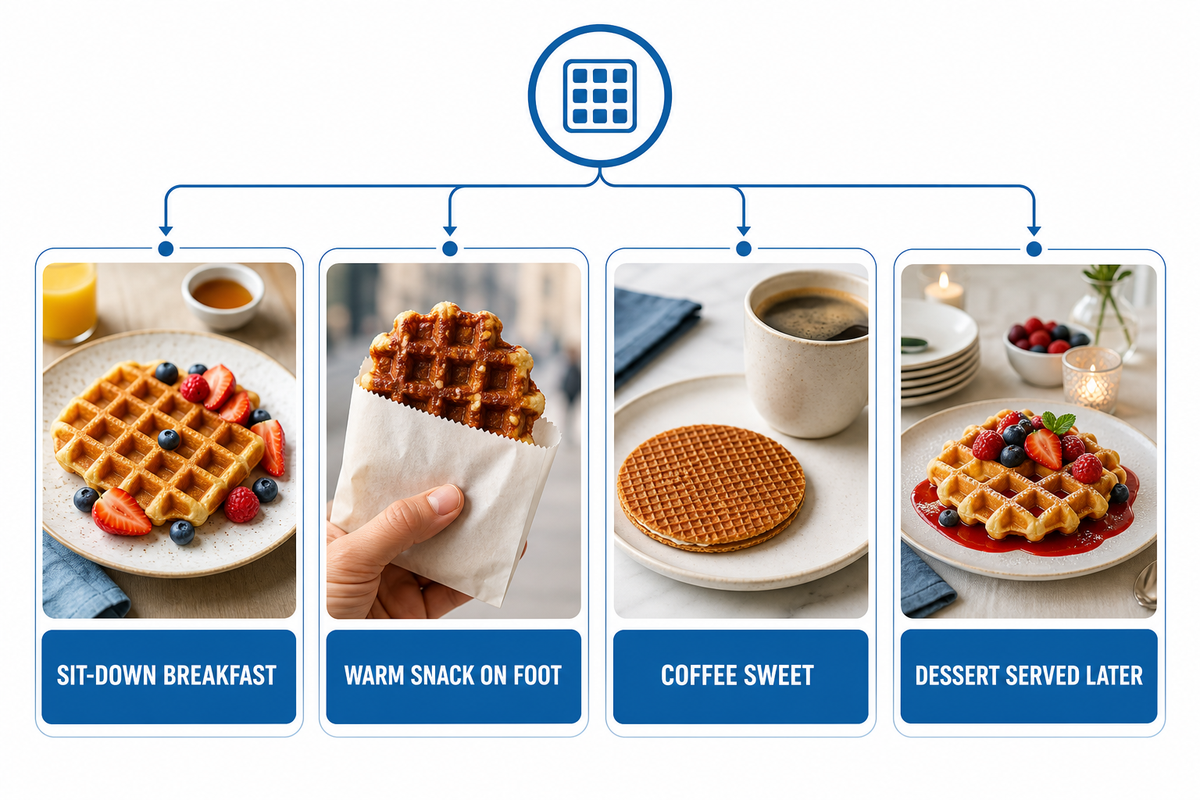
Choose a waffle for the situation in which you’ll eat it: a sit-down meal, a warm handheld snack, a filled cookie with a drink, or a dessert served later. Use the four cues to ask about the base and service. Style names offer a possible fit, but it’s the cook’s recipe and service that determine the final bite.
For a sit-down breakfast, a plated waffle with fruit may be the point of the meal. The Smithsonian’s account of American waffle history documents the breakfast-table context, but it doesn’t prescribe one “American waffle” batter or shape. A café or home waffle maker may use buttermilk, yeast, baking powder or another waffle recipe. Read the menu, then ask if the base itself is sweet, savory, or made sweet mainly by toppings.
For a warm snack on foot, a Liège-style dough waffle or a plain Hong Kong egg waffle may be easier to eat than a heavily dressed plate. With coffee, a stroopwafel is a good choice for a filled sweet. For dessert that will wait while other dishes arrive, ask what the provider has tested after holding and topping. Any list of the “best waffle styles” that ignores the wait is addressing the wrong problem.
The table is a set of prompts, not a physical performance ranking. It leaves the choice with the person eating.
Choose by the eating moment
Eating category
Likely fit to explore
Question worth asking
Sit-down breakfast
A plated waffle, including a Brussels-style option
Which base and toppings are served?
Breakfast with fruit
A plated base with room for toppings
Does the fruit arrive separately or already on top?
Breakfast without a sweet topping
A café option whose base suits your taste
Is the base itself sweet or savory?
Warm snack while walking
Liège-style or Hong Kong egg waffle
Is it served fresh and easy to hold?
Snack without extra toppings
A plain Hong Kong egg waffle or a sweet dough waffle
What does the plain item taste like?
Coffee and a small sweet
Filled Dutch stroopwafel
Is the syrup filling part of the item?
Shared dessert plate
A plated waffle with toppings served to share
Will everyone eat it soon after service?
Ice-cream dessert
A contemporary topped version of a familiar base
Which part is the traditional base and which is the addition?
Dessert served later
A recipe the provider has checked under that condition
How does the bite change after toppings and waiting?
A mistake that’s often made is ordering by the photograph only. A waffle covered in berries may have been photographed fresh, while your order may sit before serving; a bubble waffle wrapped around ice cream is a newer presentation, not proof that the plain snack was invented for cones. If you’re concerned about time or temperature, let the person know when you place your order. A specific question about the served item is better than a vague label of style.
Ingredients, allergens and the limits of a style label
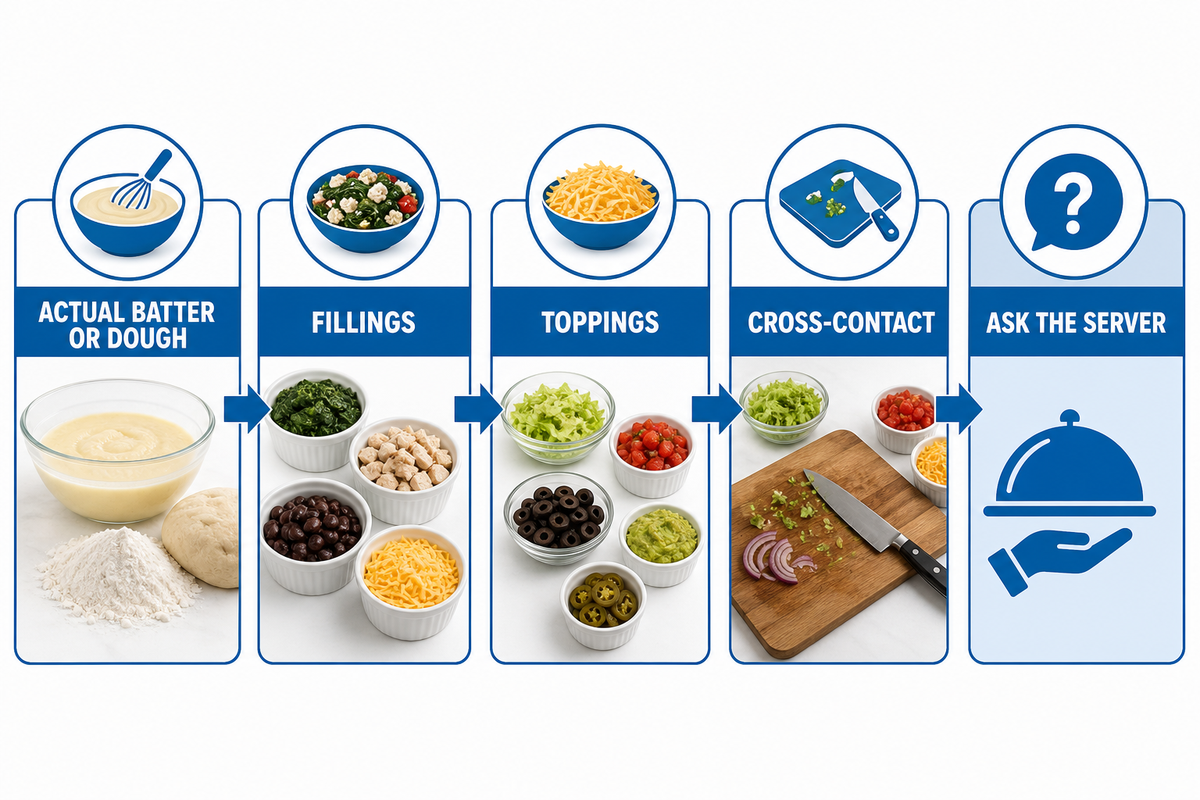
A regional waffle name doesn’t verify the ingredients or allergens in a given serving. Batter or dough, fillings, toppings and possible cross-contact each need a separate check. Determine what, if any, labeling is applicable and actually read the label, or ask the person serving the waffle about the current recipe and handling.
The U.S. Food and Drug Administration’s 2025 guidance lists milk, egg and wheat among the major allergens addressed on FDA-regulated packaged-food labels. That guidance does not establish the ingredients in every Brussels, Liège, Dutch or Hong Kong waffle, and it is not a worldwide rule for restaurant menus. A gluten-free claim on one tested recipe also cannot be transferred to a different seller’s waffle.
Regarding allergies, you should ask about the specific item and any added sauce or filling, along with potential cross contamination along the service line. The use of a style name offers little comfort if the provider is unable to answer your questions. The four-cue selector can assist in selecting an item for enjoyment; verifying the ingredients of that item is a separate step.
Do
Ask what is in the actual batter or dough.
Check fillings and toppings separately.
Ask about cross-contact when relevant.
Don’t
Infer allergen safety from a regional name.
Treat one recipe study as proof for every seller.
Assume a photo describes the served item.
Questions people ask about waffle styles
Why does the same waffle taste crisp when fresh and soft later?
Read the answer
Serving state can impact the perceived texture. Moisture migration and staling in some soft waffles is discussed in a public abstract of a chapter on after-bake technology in Academic Press. Toppings or the way the waffle is held can create further distinctions. The published waffle formulation studies that we reviewed relied on specific recipes; they don’t offer a universal minute count for each style. If the serving will be delayed, ask how that particular item holds up when food is actually consumed.
Does “Belgian waffle” identify one exact batter or dough?
Read the answer
No. Visit Brussels tells the difference between Brussels and Liège waffles and a Belgian manufacturer describes the dough versus batter discrepancy. Thus, “Belgian” can leave menu items unclear. Even a more precise regional name does not guarantee every café follows one formula. Ask whether the item is a lighter plated waffle or a sweeter dough-based snack, and check the actual ingredients if they matter to you.
Is a stroopwafel a plated breakfast waffle?
Read the answer
A Gouda Stroopwafel is better described as a syrup-filled layered cookie that can be eaten as a small sweet or with coffee. In the Dutch heritage documentation, there’s variation in how the layers were constructed over time. Therefore, it can’t be expressed as a single universal construction process. Someone seeking a larger plate with fruit and maple syrup will want a different serving method. The important distinction will be the way the food is served, not the shared term “waffle.”
Are Hong Kong egg waffles traditionally ice-cream cones?
Read the answer
No. The Hong Kong Tourism Board describes eating egg waffles in a plain state and later documented ways of eating them with other flavors and soft serve. An ice cream cone, while a modern and creative way of serving the bubble-shaped snack, shouldn’t be presented as the original or only way. To understand the base food, try or ask about the plain, warm version before judging it by an elaborate topping.
Can a topping or iron shape make a new waffle style?
Read the answer
Adoption of a new topping or imprint doesn’t establish a new culinary tradition. In Belgium, AmPi mentions variations in Brussels-waffle grid imprints, while the Hong Kong Tourism Board references variations in a flavored egg-waffle snack. Our four-cue method asks whether the base, expected bite and way of eating changed, then checks the served condition. It’s an editorial aid and shouldn’t be construed as an official test for granting or denying a style name.
For readers preparing for potential commercial production and not just picking a snack to eat, UD Company’s waffle styles solution page addresses other elements including the production of various formats.
Why UD Company wrote this eating guide
UD Company develops automation technology for food production. The focus of our project is to assist readers in analyzing regional waffle names and after-bake textures and serving conditions. The four-cue selector is an editorial synthesis; it isn’t a report of UD Company tasting evaluations or a conclusion about their equipment. Article by GW for UD Company.
UDTECH has been manufacturing food machinery since 2003. This is where we write down what we learn from product samples, trial runs and commissioning—the batter, the bake and the texture, rather than the sales sheet.
These guides help production managers, buyers and food entrepreneurs work through batter faults, sample runs, output targets and factory acceptance. When a question turns into an equipment question, the same enquiry form reaches our engineers.
OUR EXPERIENCE
Food machinery manufacturing since 2003, with practical experience from product samples, trial runs and commissioning across egg roll, wafer, waffle, biscuit and snack production.
OUR EXPERTISE
We work from real recipe and output conditions, covering process, product and machine specification questions. Technical enquiries are passed to the engineer responsible for that equipment.