Baking Texture, Browning and Moisture Control
Baking texture becomes an equipment decision when the target is linked to browning, moisture, formula state, piece geometry, heat exposure, cooling, and the way the product will be tested. UD organizes these inputs into a product-trial brief in order to let your team evaluate an equipment route relative to measurable end-product criteria.
Three Outcomes, One Process Window
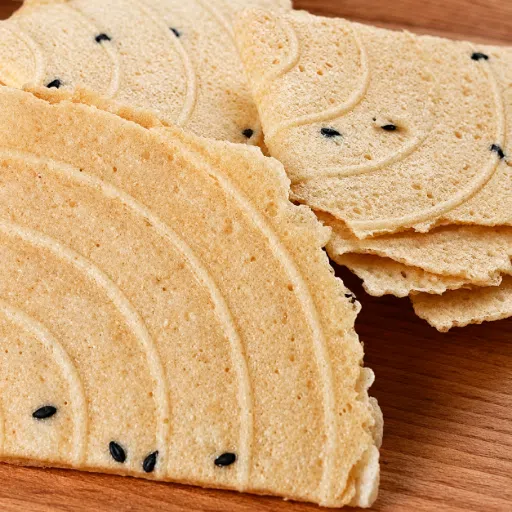
Texture, surface color, and moisture do not act as three independent controls. The same change in sugar, protein, product thickness, baking temperature, air movement, evaporation, or cooling may improve one result while moving another away from its target.
Define crumb, crust, fracture, chew, crispness, tenderness, or resilience in product language and bind the wording to an approved method.
Use an approved visual reference or an agreed instrument method at a fixed surface location and product age.
Separate moisture content from water activity, then specify the sampling location, conditioning state, and test time.
Texture-Color-Moisture Process Window Map
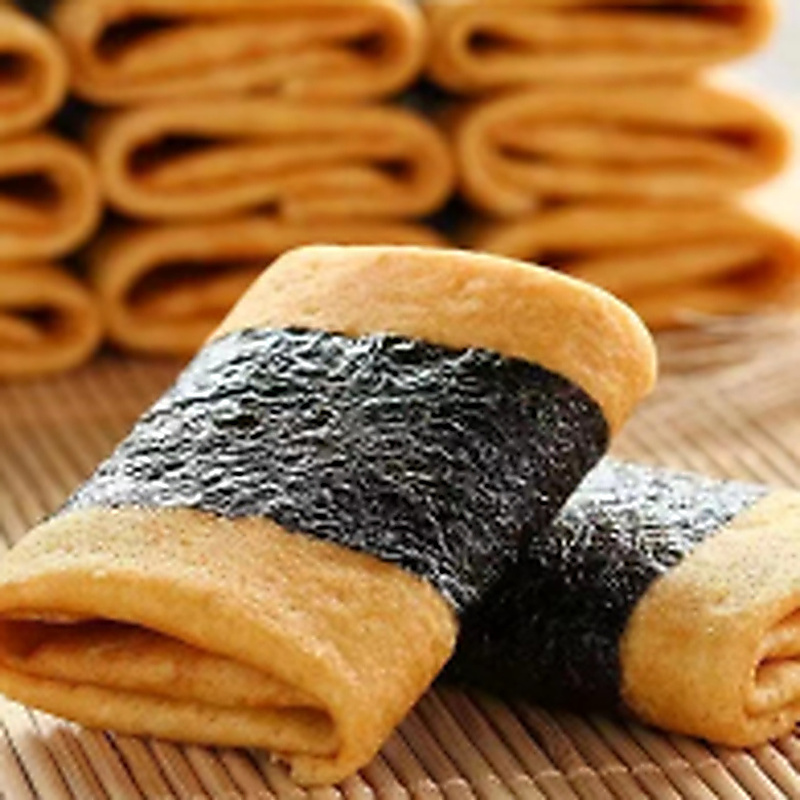
The risk is accepting one result as the whole product target. Because the same 8 input groups can move multiple outputs, UD binds the reference, formula, geometry, heat, dwell, airflow or exhaust, cooling, and packaging to one trial record for the production buyer.
Build the 8-Input Map →Food-qualified planning context
Browning in baking, the Maillard reaction in baking, and moisture in baked goods belong to the same decision context here. FDA’s water-activity distinction and Regulation (EU) 2017/2158 show why the industrial baking process must keep measurement and applicable-market checks separate; baking temperature and time remain product-specific inputs, while industrial bakery equipment remains a later route decision.
One Process Window for Product Quality
The finished-product target becomes a traceable discussion of controllable inputs, observations, equipment boundaries, and acceptance records. In our solution-level review, model capacity, utility demand, configuration, and quoted performance belong in a product-specific engineering discussion.
Approve the product sample or specification that represents the intended crumb, crust, brown color, moisture condition, aroma, and eating texture.
Record the formula class, dough or batter condition, piece mass, dimensions, fermentation status, and any fixed upstream constraints.
Separate the inputs for adjustable heat, dwell, airflow, exhaust, loading, and cooling from conditions that the project cannot control.
Sample texture, color, moisture content, qualified output, and defects under one agreed trial plan.
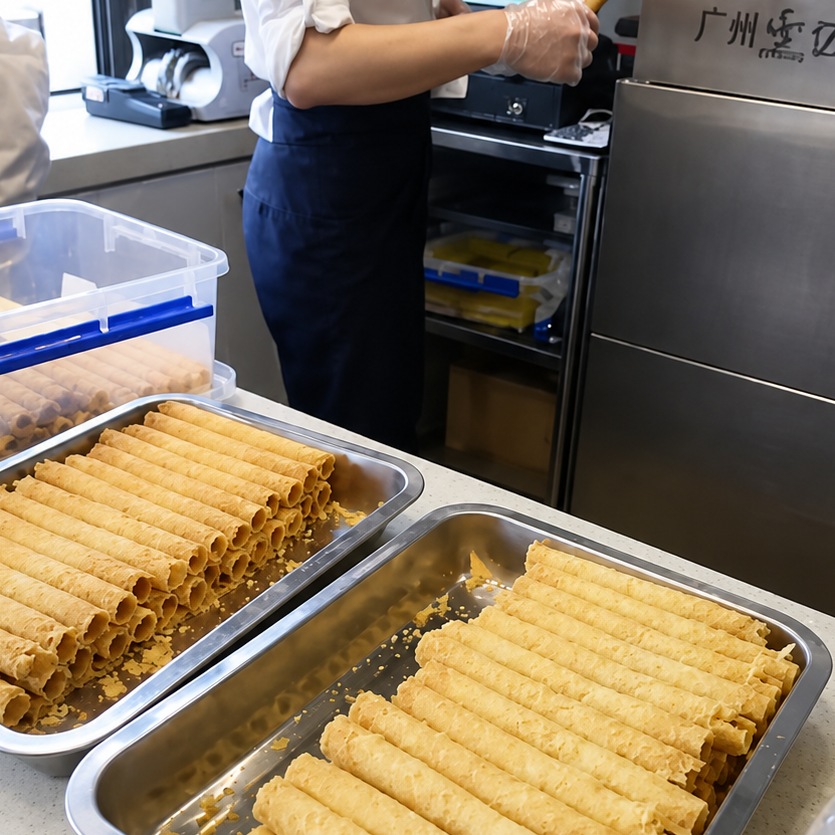
Equipment Scope Binding
Align route with product under test. Add interface, documentation and acceptance boundary in quote.
Formula-to-structure route
For the baker, flavour and structure are tied to food chemistry: the chemical reaction path between sugars and proteins connects reducing sugar and amino acid inputs to browning reactions, while starch gelatinization, protein coagulation, gluten development, yeast activity, and gas release shape the internal structure. We record these as interacting product inputs rather than treating the oven as the only source of variation.
Heat-to-release route
Heat transfer, loading, evaporation, cooling, and post-bake handling determine what reaches the release point. We include the measurement condition because an output observed at the oven exit may differ after packaging or storage.
Why a single setpoint is weak evidence
A product-specific cake study found that temperature and time affected height, moisture, firmness, and color, while springiness did not change significantly under the same comparison.3 A trial therefore needs several linked outcomes, not one universal proxy.
Product Inputs That Define the Target
The input review begins with the facts that impact the structure, water loss, color development and flavor of baked goods. The objective is to ascertain which of the factors and formulations need to be held constant while the equipment route is under test.
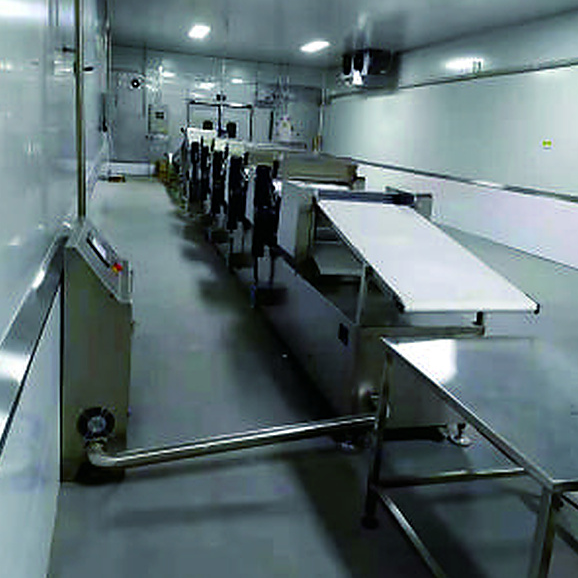
Reference product
Provide an approved sample, specification, or comparison product, together with the conditions under which it was cooled, packed, stored, and evaluated.
Formula class
Record the allowed disclosure level for flour or starch base, reducing sugar, fat, protein, amino acid sources, leavening system, yeast, binders, and added water.
Incoming physical state
State whether the material enters as dough, batter, sheet, deposited mass, wrapped piece, or another formed condition, plus its temperature and hold history.
Piece definition
Give mass, thickness, surface area, shape, orientation, and permitted dimensional variation because geometry changes the heating and evaporation path.
Texture language
Describe the target as tender crumb, crisp shell, layered fracture, resilient bite, short bite, or another product-specific response before selecting a test method.
Color reference
Supply the approved side, region, lighting condition, and reference range for browning so surface variation is not hidden inside one whole-product judgment.
Moisture definition
State whether the release plan uses moisture content, water activity, or both, and identify crust, core, filling, or component sampling positions.
Post-bake condition
Record cooling endpoint, ambient exposure, packaging point, barrier format, storage temperature, and elapsed time before each test.
Formula changes are process changes
A formula change can shift spread, color, texture, and shelf behavior at the same time. Sugar, moisture, mixing time, batch size, floor time, acidic ingredients, and leavening behavior can affect volume, color, and texture together.
- Freeze the new formula revision.
- Identify connected process inputs.
- Recheck the affected output criteria.
Formula, Geometry, Heat and Time Interactions
The baking process integrates food chemistry with transport and timing. The Maillard reaction, caramelization, starch setting, gluten or protein structure, moisture movement, and browning are phenomena that happen simultaneously when foods are subjected to heat and time.3 Consequently, the matrix that follows is used to draft questions and trials rather than prescribe a definitive method.
| Input group | Connected outputs | Information to provide | Trial action |
|---|---|---|---|
| Formula and pH context | Gas release, brown color, aroma, texture and flavor | Formula class, reducing sugar, protein, amino acid, leaven and disclosure limits | Freeze the approved formula state for the comparison |
| Piece geometry | Surface-to-core heating, evaporation, crust and crumb development | Mass, thickness, shape, orientation and variation | Sample the defined locations, not an unspecified average |
| Heat transfer | Surface reaction rate, internal setting, color and moisture loss | Current heating method, controllable zones and observed variation | Compare only within the tested equipment and product route |
| Dwell and loading | Thermal exposure, output basis and product-to-product variation | Line rate, load density, spacing and transient periods | Separate qualified output from startup and planned adjustment periods |
| Airflow, exhaust and humidity | Surface drying, moisture retention, browning and crust condition | Available controls, sensor locations and exhaust condition | Record settings with the sampled result |
| Cooling and packaging | Moisture over time, staling, retrogradation and texture redistribution | Cooling endpoint, ambient exposure, pack time, barrier and test age | Repeat the release check under the intended post-bake condition |
Surface and core
A crisp crust and a tender crumb may require different sampling positions and different acceptance language. We do not collapse those product zones into one unspecified moisture result.
Reaction and structure
Non-enzymatic browning may develop while protein coagulation and gelatinization are still changing the internal matrix. We track the outputs at an agreed point rather than infer structure from appearance alone.
Production and release
Nominal line rate is not a substitute for saleable output. Our trial plan defines which units count, which transient periods are excluded, and which defects remove a unit from qualified output.
Trial Variables and Acceptance Criteria
Each acceptance criterion is drafted with an owner, a required method, a sample location, a state of equilibrium, and a test time. Our values are taken from your agreed-to product specification or the signed joint trial protocol, not from a competitor publication or a generic food science reference.
| No. | Acceptance item | Method and location | Record required |
|---|---|---|---|
| 01 | Product mass and geometry | Buyer-approved method at defined line entry and exit points | Target, observed range and sample count |
| 02 | Texture response | Product-specific preparation, probe or fixture, load range, conditioning and test age | Target band, readings and failure rule |
| 03 | Browning or color | Approved visual reference or instrument at a fixed product face and location | Reference, deviation and defect class |
| 04 | Moisture content | Agreed method with crust, core, filling or component sampling plan | Target band, position and elapsed time |
| 05 | Water activity | Agreed instrument and equilibrium condition when the quality plan requires it | Criterion, sample temperature and result |
| 06 | Qualified output | Joint saleable-product rule during a timed trial | Accepted units, total units and exclusions |
| 07 | Cooling endpoint | Approved temperature or handling rule before packaging | Endpoint, time and ambient condition |
| 08 | Defect categories | Approved visual definitions at trial and repeat-run checkpoints | Count by named category and disposition |
Moisture content and water activity are not interchangeable
FDA guidance defines water activity from equilibrium vapor pressure and notes that it changes with temperature; some ingredients bind water molecules, so bound water also makes the measure different from total water content.1 The release plan must name the measurement and its conditions because moisture content alone does not define microbial growth risk or product release.
Texture method fit
Instrument choices include compression, fracture, imaging, near-infrared, hyperspectral, ultrasound, and other methods, each with limits and product-specific applications.6 We ask the quality owner to approve the method that represents the actual buying decision.
Spatial sampling fit
Products with a crust/core gradient, filling, coating, or rolled layers need named sample positions. We record the position so a local wet or dry zone is not hidden by a blended result.
Product Trial and Release Evidence
An accepted sample begins an acceptance record; it is not the end of the engineering effort. Our record embraces product state, machine inputs, sampling, cooling, packing, test age, qualified output, and deviations.
Your product and quality owners approve the reference, test method, target band, sample location, exclusion rules, and final release criteria.
The record captures the agreed equipment and process inputs used for the test, along with the defined observations and any adjustment made during the run.
Both sides define which units count as qualified output and how startup, planned adjustment, stoppage, and rejected product are treated.
Each deviation is compared against the approved criterion, connected variables are identified, and affected items return to the agreed test path.
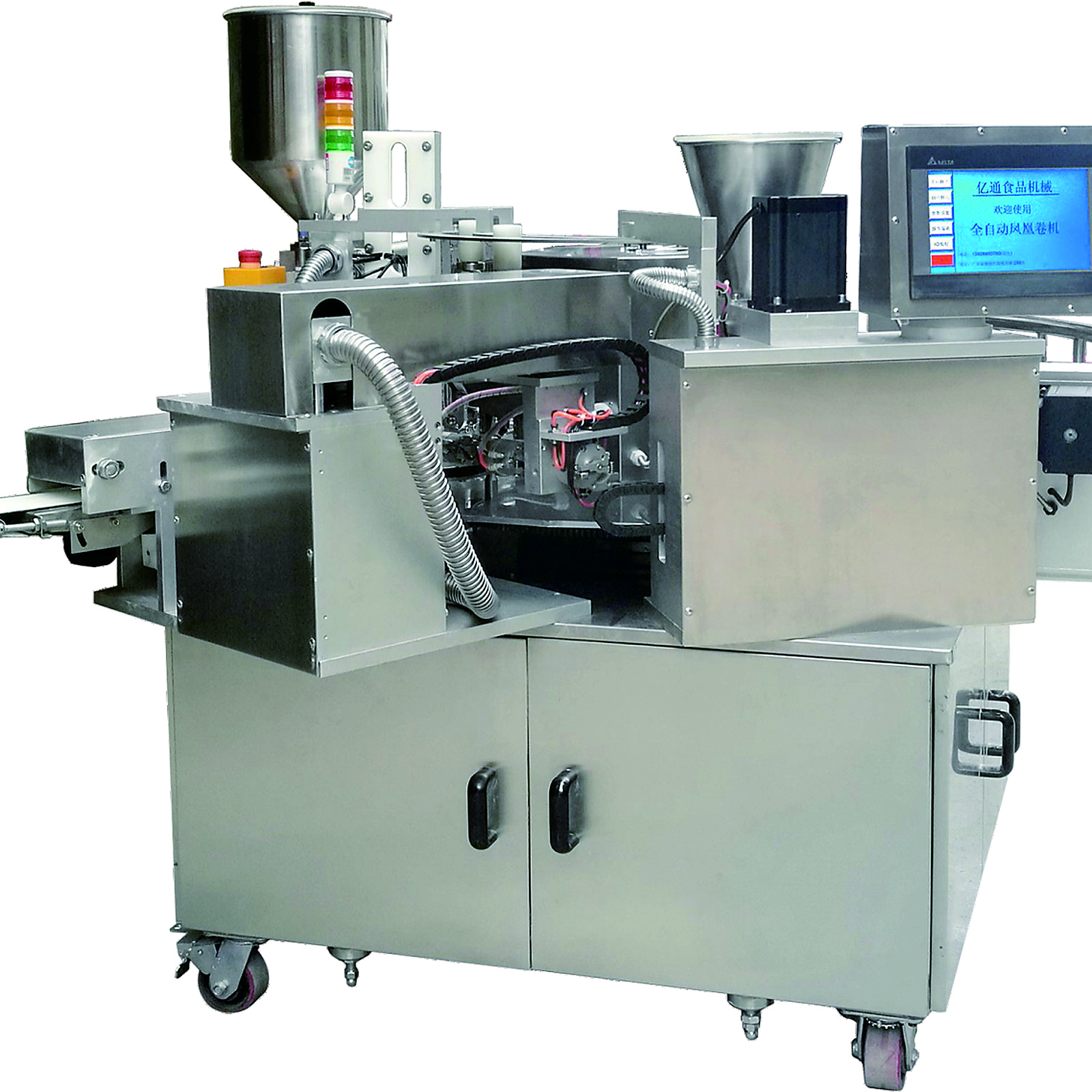
Trial Record Fields
- Reference product and formula revision
- Piece mass, dimensions and orientation
- Incoming product temperature and hold time
- Zone, airflow, exhaust and dwell inputs
- Line rate, spacing and load density
- Cooling endpoint and ambient exposure
- Packaging point and barrier condition
- Storage temperature and elapsed test age
- Texture method and sample preparation
- Color reference and sampling face
- Moisture method and spatial location
- Qualified-output and defect counts
Applicable-market control
For covered products and operators in the European Union, Regulation (EU) 2017/2158 establishes acrylamide mitigation measures and monitoring through production sampling and analysis. A color result is not a substitute for that contaminant check; the target market and product category decide whether the checkpoint applies.
From Product Target to Equipment Route
The product target and existing-line boundaries define which project route belongs in the review.3 This prevents a catalogue choice from ordering process control beyond the evidence available to support texture, browning, moisture, line balance, and release.
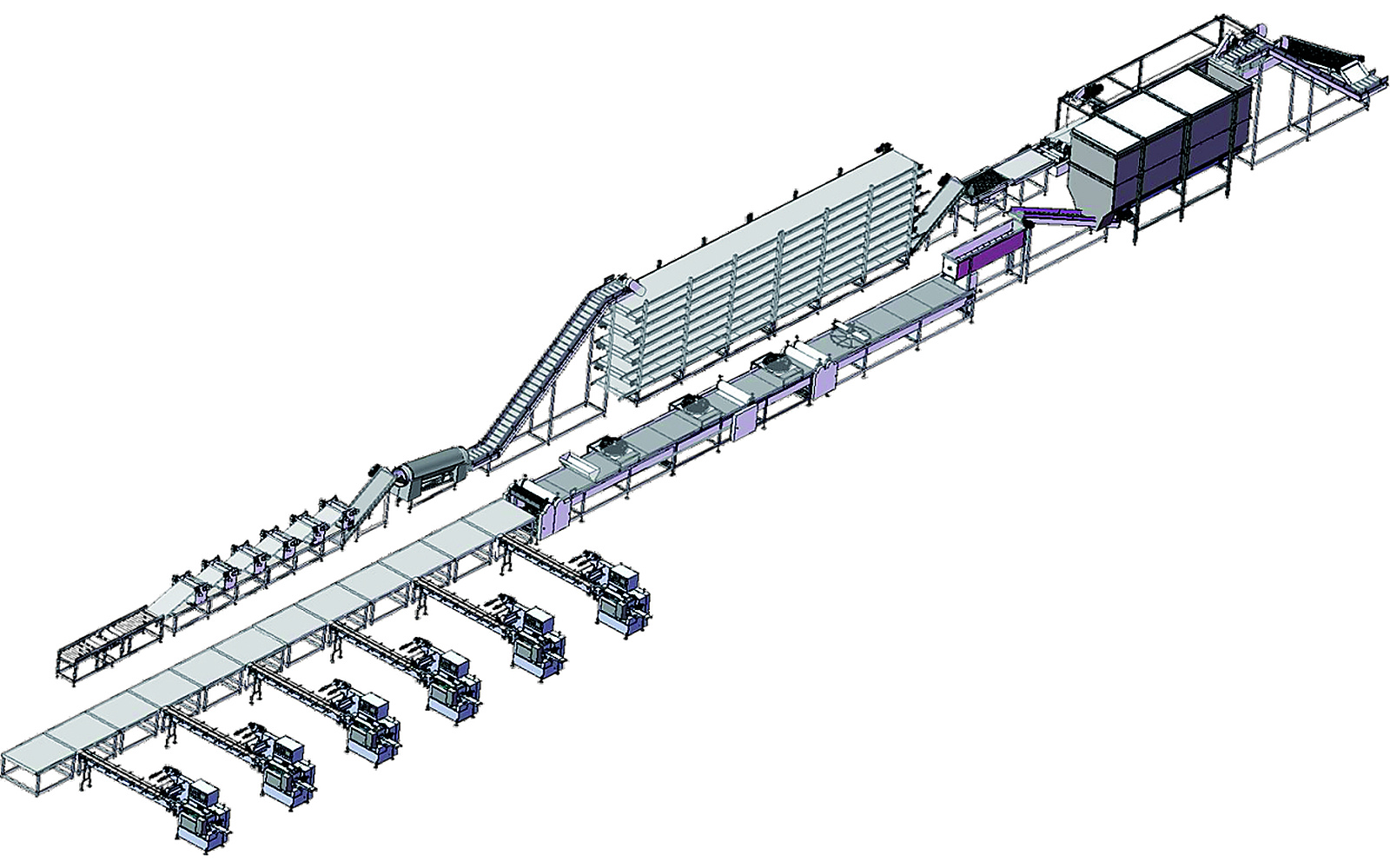
Set the target process.
Define the approved product reference, the vocabulary of the result, the method, the sample, test age, and the sampling face.
Document the process as is.
Record the formula, the geometry, and the feeding, mixing, forming, and heating, as well as cooling and packing.
Differentiate fixed and adjustable inputs.
Show site constraints and interfaces, utilities, output basis, and variables during the trial.
Draft the trial plan.
Describe the samples, methods, timing, and temporary exclusions, and define the sign-off owner for each result.
Review the equipment route.
Assess the tested process and family of equipment without drawing any inferences as to equipment model compatibility.
Bind the quote.
Integrate configuration, deliverables, schedule, interfaces, and acceptance into a single written project definition.
Food Automation Context
Guangzhou Yitong Food Machinery Equipment Co., Ltd. was established in 2003 and focuses on food-production automation research and development. UD has invested nearly RMB 200 million in the Xinyu High-tech Development Zone and has built two major production bases.
Established in 2003
The company develops automation technology for food-production applications and uses that focus as the starting point for project discussions.
Two production bases
The company profile identifies two major production bases associated with the Xinyu investment program.
Nearly RMB 200 million invested
The company profile places this investment in the Xinyu High-tech Development Zone.
Independently Developed Series
Fully automatic egg roll machines
The fully automatic egg roll machine series was independently developed by the company.
Fully automatic phoenix tail roll machines
The fully automatic phoenix tail roll machine series was independently developed by the company.
Invention-patent context
The two independently developed series hold multiple invention patents. Product-specific patent identifiers and claim scope belong in the relevant verified product documentation.
Baking Process Analytical Tools
SYSTEM RESOURCES
Trial, Integration and Purchasing Questions
It means the approved product response expressed in observable or measurable terms, such as crumb tenderness, crust crispness, fracture, chew, resilience, or layer separation. The trial must also state the method, preparation, sample position, conditioning, and test age.
They share inputs such as formula chemistry, geometry, heating, dwell, airflow, evaporation, cooling, and packaging. Moving one input may change several results in different directions, so one output is not a reliable substitute for the complete target.
Freeze the formula revision, incoming state, piece mass and geometry, reference product, target methods, line-loading basis, cooling rule, packaging condition, and elapsed time before testing. Record which process settings may be adjusted during the run.
Operator discussions often point to loading, circulation, and calibration when top-to-bottom browning differs. For a production trial, map product position and load density, then sample color at fixed locations before assigning the issue to formulation.
Moisture content measures the amount of water under a stated method, while water activity describes the equilibrium vapor-pressure relationship at a stated temperature. The quality plan decides whether it needs one or both; the values are not interchangeable.
Record the cooling endpoint, ambient exposure, time to package, barrier format, storage temperature, and elapsed time before every release measurement. These conditions are especially important when the target includes crispness, tenderness, staling, or shelf life.
Approve the product face, region, lighting or instrument method, reference range, sample age, and defect categories. If the target market and product are covered by a thermal-contaminant rule, keep the required chemical monitoring separate from visual color acceptance.
Use a method that represents the product and buying decision, then lock preparation, fixture or probe, loading range, position, conditioning, replicate count, and test age. A method suited to bread crumb does not automatically represent a crisp rolled shell or a filled product.
Revalidate when the change may affect reaction, gas release, water binding, gluten or starch structure, color, moisture retention, or post-bake behavior. Start with the affected rows of the acceptance matrix rather than repeating unrelated checks.
Agree on accepted units divided by total trial units, then name startup, adjustment, stoppage, planned sampling, and rejected-product exclusions. The same rule must appear in the trial record and the equipment acceptance boundary.
Include feeding or mixing, forming, transfer, baking, cooling, handling, inspection, packaging, controls, utilities, and data exchange. Mark each interface as supplier scope, buyer scope, or separately coordinated work before quotation comparison.
Provide the product family, reference sample, formula class, piece mass and dimensions, current process, target texture, color and moisture methods, required output basis, site utilities, and upstream and downstream boundaries. Attach existing layouts or product specifications when available.
For planning, allow up to 35 days; UD confirms the actual schedule in the quotation. Configuration, trials, interfaces, documents, buyer approvals, and site-service scope determine the final project sequence.
Yes. Send the product and process inputs through the project brief; the engineering review does not require a public product-card URL, and unfinished routes remain unlinked until their destination is verified.