Factory troubleshooting for formed batter products
Waffle and Pancake Batter Problems, Traced Before You Change the Line
Waffle and pancake batter problems rarely reside in the mixing tank. To help localize the symptom within the process, this guide follows the path of the formula, mixing, holding, depositing, baking, release, cooling, and packaging, and suggests the next controlled test prior to a process change or equipment purchase.
Your review begins with the product target and the first point where the defect becomes visible. General company background stays separate from evidence about your specific process, so the work starts with records rather than assumptions.
Send Your Batter and Texture Diagnostic Brief
Begin with the defect, product format, current line, and context of throughput and the tests conducted. Use the contact window to share the records you have.
6 diagnostic zones
1-variable screening
interaction-aware escalation
method-bound measurements
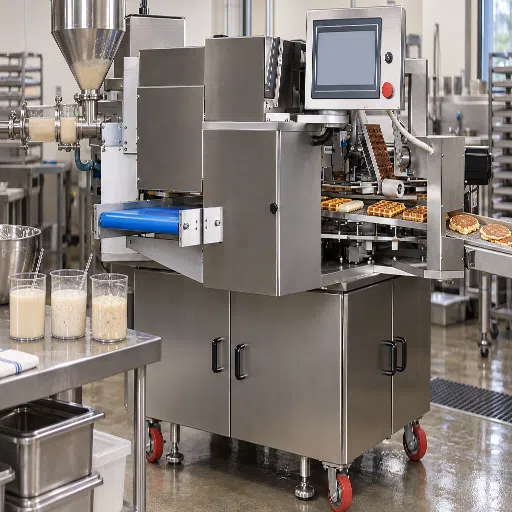
The 6-Zone Batter-to-Texture Interaction Map
When a team changes water level, mixing time, and bake setting in one trial, it cannot tell which change affected the final product texture. The 6-Zone Batter-to-Texture Interaction Map separates the process into interrelated zones, identifies where the first problem appears, and defines the first measurable value to hold constant.
01
Formula and raw material
02
Mixing and aeration
03
Rest and holding
04
Deposit and fill
05
Bake and release
06
Cool and pack
Hidden Bottleneck Route
Trace forward from the last stable record and backward from the first visible defect.
Batter spreads farther than the approved deposit footprint
First zone to inspect
Zone 1, formula
Interacting zones
Zones 2, 3 and 4
Freeze before the test
Batch identity, method-bound consistency, hold time and deposit mass
Next controlled comparison
Repeat one approved water or solids condition while all process settings remain fixed
Deposit holds its shape and does not fill the cavity
First zone to inspect
Zone 3, holding
Interacting zones
Zones 1, 2 and 4
Freeze before the test
Sample temperature, elapsed hold time, mixing history and aeration state
Next controlled comparison
Compare matched samples at two recorded hold points
Visible lumps remain after mixing
First zone to inspect
Zone 2, mixing
Interacting zones
Zones 1 and 3
Freeze before the test
Addition order, mixing tool, speed, time and raw-material lot
Next controlled comparison
Repeat the same formula with one authorized addition-order change
Finished pancake is dense or rubbery
First zone to inspect
Zone 2, mixing
Interacting zones
Zones 1, 3 and 5
Freeze before the test
Mix time, shear condition, rest time, deposit mass and bake record
Next controlled comparison
Screen mixing exposure while the formula and bake profile remain fixed
Waffle exterior does not remain crisp
First zone to inspect
Zone 6, cooling and packaging
Interacting zones
Zones 1, 5 and 6
Freeze before the test
Release time, cooling time, product temperature and pack condition
Next controlled comparison
Compare texture before packing and after a fixed cooling interval
Waffle sticks during release
First zone to inspect
Zone 5, bake and release
Interacting zones
Zones 1, 4 and 5
Freeze before the test
Plate condition, release practice, deposit mass, bake state and formula lot
Next controlled comparison
Change only the authorized release or bake factor after cleaning status is confirmed
Color is uneven across one plate or lane
First zone to inspect
Zone 5, baking
Interacting zones
Zones 4 and 5
Freeze before the test
Deposit distribution, position map, actual thermal reading and cycle time
Next controlled comparison
Rotate or swap a controlled position without changing formula
Piece weight varies while the tank appears stable
First zone to inspect
Zone 4, depositing
Interacting zones
Zones 2, 3 and 4
Freeze before the test
Tank level, batter state, deposit command, nozzle condition and measured mass
Next controlled comparison
Compare commanded deposit with collected mass by position
Texture drifts late in the run
First zone to inspect
Zone 3, holding
Interacting zones
Zones 2, 4 and 5
Freeze before the test
Time-stamped samples, temperature, aeration proxy and equipment state
Next controlled comparison
Compare early and late samples under the same measurement method
Surface tears although color looks acceptable
First zone to inspect
Zone 5, release
Interacting zones
Zones 1, 4 and 5
Freeze before the test
Release timing, contact surface, deposit coverage and formulation lot
Next controlled comparison
Hold bake and formula constant while one release condition is screened
Product is acceptable at release but soft at dispatch
First zone to inspect
Zone 6, cool and pack
Interacting zones
Zones 5 and 6
Freeze before the test
Cooling duration, core or surface temperature, pack timing and barrier condition
Next controlled comparison
Sample at release, after cooling and after the defined packed hold
One shift records a different consistency for the same batch
First zone to inspect
Measurement system
Interacting zones
Zones 2 and 3
Freeze before the test
Method, operator, temperature, location, delay and sample history
Next controlled comparison
Measure one split sample with the same written method
Batter Consistency, Mixing and Holding Controls
A viscosity number moves between shifts when readings are taken without a fixed cup or instrument, sample temperature, sampling point, delay, shear history, and aeration state. That number appears precise, but it cannot explain batter inconsistency without its measurement method and sample history.
Thick or slow-flowing
Start with raw-material identity, hydration sequence, sample temperature and elapsed holding time. Record the approved consistency method before comparing batches, because a warmer sample or a different shear condition can change the apparent result.
Thin or spreading
Check formula execution, addition records, separation, aeration loss and temperature before adding solids. Match the sampling location and delay so a tank-top sample is not treated as equivalent to batter at the deposit point.
Lumpy batter
Inspect addition order, wetting time, screen or sieve condition and mixing geometry. The controlled comparison changes one authorized preparation step while raw-material lot, formula, temperature and hold remain fixed.
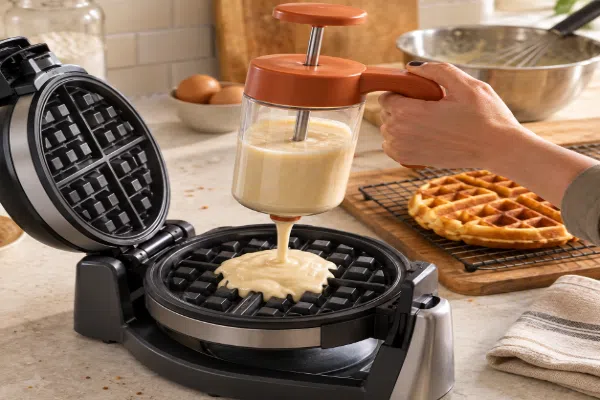
Dense or rubbery
Overmixing may be one contributor, but the symptom does not isolate it from formula, rest, deposit or bake. Screen mixing exposure first and use product density, piece weight, structure and the full bake record as the response set.
Holding drift
Time-stamped samples matter more than labels such as early and late. Pair consistency, temperature and aeration state with a fixed sampling point, then compare the product response at the same deposit and bake conditions.
Shift disagreement
Split-sample work distinguishes process drift from measurement variation. Align the method, operator steps and reporting units before a formula or equipment change is authorized.
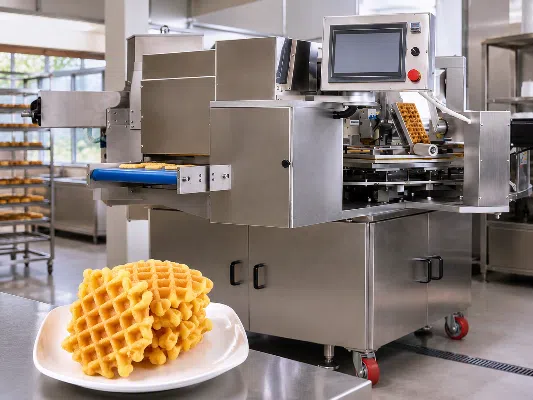
Depositing, Baking, Release and Cooling Failure Patterns
Texture becomes a line problem when the response is observed after many unrecorded transitions. A position map and time sequence will not allow a defect at release to be blamed on the last machine action.
Convert appliance words into line variables. Reports that a waffle iron sticks, a waffle maker browns unevenly or operators cannot make waffles consistently should become records of plate position, surface condition, release timing, deposit mass, temperature and cycle time. If a topping is added after baking, hold its moisture and application timing outside the bake-trial variable set until the base product is stable.
Process Logic & Trade-offs
The common assumption: more heat fixes softness. The trade-off: a longer or hotter bake can change color or edge condition while leaving a cooling or packaging bottleneck untouched.
The wrong call is to raise the whole-line setting before locating the first failed stage. The right call is to compare texture at release, after controlled cooling and after the defined packed hold.
Experimental Baseline
The published waffle work controlled deposit volume, plate temperature, baking time, release conditions and a 30 min cooling interval for its experimental formula.1
That design lesson, rather than its exact settings, is the basis of the production trial.
Failure Pattern
Diagnostics
Diagnostics
Navigate through common line variables, required evidence, and safe corrective moves.
Measurable Production Control Points
Measurement should reduce uncertainty rather than increase it. Assign each metric one written method, a stable unit, and a fixed sampling location, then link its value to the batch and timestamp.
Technical Reference
Batter is non-Newtonian, so its apparent viscosity depends on the measurement method. A peer-reviewed waffle study bound its investigation to a specified flow-cup method and documented the preparation conditions.1 A vendor-authored Food Engineering article describes the impact of temperature, shear, and inline versus offline measurements; its product performance and cost claims are not referenced here.4
Batter Measurement Record Builder
Create a completeness check for method, sample and history fields before two readings are compared. It does not set a universal viscosity target.
Production-Line Diagnosis and Equipment Fit
The risk associated with procurement increases when a process problem is transferred into a machine specification. There are three separate decision paths which prevent a maintenance condition, operating-window issue, or capability boundary from becoming a full-line replacement project. This is also the reason one inconclusive screen does not establish equipment scope.
Path A
Process-control correction
Use this path when the equipment repeats its command but formula execution, mixing history, holding, cooling or packaging records have moved. The output is an approved process trial, not a machine quotation.
Path B
Maintenance or parameter action
Use this path when commanded and actual deposit, thermal, release or timing behavior disagree. The output is a verified condition check or parameter window, with the product formula held stable.
Path C
Capability-boundary review
Use this path when the required geometry, repeatability, handling sequence or production objective sits outside the confirmed line envelope. The output is a project brief for modification, subsystem or line evaluation, not a preselected machine.
Evidence Pattern Evaluation
| Evidence pattern | Likely path | What does not follow | Next record |
|---|---|---|---|
| Same equipment state, different formula or hold history | Process-control correction | A new depositor is not automatically justified | Matched batch and hold comparison |
| Command is stable, collected deposit is not | Maintenance or parameter action | A formula change is not the first answer | Position-coded command versus mass check |
| Texture fails only after packing | Cooling or packaging investigation | Higher baking energy is not always the right answer | Timed unpacked and packed texture checks |
| Required response cannot be reached inside an approved operating window | Capability-boundary review | Replacement scope is not known yet | Product, throughput, geometry, utilities and acceptance brief |
REVIEW
How We Work on Food-Automation Reviews
UD Company was established in 2003. The company develops automation technology for food production from the High-tech Development Zone of Xinyu City, Jiangxi.
Company size and topic-specific focus answer different buyer questions. Our answer shows how the buyer’s need connects to verifiable facts before a technical review.
This section explains who UD Company is; your diagnostic brief shows whether the process or equipment problem has a scope clear enough for a review and proposal.
01 / 04
Batter and Texture Diagnostic Tools
Batter Measurement Record Builder
Check whether two consistency or apparent-viscosity readings carry enough method and sample context to be compared. This tool does not create a target value and does not store or send your entries.
Access Tool
Controlled Trial Escalation Checker
Decide whether a run belongs in one-factor screening, must pause for missing controls, or is ready for an authorized interaction study. The tool does not design the experiment or approve a food-safety change.
Access Tool
Waffle and Pancake Defect Triage Router
Route an observed defect to the first zones worth checking. The output is a starting point for evidence collection, not a root-cause diagnosis.
Access Tool
FAQ: Waffle and Pancake Batter Troubleshooting
Comprehensive diagnostic approaches to resolve consistency, spreading, and texture anomalies in commercial batter production. Use data-driven screening and standardized holding records to optimize output quality.
Why is my pancake batter unexpectedly thick?
Start with formula execution, ingredient identity, addition order, hydration time, sample temperature and elapsed holding time. Record the consistency method before adjusting water or solids. A thick reading taken later, colder or with a different method is not directly comparable to the approved baseline.
Why is my waffle batter too thin or spreading too far?
Check whether the formula, temperature, aeration state, holding time and sampling point match the baseline. Then compare deposit mass and footprint. Correcting the formula from an unmatched tank-top reading can move the problem into filling, color or release.
Do lumps mean the batter needs more mixing?
Not necessarily. Lumps can point to addition order, wetting, raw-material condition, screening or mixing geometry. More mixing may change aeration or structure, so first repeat the preparation record and change only one authorized step.
Why are pancakes dense or rubbery after the batter looked acceptable?
The visual appearance of batter does not isolate mixing exposure, rest, deposit load or bake state. Use the same formula and bake record while screening one preparation variable, then compare product density, weight and structure rather than relying on appearance alone.
Why are waffles sticking to the plates?
Sticking is not always a release-agent problem. Record plate or surface condition, cleaning status, release practice, deposit coverage, bake state and formula lot, then test one factor at a time. The peer-reviewed waffle source also identifies both ingredient and process conditions as relevant.
Why are my waffles not crispy after packaging?
Measure at three points: release, the defined cooling interval and the packed hold. If texture is acceptable before packing, investigate cooling time, product temperature, environmental exposure and barrier condition before increasing bake energy.
Can one viscosity target be used for every waffle and pancake formula?
No. Apparent viscosity depends on formula and on the method, temperature, shear condition, sampling point, delay and aeration state. Build a method-bound approved range for the specific product and process; do not transfer a number from another method or study.
Should we change only one factor at a time?
Use one-factor screening when the baseline is repeatable and traceability is the main need. If the evidence still points to interactions, move to an authorized multifactor design with defined factors, levels, responses, replication, stop rules and rollback. NIST notes that one-factor-at-a-time work cannot reveal interactions.
When should an equipment review begin?
Begin after the defect and target response are defined, the measurement method is stable, and process, maintenance and post-bake causes have been separated. The equipment brief should include the current line, product geometry, throughput context, utilities, interfaces and acceptance respons