Waffles vs pancakes are best compared through recipes, cooking surfaces, serving plans, and preferred textures. Waffles versus pancakes is not really a contest between two fixed foods. Pancakes and waffles are similar in their ingredient families, but they need not be the same two types of breakfast. The finished piece can be round, square, or another shape; batter is not dough, and a pancake can also serve as a foldable sandwich base when fillings are part of the plan. One breakfast may favor a light pancake, while another may prefer a waffle with grooves for fruit and syrup. The relevant question isn’t “Which one wins?” but rather “What’s my objective today?”
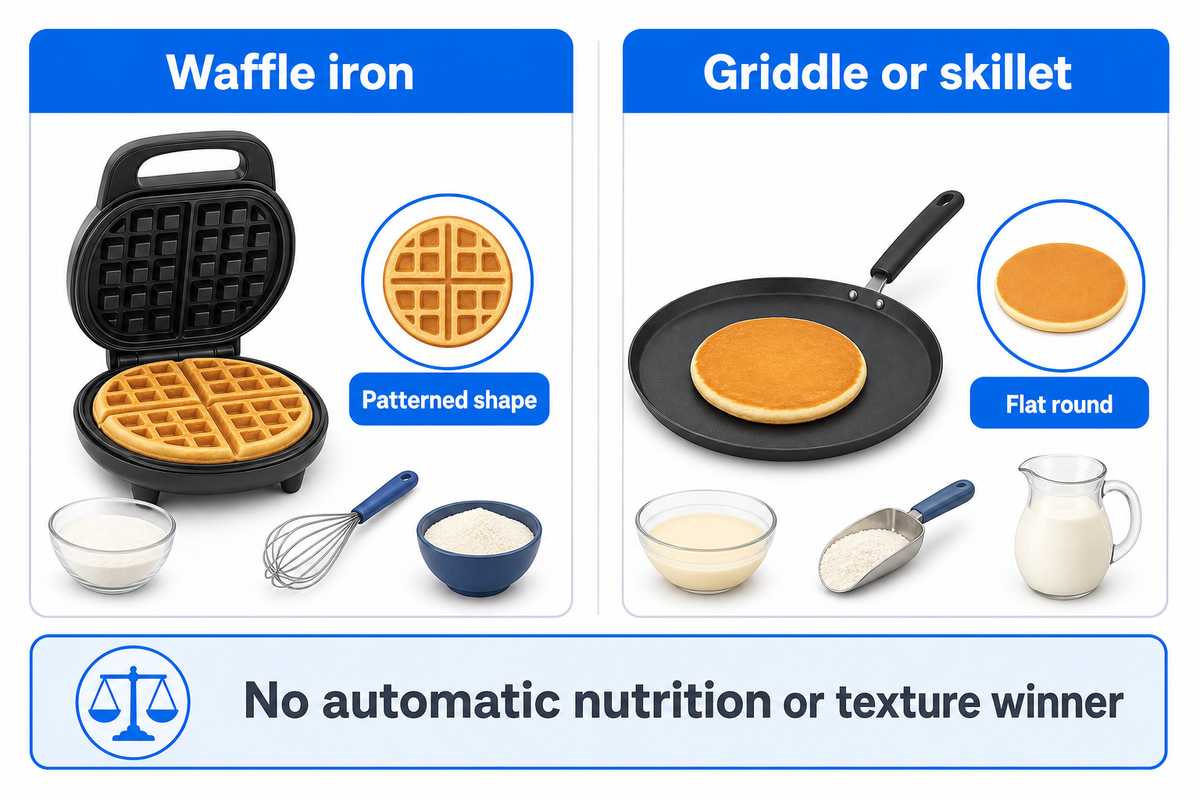
The short answer: waffles and pancakes often begin with familiar ingredients, but the recipe and cooking method can lead them in different directions. The waffle iron creates a patterned shape; the griddle creates a flat round. Either can be tender, soft, crisp at the edges, or less successful than planned if the recipe and handling are mismatched. There is no automatic nutrition or texture winner.
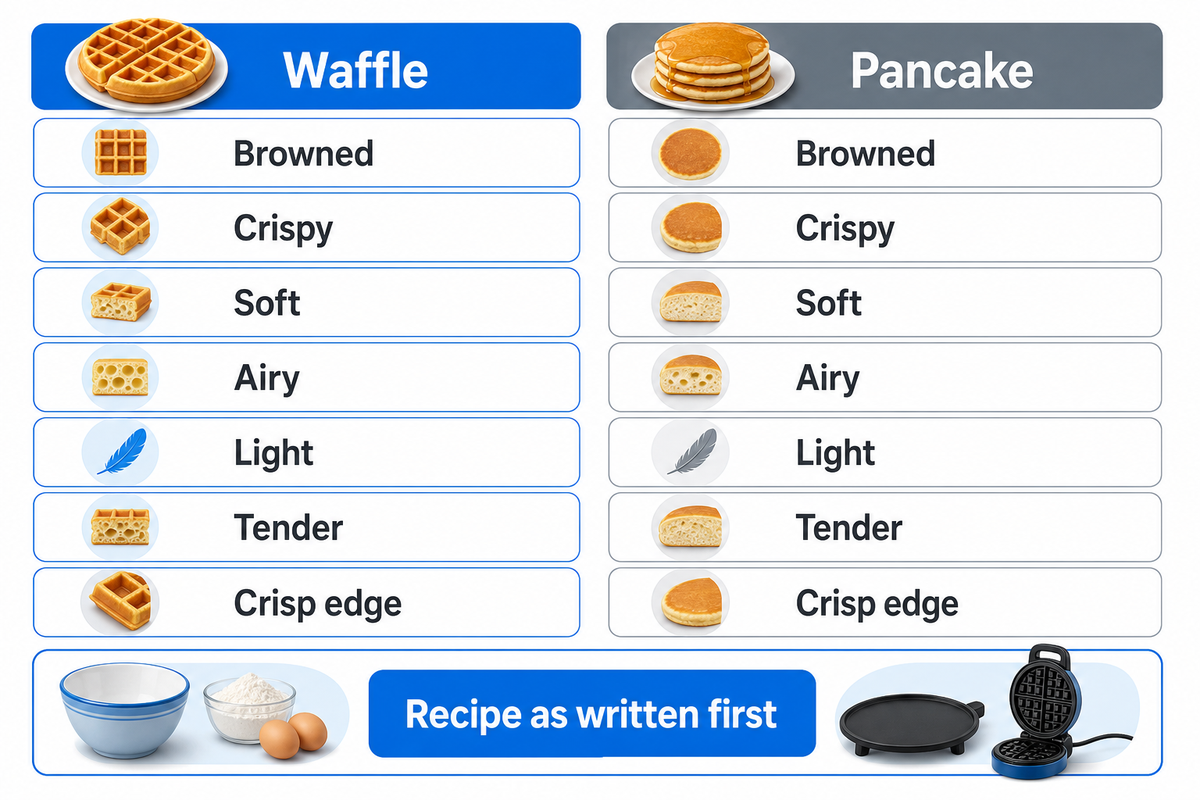
Waffles vs Pancakes at a Glance
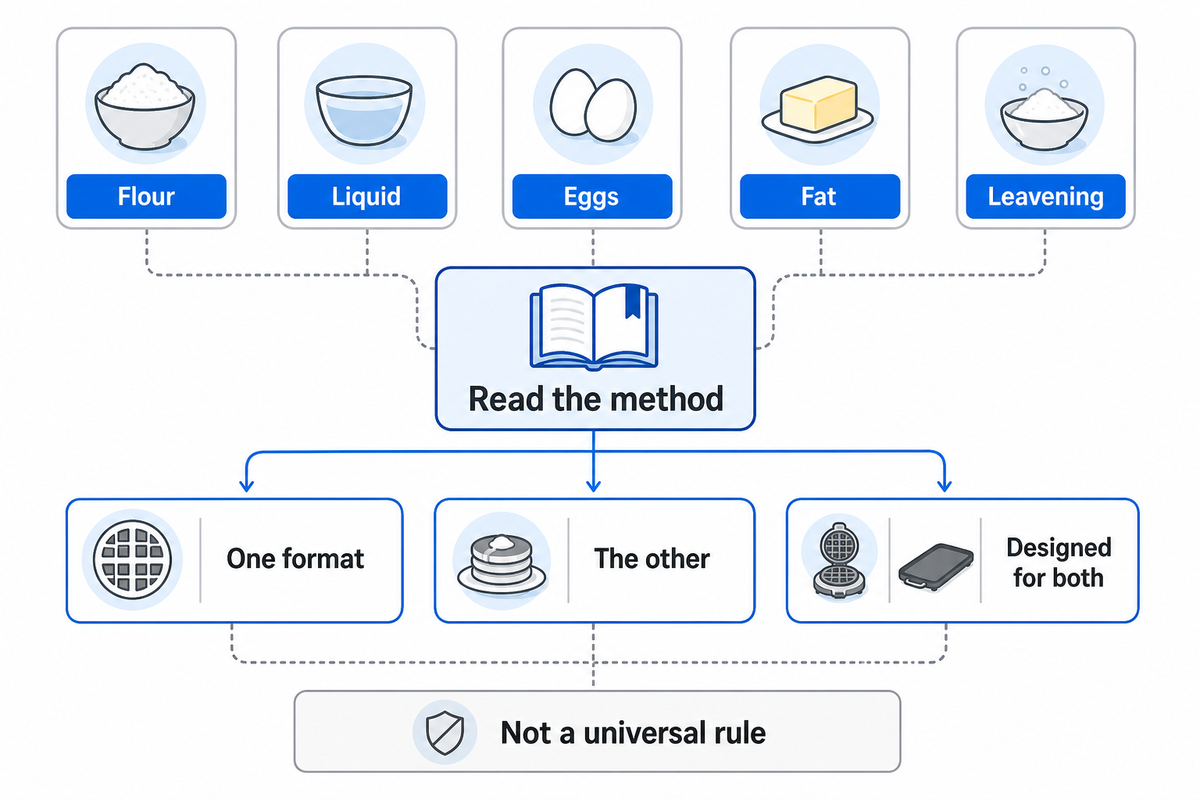
When considering the comparison, it’s helpful to think about tendencies rather than absolutes. The cited waffle and dual-format recipes include flour, a liquid, egg, fat, and a leavening agent. The University of Illinois Extension cites this as a common starting point for waffle batter. In contrast, a recipe published by the North Carolina Cooperative Extension is designed to make either pancakes or waffles. (N.C. Cooperative Extension) This valuable insight is that many home recipes use flour, liquid, eggs, a fat, and a leavening ingredient. That’s a useful reminder: Names on the plate don’t define a single batter formula.
Comparison type
Waffles
Pancakes
What shape is the cooking method built to make?
The iron forms a patterned, grooved piece between its plates.
On a griddle or skillet, a flat, round or free-form piece cooks one side at a time.
What texture might a reader be seeking?
Often a browned, crispy exterior, with grooves and an interior that may stay soft or airy depending on the style and recipe.
Often a soft, tender, fluffy, or thin result, depending on the batter and cooking method.
What is the serving advantage?
Grooves can hold toppings, sauces, fruit, or savory additions in a structured way.
The flat surface is easy to stack, spread, fold around fillings, or make in varied sizes.
What is the main caution?
Do not assume an iron alone creates the intended result; batter, heat, timing, and the style of waffle all matter.
Do not assume every pancake batter will behave the same way in a waffle iron or on a different pan.
What is the ingredient starting point?
Many recipes begin with flour, liquid, eggs, fat, and leavening, but the formula still belongs to its recipe.
Many recipes begin with a similar foundation; some are intentionally written for both formats.
How does heat meet the batter?
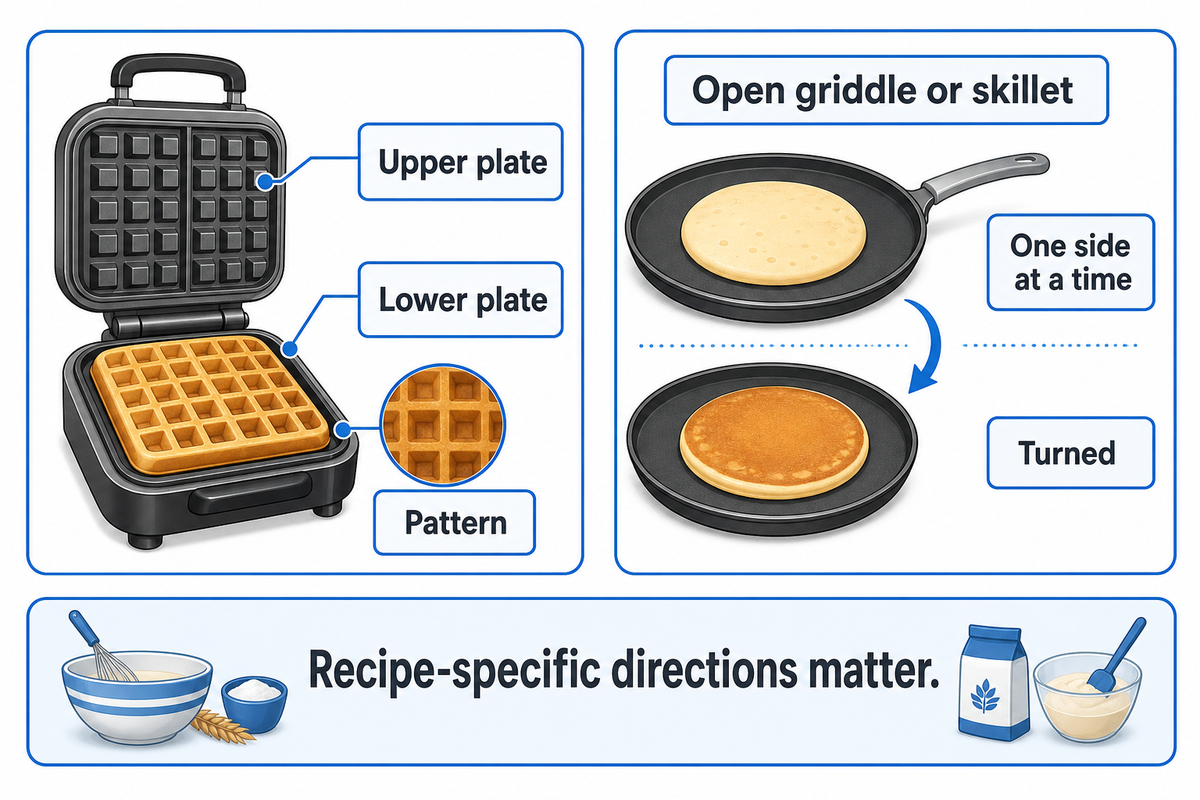
An iron encloses the batter between upper and lower plates.
An open griddle or skillet cooks one side before the pancake is turned.
How fixed is the style target?
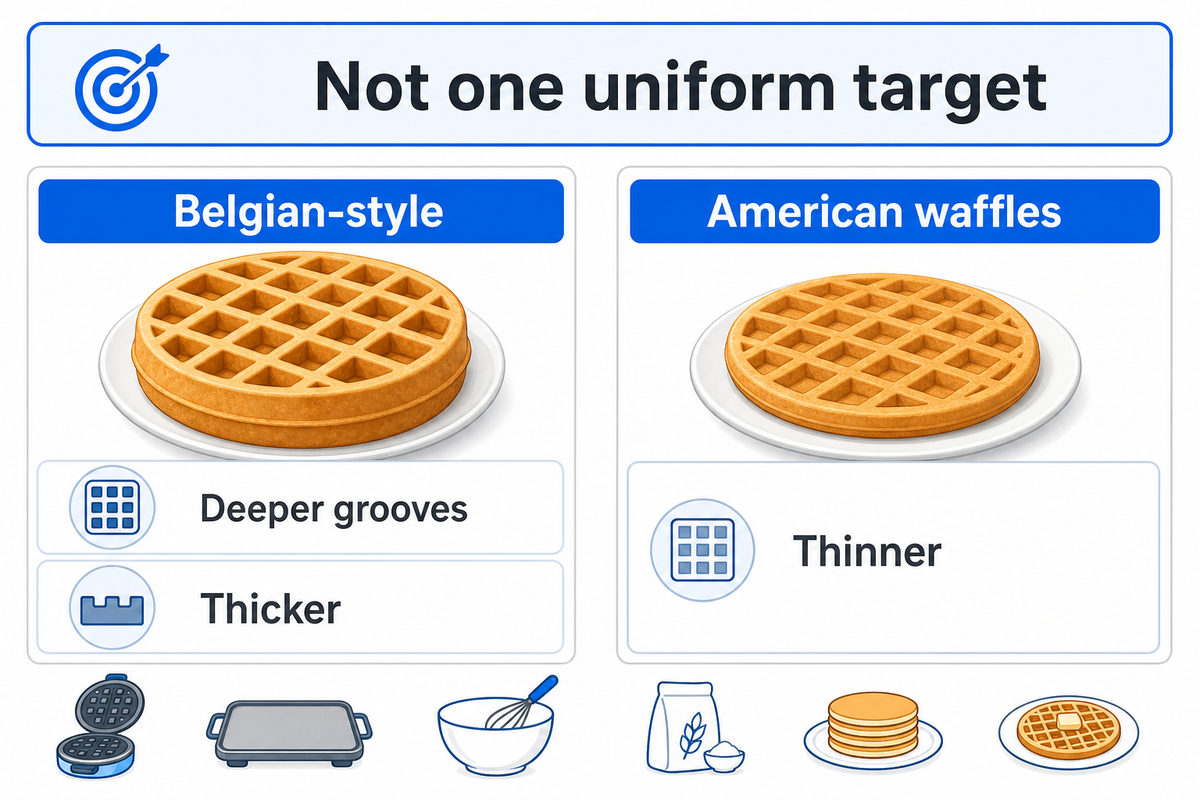
Not very: Belgian-style, thinner American, and specialty waffles can have different groove depths and texture goals.
Not very: pancakes can be thin, tender, fluffy, or made in different diameters.
What happens when a recipe is switched?
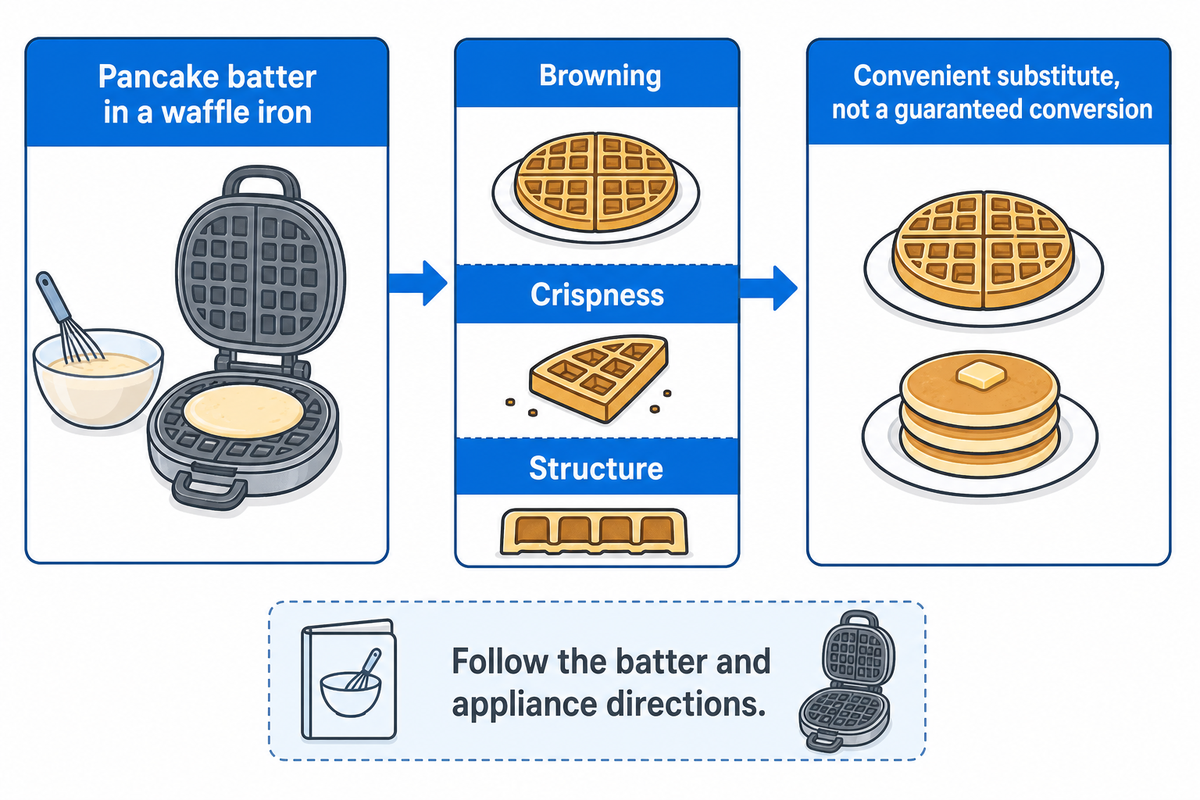
Pancake batter may cook in an iron, but it may not deliver the browning or structure expected from a waffle recipe.
Waffle formulas may not behave as intended on a griddle without recipe-specific directions.
How should nutrition be compared?
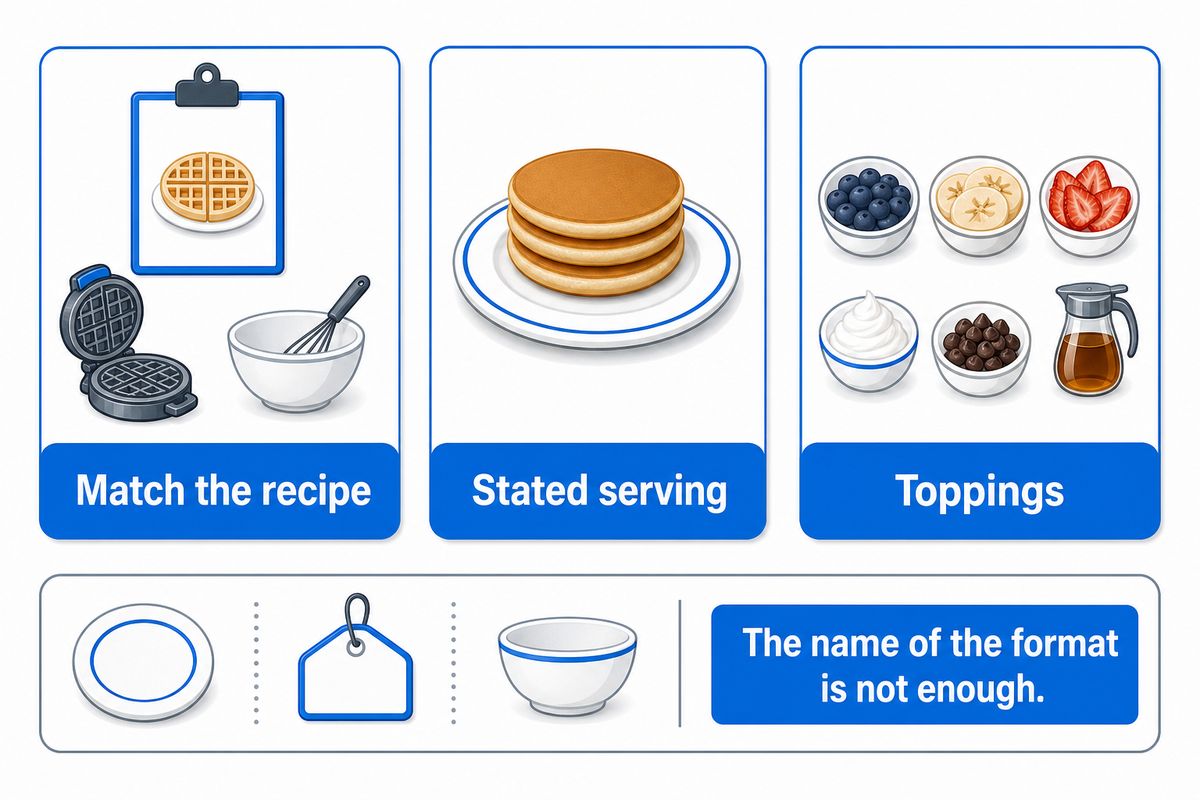
Match the recipe, stated serving, and toppings before drawing a conclusion.
Use the same like-for-like comparison; the name of the format is not enough.
Batter: Similar Starting Points, Not a Universal Rule
While you can argue that waffle batter is pancake batter with more of one ingredient, that may only hold true for some recipe families. It’s a rule that’s too broad and too flexible to be dependable. For a recipe, you have to look beyond the ingredients listed and read the method to see whether it is written for one format, adjusted for the other, or designed for both.
What can vary? How much fat, sugar, liquid, leavening, flour, and how a batter is mixed can affect how it spreads, sets, browns, and feels when consumed. King Arthur Baking includes eggs, butter or oil, milk, flour, salt, and leavening in their waffle suggestion. (King Arthur Baking) Their pancake-mixing comparison shows why a cooking label can’t provide all the directions: gently stirred batter and batter mixed vigorously for two minutes resulted in different described outcomes.
That doesn’t transform one mixing instruction into a universal formula. The recipe can use a different flour, a different leavening system, or a different target style. If a recipe says it’s for waffles, follow its intended method first. If it says it works for both, consider that a recipe-specific allowance rather than that every pancake and waffle batter is interchangeable.
Shape and Heat Contact: Why the Cooking Surface Matters
The cooking surface changes the form before it changes the debate. A pancake batter meets an open griddle or skillet. The waffle batter is enclosed by an iron that gives it a top and bottom at once, along with a pattern. (waffle-iron design context) This affects the shape, serving methods, surface area, and how much surface is available to undergo the browning process.
It’s still too simple to say the iron is the only component that makes a waffle crisp. The depth of the waffle plate, heat, batter composition, amount of batter used, time in the iron, and process after cooking can affect how crispy the waffle becomes. However, when you’re really comparing a recipe and breakfast, make the recipe as written the first time. So, choose the surface appropriate to the recipe and breakfast, and, within the recipe’s suggestions, feel free to adjust.
Style adds further clarity. The guide to waffle makers from Serious Eats distinguishes thicker Belgian-style waffles with deeper grooves from thinner American waffles. So “waffle” clearly isn’t one uniform target. So one shouldn’t expect the same texture for a deep-pocketed breakfast waffle, a thinner home style waffle, and a specialty waffle.
Texture: Crisp, Soft, and Full of Exceptions
The common short-hand is crisp waffles and soft pancakes. A recipe may yield a fluffier waffle with a crisp exterior and fluffy interior, or crisp outside and fluffy interior; another may have crispy edges, a soft interior, less crunch, or a soggy result. A waffle’s characteristic little pockets can hold a syrup dip, yet they do not make it automatically sturdy. It’s a start, but limited. The waffle can be browned and crispy in some areas, but can still be soft or airy inside. The pancake can be light and tender, but can be browned to a crisp edge. The recipe, the mixing process, holding time, and topping used can all be factors after cooking.
Texture advice is most effective when it identifies a controllable choice rather than when it tries to unravel all results. For example, Bon Appetit flags an overly strong flour structure as a waffle-making mistake because it can make the finished waffle feel too heavy. (Bon Appetit) King Arthur’s pancake example links very strong mixing to a different result when compared to gently stirred batter. These are recipe-method observations, not the freedom to blame each and every example of a heavy or a soft breakfast on one factor.
When comparing apples to apples, make the recipe as written the first time. After that, decide which result you want to change: more browning, a softer center, a thinner pancake, or a different topping experience. Then decide what you want to change: more browning, a softer center, a thinner pancake, or a different topping experience. A waffle can be crispy on the outside without having one fixed interior texture. Change one visible choice at a time as a practical next-batch comparison, not as proof that you’ve discovered the one true answer.
Can Pancake Batter Go in a Waffle Maker?
Pancake batter may cook in a waffle maker, but “can cook” isn’t the same as “will turn out like the waffle in a dedicated recipe.” In the cooking subreddit, someone stated that pancake batter worked in a waffle iron, but it was less crisp than a dedicated recipe. (cited discussion) This is useful real-world experience, but it remains a cited case rather than replicated results.
If you give it a shot, start with the instructions for the batter and the appliance. Don’t be tempted to overfill the iron just because a pancake spread would be manageable on a griddle. It will probably change shape, and you may end up with a more pancake-like result in taste or texture than a waffle. If the goal is a particular crispness or pocket depth, a waffle-specific recipe is the clearer starting point.
This guide is about cooked breakfast results, not raw-batter handling. Follow the food-safety instructions for your recipe and the instructions/advice for working with raw flour and eggs. For cooked egg dishes, USDA guidance includes a 160°F temperature reminder.
Is One Healthier Than the Other?
Neither format is automatically healthier. A true comparison would require the same or similar recipes, defined serving sizes, and the toppings that will actually be served. A pancake, a sugared waffle, a protein-rich blend, a large restaurant serving, and a home recipe with fruit don’t constitute equivalent nutritional comparisons.
USDA FoodData Central provides public food-composition data that users can inspect, but it includes distinct kinds of food data. (USDA FoodData Central) Its survey data are used for What We Eat in America/NHANES and are updated on a stated schedule. Publicly available food data, though helpful, doesn’t provide the rationale for declaring a food item belonging to one breakfast category as healthier than the other when it’s taken out of its recipe and serving context.
When considering what to serve for a household meal, the considerations of toppings, sides, and how much you plan to serve often matter more than whether the base came from an iron or skillet. What toppings, recipe choices, and sides are part of the meal? Maple syrup, a strawberry or blueberry topping, butter, and yogurt can make a larger difference to the meal than the format alone. A waffle or pancake can fit a range of eating patterns; the format alone does not answer the question. The format alone isn’t all there’s to it.
Comparing is easier if you don’t treat breakfast as a nutrition experiment. Choose a recipe you’re familiar with. See what the yield and serving suggestion is. Look beyond those changes and variations to ask what toppings and sides are part of the meal. Did you pour more syrup, and how much will you serve? Did you serve more? Did you add butter, fruit, yogurt, and/or nut butter? Did you add eggs and/or a savory side to your meal? Those elements usually affect the meal more than from which cooking equipment the food was prepared. If a nutrition goal matters, use a recipe or a product label that clearly identifies the serving context you are comparing.
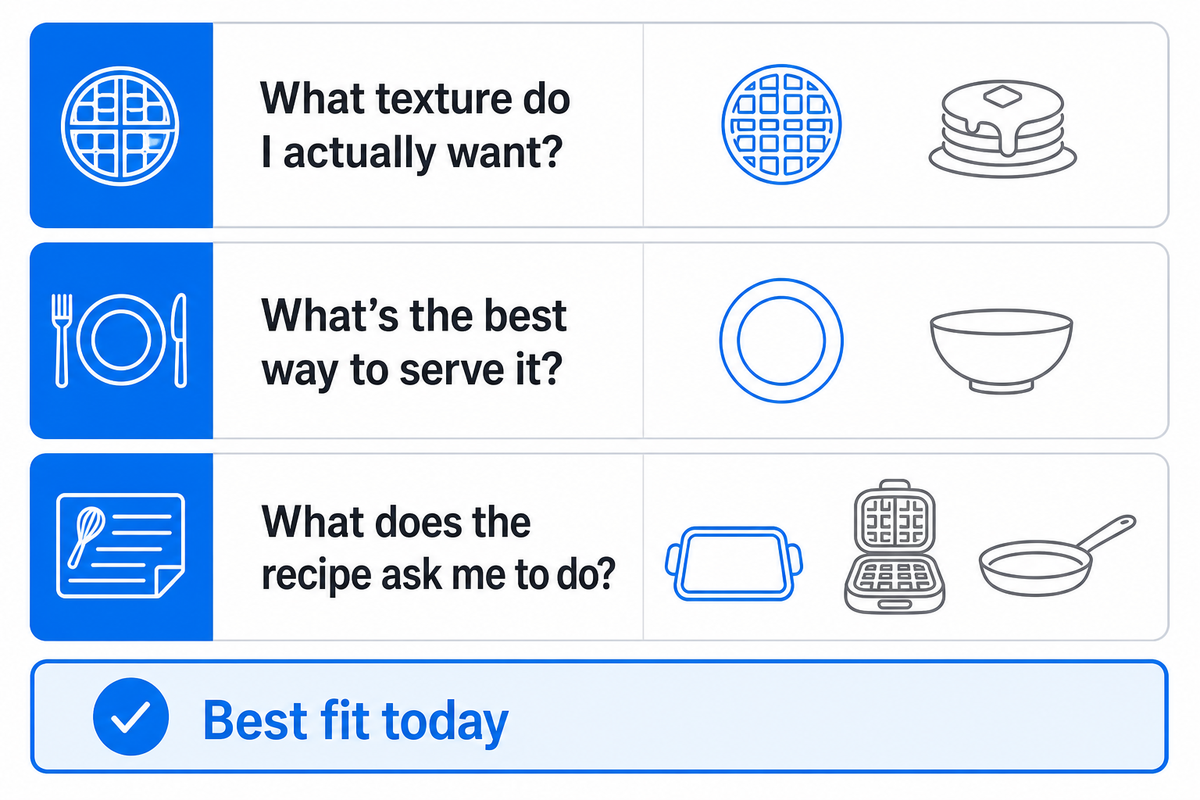
The 3-Question Breakfast Fit Check
What texture do I actually want? Think waffle for grooved textures with a browned exterior. For a soft stack or a thin, flexible base, choose pancakes. Consider the recipe design.
What’s the best way to serve it? Waffles go nicely with toppings that can use pockets or sections. Pancakes suit stacking, spreading, folding, and easy size changes; a stack can also take the place of toast beside an egg dish. There’s no better serving method for either.
What does the recipe ask me to do? This is the deciding question when the batter is unfamiliar. (dual-format recipe example) If the outcome matters, do what’s written with the recipe for the appliance. Treat any substitutions as an experiment that may have an effect on the result.
This isn’t a test of your culinary skills. It merely shifts your point of comparison from a universal winner to a breakfast that’s the best fit in this present situation.
Waffle Styles Can Change the Comparison
It’s always wise to acknowledge the restraints of a general waffles-versus-pancake answer. The style of waffle varies the thickness, groove depth, the leavening method, and how toppings are served. For this reason, a more specific style response can be more helpful than a broad all-waffles argument.
If you wish to proceed beyond the general comparison then consult our guide to waffle styles. This is often the next-level response when the question is no longer waffle vs. pancakes, but which waffle style is best suited for this breakfast?
What a 12-Month Search Pattern Can, and Cannot, Tell Us
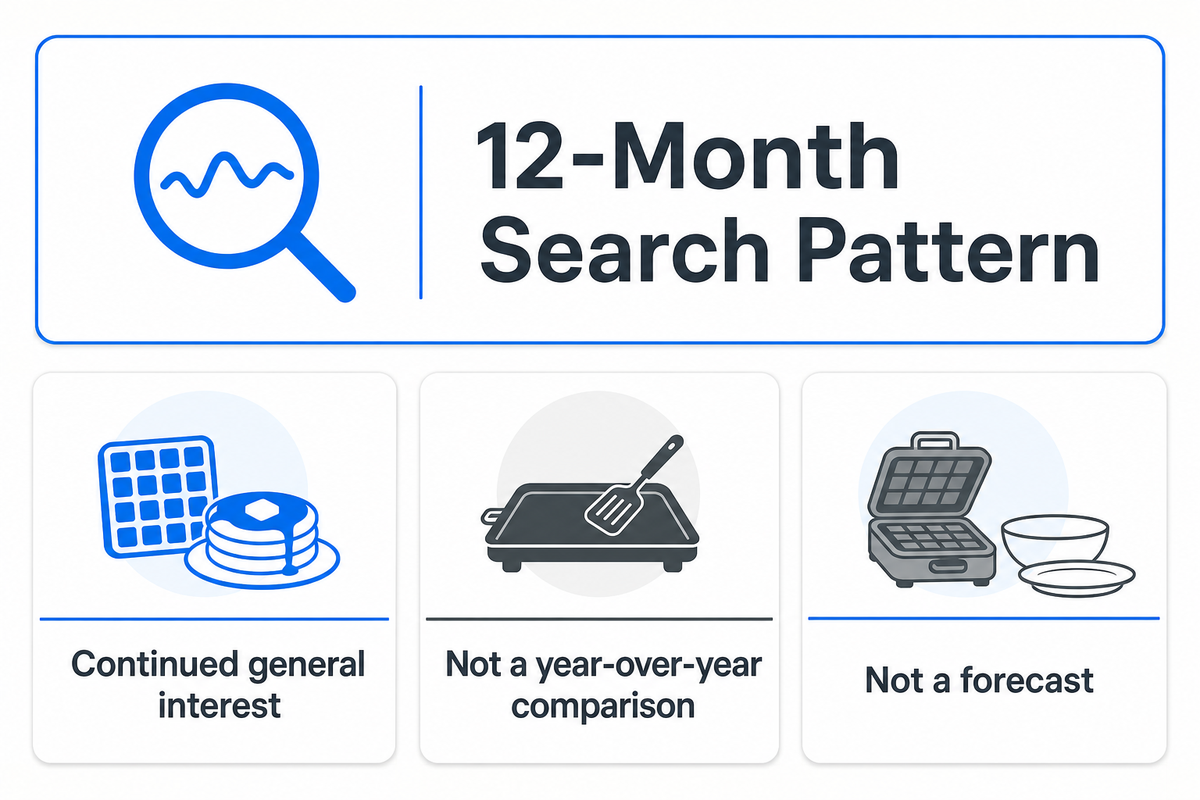
The twelve-month search log shows that general interest in the subject matter continues. (source) This includes direct requests for information about batter, waffle makers, texture, and requests to determine which option is healthier. The record does not capture a twelve-month or year-over-year comparison, projection, forecast, or evidence that one breakfast style is gaining versus the other. Reader requests have been useful in prioritizing the sections of this report; they aren’t a substitute for evidence in recipe or nutrition.
Frequently Asked Questions
Are waffle and pancake batter the same?
Waffle and pancake batter can be similar, but not always. Both can draw from a common base of flour, liquid, eggs, fat, and leavening. Some recipes are intentionally written to make pancakes or waffles from one formulation, while others are built for one outcome and one method. It’s best to read the recipes instead of assuming that similar ingredients guarantee the same behavior in the iron or on the griddle. Recipe directions remain decisive.
Why are waffles usually shaped differently from pancakes?
The machine is an immediate factor, rather than the most important one, in the waffle’s shape. A waffle iron cooks batter between patterned plates, creating a two-sided form with grooves. Pancakes cook on an open griddle or skillet and are turned as they set, so they stay comparatively flat. The shape remains consistent, but the final texture is beholden to the recipes, the level of batter, the degree of cooking, and the heat. Recipe variation still matters after surface choice.
Can I make waffles with pancake batter?
You can cook pancake batter in a waffle iron, but the result may not have the same browning, crispness, or structure as a waffle recipe. The written recipe and appliance directions determine whether that substitution fits the intended result in practice.
Waffle and pancake recipes can use different combinations of dry ingredients, baking powder, milk or buttermilk, eggs, and melted butter or oil; the written method still governs how that batter behaves in an iron or on a well-greased griddle.
Consider this a convenient substitute, but not a guaranteed conversion for the recipe. Use the appliance carefully, avoid overfilling it, and follow the batter and appliance directions.
Keep the expectation specific: Don’t expect this batter to transform a cooked breakfast into proof that two waffle recipe types are equivalent. For a particular waffle recipe texture, begin with a pancake recipe converted only when its own directions say it is appropriate to cook, or use a recipe written for waffles. If the batter is unfamiliar, waffle recipe texture should not settle the question by itself.
Are waffles or pancakes better for toppings?
The better choice for toppings depends on how you intend to serve them. A pancakes-vs-waffles menu can include crepes, chicken and waffles, or a sweet or savory serving plan. Toppings still belong to the serving context for this particular choice.
Honey, cinnamon, chocolate chips, a berry drizzle, whipped cream and strawberries, peanut butter, and other savory toppings describe preference; they do not prove that one base tastes good for every reader.
Waffle grooves can hold syrup, fruit, sauces, or savory additions in separate pockets. Pancakes, on the other hand, provide a flat surface that works well for butter, yogurt, fruit, or fillings. The option that fits can be a better choice than a general rule about food.
UDTECH has been manufacturing food machinery since 2003. This is where we write down what we learn from product samples, trial runs and commissioning—the batter, the bake and the texture, rather than the sales sheet.
These guides help production managers, buyers and food entrepreneurs work through batter faults, sample runs, output targets and factory acceptance. When a question turns into an equipment question, the same enquiry form reaches our engineers.
OUR EXPERIENCE
Food machinery manufacturing since 2003, with practical experience from product samples, trial runs and commissioning across egg roll, wafer, waffle, biscuit and snack production.
OUR EXPERTISE
We work from real recipe and output conditions, covering process, product and machine specification questions. Technical enquiries are passed to the engineer responsible for that equipment.