ISO Certified Solution
crispy snack guides
Crisp Snack Names and Food Guides
These crispy snack guides help turn a known snack name into a usable product description for food brands, product developers, and equipment buyers. Describe the base ingredient, visible form, dominant process, and intended bite size. Define characteristics that impact production and packing.
Name-to-process map
Crispy vs crunchy language
Regional name context
Production brief tools
Regional examples: Senbei, murukku, namkeen, prawn crackers and related local terms
Buyer bridge: Finished-product inputs before equipment comparison
Recognizable name and photo. Recipe, dimensions, filling, coating, output, and packing.
Expert Guide
Texture words
Crispy, crunchy, brittle, airy and firm
Ingredient families
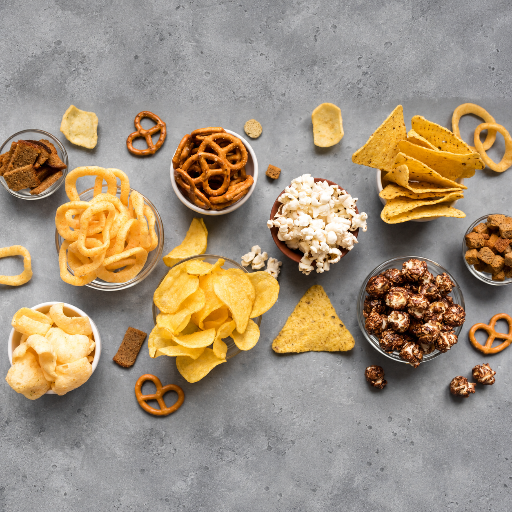
Potato, corn, rice, wheat, pulses, fruit, nuts and mixed doughs
Product forms
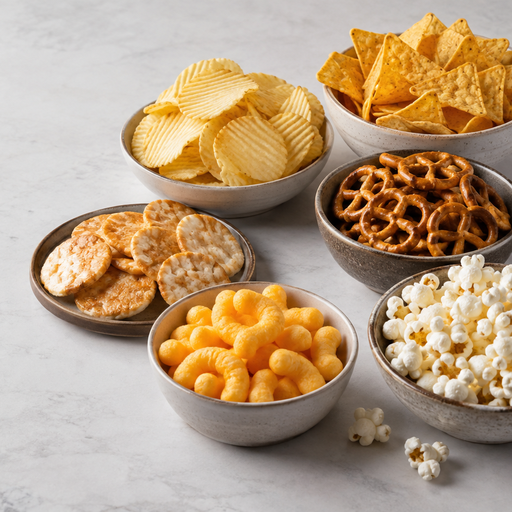
Chips, crackers, wafers, puffs, sticks, rolls, clusters and brittle pieces
Process routes
Frying, baking, roasting, extrusion, puffing, dehydration, lamination and rolling
Crispy and Crunchy Texture Language
‘Crispy’ and ‘crunchy’ describe sensory experiences and should not be equated with a rigid list of foods. While crispy snacks tend to fracture with acoustic and visual cues that are light, crunchy snacks require a more deliberate bite and a sustained break.
Technical basis: peer-reviewed mechanical, acoustic, and sensory texture mapping.Crispy target
Use this word for a light, brittle break: a thin potato crisp, a delicate wafer shell or a dry rice cracker. The sound, fracture pattern and loss of moisture all shape the impression.
Crunchy target
Use this word for a denser or firmer bite: a hard pretzel, a roasted nut cluster or a thicker corn snack. More bite force does not make crispy and crunchy products interchangeable; it defines a different texture job.
One label is not enough
Inside the atlas, we group each entry by base ingredient. We separate product form from process route. A useful food texture description might read “baked rice cracker with a light crisp fracture,” not simply “crispy snack.”
| Descriptor | What to observe | Useful reference |
|---|---|---|
| Crispness | Fast brittle breaks, light structure, sharp first-bite sound | Reference product plus acoustic and fracture observations |
| Crunchiness | Firmer resistance, larger breaks, longer chewing sequence | Reference product plus force and sensory comparison |
| Hardness | Initial resistance to deformation | Do not use hardness alone as a substitute for crispness |
| Brittleness | How quickly the structure breaks rather than bends | Pair with thickness, porosity and moisture condition |
Crispy Snack Families by Ingredient and Form
Base ingredients guide the vocabulary, but the same ingredient can produce several snack categories. In every record, we keep the regional name beside the common English label so a buyer can preserve market meaning without forcing every product into a single global term.
Category reference: U.S. Commercial Item Description A-A-20195E for snack foods.
Potato and root snacks
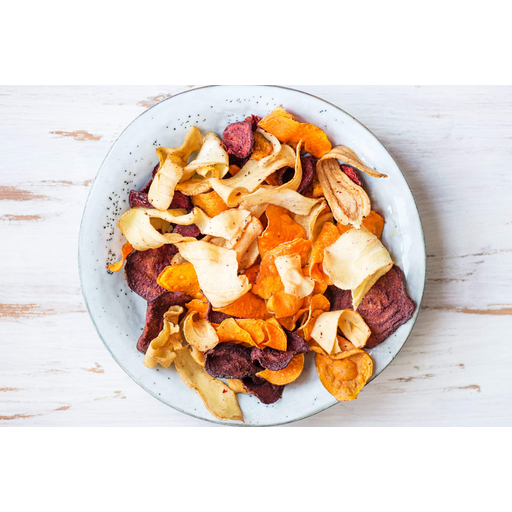
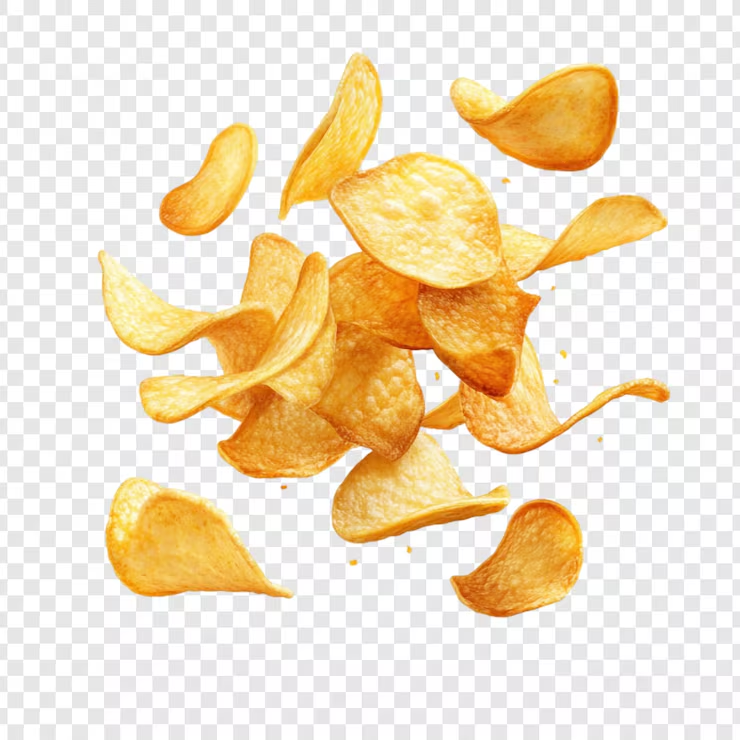
Potato chips or crisps, ridged chips, kettle-style chips and plantain chips sit here. Slice thickness, starch behavior, frying or baking route and seasoning load change the finished bite.
Corn snacks
Tortilla chips, corn puffs, curls, rings and other extruded snacks use very different forming routes. A “corn snack” brief still needs the masa or flour basis, shape, expansion target and coating step.
Rice snacks
Rice crackers, senbei, puffed rice cakes and crisp rice clusters can be baked, puffed, pressed, fried or coated. Keep the regional snack name, then state the rice form and route.
Wheat snacks
Crackers, pretzels, wafers, bread crisps and rolled wafer biscuits belong to separate product forms. Dough development, lamination, baking and rolling do different structural work.
Pulse, nut and seed snacks
Roasted chickpeas, pea crisps, lentil puffs, nut clusters and seed brittle span whole-piece and formed products. Protein and fiber can shift expansion, fracture and mouthfeel.
Mixed batter and sweet formats
Filled wafers, egg rolls, coated cereal clusters and brittle confectionery join several ingredient and process stages. We flag fillings and coatings that can change texture behavior.
From search phrase to useful category
A snack food categories page needs more structure than a crunchy snacks list. Queries such as types of wafers, extruded snacks examples, Asian crispy snacks and savory snacks point to different child-page jobs, so this hub gives each one a clear boundary.
Crispness Route Map for Processing Choices
The preparation method creates the structure that later breaks in the mouth. Across fried snacks and baked snacks, we distinguish fried, baked, roasted, puffed, extruded, dehydrated, laminated and rolled routes because two products with the same retail name can need different equipment and controls.
Process evidence: extruded-snack structure and texture mapping study.
| Route | Structure-forming job | Product examples | Brief detail that matters |
|---|---|---|---|
| Frying | Rapid heating and water removal create a porous or blistered structure | Potato chips, tortilla chips, murukku | Slice or dough form, oil system, final moisture and seasoning |
| Baking | Heat sets dough or batter while controlled moisture loss creates fracture | Crackers, pretzels, wafers, bread crisps | Sheet or mold route, thickness, color and cooling |
| Roasting | Dry heat changes whole-piece texture and flavor | Nuts, seeds, chickpeas | Raw material size, surface treatment and roast endpoint |
| Extrusion | Pressure, shear, heat and die geometry form a cooked mass | Corn puffs, curls, cereal sticks | Formula, feed form, die shape, expansion and post-drying |
| Puffing | Expansion creates a cellular structure with low density | Rice cakes, popped grains, puffed pellets | Starting piece, pressure or heat route, density and breakage |
| Dehydration | Water removal concentrates structure without a dough-forming stage | Fruit chips, vegetable crisps | Cut size, pretreatment, endpoint and package exposure |
| Lamination | Layering and sheeting control thickness and flaky fracture | Layered crackers, wafer sheets | Layer count, sheet gauge, docking and bake profile |
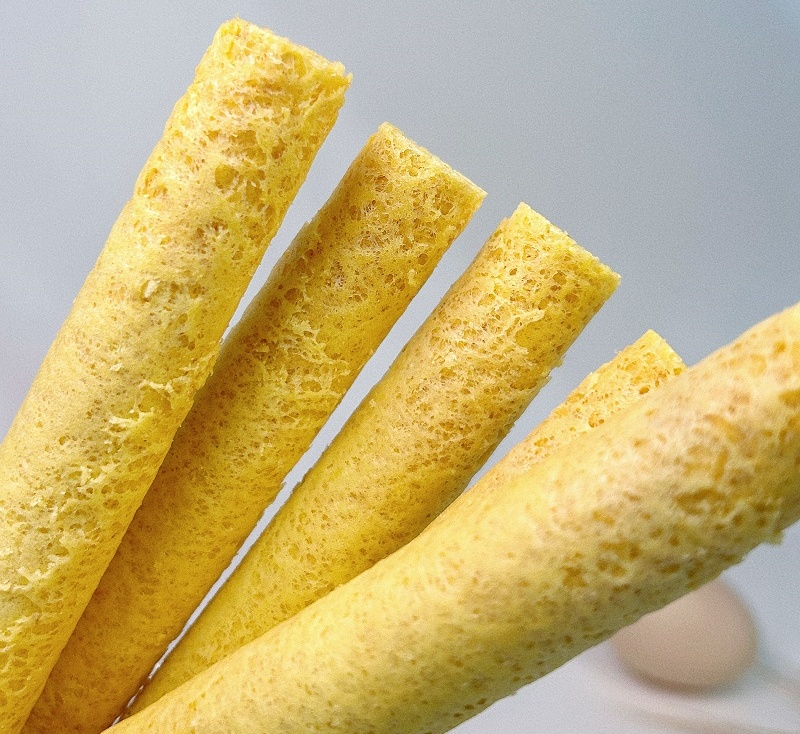
| Rolling | A hot, flexible sheet is formed before it becomes brittle | Wafer rolls, egg rolls | Sheet condition, roll diameter, filling and cooling handoff |
Process route is not a texture guarantee
Frying can create crisp texture, but the common assumption that every fried snack stays crisp is wrong. Brittle foods also show why crisp vs crispy language is too loose for a technical brief: formulation, cooling, coating, humidity exposure and package barrier still decide the customer experience.
Crispy Snack Name Atlas
A snack glossary has a lot more than a name. The atlas provides a selection guide for shape and format that connects each common name and regional snack name to a searchable description while keeping recipe and origin claims separate. Naming reference: formal snack-food identity and characteristic descriptions.
| Record | Name family | Base ingredient | Form | Common route | Clarification |
|---|---|---|---|---|---|
| 01 | Potato chips / potato crisps | Potato | Thin slices | Fried or baked | State thickness, ridging and seasoning |
| 02 | Tortilla chips | Corn or masa | Cut sheet pieces | Fried or baked | Distinguish true masa from other corn doughs |
| 03 | Pretzels | Wheat dough | Twists, rods or sticks | Alkaline treatment and baking | Hard and soft pretzels are separate products |
| 04 | Rice crackers / senbei | Rice | Rounds, sheets or formed pieces | Baked, grilled or fried | Keep the regional name and recipe form |
| 05 | Prawn crackers | Starch with seafood ingredient | Pellet-expanded pieces | Dried precursor then fried | Ingredient and allergen details belong in the brief |
| 06 | Murukku | Rice and pulse flours vary by recipe | Extruded coils or sticks | Fried | Do not reduce regional variants to one formula |
| Record | Name family | Base ingredient | Form | Common route | Clarification |
|---|---|---|---|---|---|
| 07 | Namkeen | Mixed family | Strands, pieces or mixes | Fried, roasted or combined | Use a specific sub-type and ingredient list |
| 08 | Corn puffs and curls | Corn-based mix | Expanded forms | Extruded and dried | State expansion, density and coating target |
| 09 | Popcorn | Popping corn | Expanded whole kernel | Dry or oil popping | Kernel type and coating affect line scope |
| 10 | Wafer biscuits | Wheat-based batter | Sheets, sandwiches or bars | Baked sheets plus filling or cutting | See the dedicated wafer guide for deeper types |
| 11 | Wafer rolls / egg rolls | Thin batter sheet | Hollow or filled roll | Bake, roll, cool and fill as required | Hot-sheet behavior and filling define the route |
| 12 | Fruit and vegetable crisps | Fruit or vegetable | Slices or pieces | Fried, baked or dehydrated | Cut size and final moisture condition matter |
Production Route and Quote Inputs
A machinery discussion begins after the finished product is described well enough to compare possible routes. We use buyer-supplied dimensions instead of guessing a machine fit, and no model, capacity or price should be inferred from the name atlas.
01
Product Identity
- Local name and common English name
- Finished-product photo or physical reference
- Base ingredients, batter or dough form
- Allergens and shared-line constraints
02
Physical Format
- Shape, length, width, thickness or diameter
- Piece mass and acceptable variation
- Hollow, filled, coated or plain
- Surface color and breakage limits
03
Process and Texture
- Current manual or industrial sequence
- Crispy, crunchy, brittle, airy or firm target
- Reference sample and acceptance method
- Cooling and post-process handling
04
Factory and Package Handoff
- Accepted output basis, not nameplate rate alone
- Available utilities and floor layout
- Upstream feed and downstream packaging format
- Cleaning, changeover and destination requirements
Quote Comparison Rule
The cheapest quote is not always the best comparison because it may exclude recipe trials, tooling, cooling, product transfer or packing interfaces. Unlike a flat equipment list, this brief exposes the trade-off before suppliers price different scopes.
From Snack Name to Equipment Discussion
For the B2B handoff, we direct equipment discussions to a finished-product brief. That keeps naming research useful while preventing a glossary entry from turning into an unsupported equipment recommendation.
Selection basis: Oklahoma State University guidance on selecting and purchasing food-process equipment.
Keep the known name.
Record the local, trade, or retail term and the market in which it is used.
Add a common English description.
Combine the ingredient, form, process and texture while retaining the regional term.
Attach a reference.
Use a physical sample, a photo set, or a current manual-process video to illustrate shape and handling requirements.
Define the finished product.
Add dimensions, recipe form, filling or coating, texture, output, and packing.
Mark the line boundary.
Identify the mixing, forming, cooking, cooling, coating, transferring, and packaging functions.
Agree on acceptance.
Describe what will be measured, which samples will be measured, and which conditions will apply. Indicate who will accept the measurement results.
“The fastest way to clarify an unfamiliar snack is to separate its name from its physical job: ingredient, geometry, process, texture and pack.”
Start with the finished product
A machine name can narrow the conversation, but it is not a substitute for the product brief. When the product changes, the feeding, forming, heating, cooling and packaging questions can change with it.
Reference Products and Acceptance Targets
The most persuasive evidence available this early on is a reference product that is available for everyone to inspect. It connects adjectives such as crispy, thin, even, filled, or lightly browned to shared definitions that a supplier can use when proposing a process route.
Measurement basis: sensory and consumer research on snack texture concepts.
| Evidence object | Decision it supports | What it does not settle |
|---|---|---|
| Physical reference product | Shape, bite, color, surface and breakage target | Recipe ownership, shelf life or legal label |
| Photo set with scale | Visible geometry, filling position and surface pattern | Texture, mass, internal structure or output |
| Ingredient and process sheet | Formula form, allergen questions and main stages | Equipment fit until dimensions and line boundary are added |
| Dimensioned drawing | Size, tolerances and interfaces | Sensory target or package performance |
| Accepted-output definition | Comparable capacity basis and reject handling | Real plant performance before trials and commissioning |
| Packaging and storage test | Texture retention under a stated pack and condition | Another recipe, film, seal or distribution route |
For a new product
Choose one target product and one permitted variation. Trying to qualify every future flavor, shape and pack at once can hide the conditions that matter most.
For an existing product
Document the current manual or machine-made sequence, the known failure points and an accepted sample. That is more useful than a marketing name alone.
Classification Boundaries and Related Guides
This hub is not the right page when a query requires a deep wafer taxonomy, a regional sweet glossary, a recipe definition, nutrient rankings, or a machine model. Those topics need dedicated pages to avoid confusing the site’s informational and commercial intent.
Scope reference: formal snack-food description boundaries.
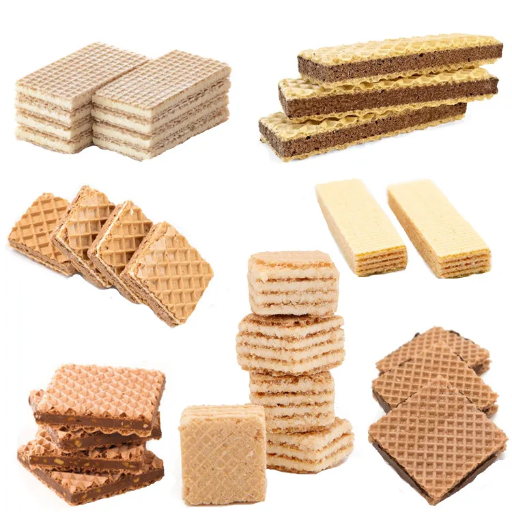
Wafer Biscuit Types
Flat sheets, sandwich wafers, wafer bars, cones, hollow rolls and filled sticks need more depth than one atlas row. For that depth, continue to the Wafer Biscuit Types guide.
Explore Wafer Biscuit Types
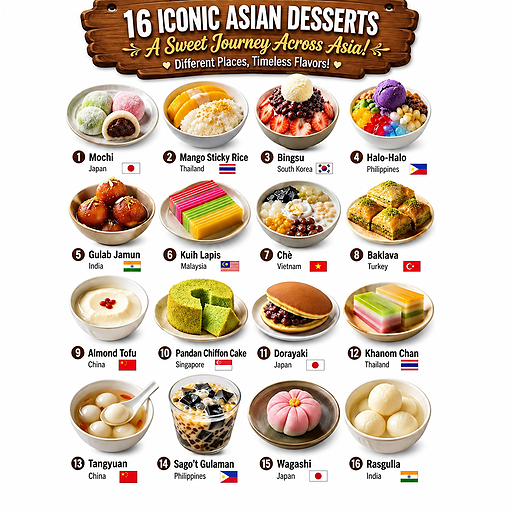
Asian Sweet Snack Glossary
Regional sweet names deserve language, origin and format context without being flattened into a global list. For regional depth, continue to the Asian Sweet Snack Glossary.
Explore the Asian Sweet Snack Glossary
| If the question is about | Use this page for | Look elsewhere for |
|---|---|---|
| Names | Common and regional labels with ingredient, form and route | Legal identity of a food in a specific market |
| Texture | Crispy, crunchy, brittle and related brief language | A universal pass/fail threshold |
| Processes | Route comparison and product inputs | An equipment model selected without samples or data |
| Safety | Questions for ingredients, allergens, cleaning and packaging | Destination-specific compliance approval |
Interactive Crispy Snack Production Tools
Snack Classification Builder
Build a working English description from four separate choices. The result is a naming aid, not a recipe, legal name, or machine recommendation.
Crispness Risk Checklist
This screening score flags where a product brief needs more work. It is a declared planning heuristic, not a shelf-life prediction or food-safety decision.
Finished-Product Brief Builder
Capture six product decisions before discussing a production route. The tool records what you enter and marks open fields; it does not fill gaps with supplier assumptions.
Crispy Snack Names and Production FAQ
FAQ basis: snack-food descriptions, texture evidence, and FDA allergen guidance.
What are the main types of crispy snacks?
A practical list includes chips or crisps, crackers, pretzels, wafers, puffs, popcorn, rice crackers, prawn crackers, roasted nuts, brittle clusters, fruit crisps and regional fried snacks. Group them again by ingredient, form and process before using the list for product development.
What is the difference between crispy and crunchy snacks?
Crispy points to a light, brittle and fast fracture with sharp sound cues. Crunchy suggests a firmer bite and more sustained breakage; real products can sit between the two.
Are chips and crisps the same thing?
In British English, “crisps” often means the thin packaged potato product that American English calls “chips.” “Chips” in British English can instead mean thicker fried potato pieces, so keep the target market beside the name.
Is a wafer a cracker?
No. Wafers are their own batter-and-sheet family.
Can a snack name identify the right production machine?
No. The same retail term can hide a slurry, batter, dough, slice or preformed pellet; it can also hide a filling, coating, different dimensions and a different package handoff. Add a reference product, accepted output basis, utilities and line boundary before asking a supplier to select equipment.
What should a snack product brief include?
Include the local and common name, reference product, ingredients and allergens, process sequence, finished dimensions, filling or coating, texture target, accepted output, utilities and packaging format. Add the acceptance method for breakage, color, moisture and sensory texture.
Why can a crispy snack become soft after production?
Moisture can move from the air, a filling or another component into the crisp structure. Cooling conditions, coating, seal integrity and package barrier all belong in the investigation.
How should regional snack names be translated for a supplier?
Keep the regional term exactly as used in its market. Add a plain English line built from ingredient, visible form, main process and intended texture, then attach a photograph with scale and a reference sample if one can be shipped. Avoid replacing the original term with a broad label such as cracker or chip when that label drops information about the recipe, shape or eating experience.
Does this guide provide machine capacity or pricing?
No. It prepares the product inputs for a separate equipment discussion.