ISO Certified System
wafer biscuit types
Wafer Biscuit Types and Names
Start with the complete, real snack, not a machine label; then identify the different types of wafer biscuits and their geometry, batter behaviour, forming operation and downstream modules before your team discusses a wafer biscuit line.
- Flat and sandwich wafer
- Wafer stick and roll
- Cone and cup
- Egg roll and phoenix roll
- Moulded shell
Local market names for wafer biscuits are helpful. The various wafer biscuit names can be matched using a photo, target size, filling plan and pack format.
Send a Wafer Photo for Route Review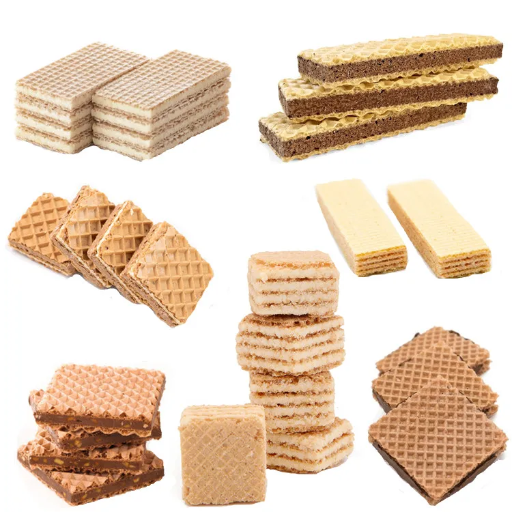
100%
Customizable Geometry
5+
Core Forming Modules
High
Production Yield
Global
Market Adaptability
Recognize the Wafer Name, Then Check the Process
01
Flat or layered
Thin wafer sheets become plain biscuits, cream sandwich wafers or a classic chocolate coated wafer bar after spreading, stacking, cooling and cutting.
02
Tube or stick
A hot baked wafer is rolled into a hollow tube. Cream filling, chocolate cream or another centre can be added before cooling and packing.
03
Cone or cup
Ice cream carriers need their own forming shape and release sequence. Cone, cup and circular shell geometry should be stated before line selection.
04
Folded or rolled
Egg roll biscuit, phoenix roll biscuit, love letter, kuih kapit and barquillo names can overlap. The actual fold or roll decides the forming route.
05
Moulded shell
Embossed or deep-formed pieces need a mould and a hot-forming step matched to batter release, texture and final shape.
Wafer Biscuit Types Across Five Engineering Coordinates
The quickest way to start a production-line meeting is to describe the product on 5 interconnected axes, avoiding the risk that labels such as “flavour,” “topping” or “brand” are mistaken for a machine family.
The product name is not a substitute for geometry. The common assumption that each name equals one machine category is the mistake; unlike a catalogue list, the five-coordinate route separates flat sheets, hot-rolled tubes, cones and folded wafers.
Market name
Finished geometry
Batter and hot form
Forming action
Downstream route
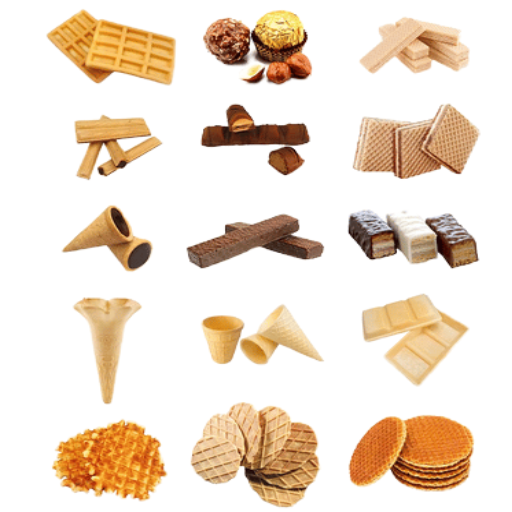
| Example wafer name | Geometry to confirm | Forming decision | Downstream route to discuss |
|---|---|---|---|
| Flat wafer biscuit | Single sheet, sandwich or layered bar | Plate baking and sheet release | Cooling, cream spreading, book cooling, cutting, enrobing, packaging |
| Wafer stick | Hollow or filled tube; straight or cut length | Hot rolling after sheet baking | Filling, cooling, cutting, arranging, coating, pack |
| Wafer cone | Cone, cup or shaped ice cream carrier | Rolling, pressing or deep-forming while warm | Cooling, nesting, inspection and protective packaging |
| Egg roll or phoenix roll | Reel, flute, folded fan or local shape | Immediate rolling or folding | Cutting, cooling, handling and retail pack |
| Moulded wafer | Embossed shell or cavity shape | Mould baking plus timed release/forming | Filling, joining, coating and package handling |
Batter and Hot-Wafer Formability
Each wafer sheet leaves the baking oven thin, hot and time-sensitive. Flour and starch choice, water, sugar, fat, salt and batter viscosity all affect deposition, release, colour, crisp texture and the window available for rolling or folding.
Flat Sheet Route
The sheet needs enough integrity for transfer, cooling and later cutting. A sandwich wafer adds cream spreading and layer control, while a plain crispy wafer can move straight toward cooling and packaging.
Hot Rolling Route
A wafer roll or stick must form before the baked wafer becomes too crisp to bend. Tube diameter, seam, filling path and cut length all belong in the product trial.
Cone and Deep-Form Route
Shape depth and surface pattern change release and forming demand. The buyer should send the target cone or cup, not only a product name.Flavour and Inclusion Route
Vanilla, milk, cocoa, chocolate, hazelnut, fruit, caramel and strawberry or pink finishes change the recipe and market variety. They do not automatically create a new base line, but they can change filling, topping, cleaning and allergen work.Trial Rule
Do not convert a paper recipe into a guaranteed production setting. Use the buyer’s batter context and finished sample, then agree what a successful baked wafer looks like before a production line route is fixed.Forming, Filling, Cooling and Moisture-Protective Packaging
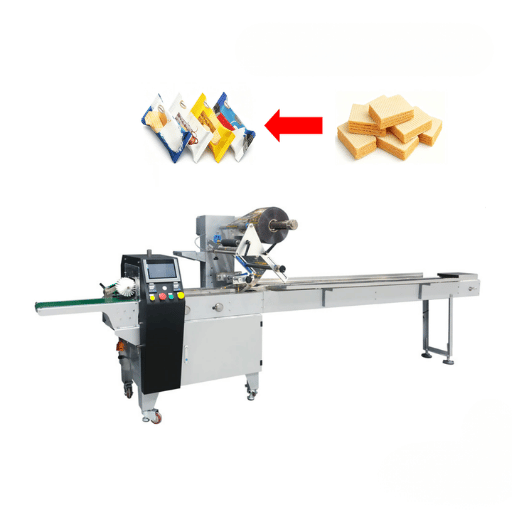
Production lines are process chains. They are not only wafer baking machines. Mixing, depositing, baking, initial cooling, conveying, forming, final cooling, cutting, filling and packaging should serve the same product definition.
| Process stage | What the buyer defines | What the line review checks |
|---|---|---|
| Batter preparation | Raw material, allergen set, viscosity context and recipe ownership | Mixing boundary, transfer path and cleanout access |
| Wafer baking | Wafer sheet colour, thickness, pattern, taste and acceptable texture | Deposit, plate or mould route, release and baking controls |
| Hot forming | Roll, fold, press, cone, cup or shell shape | Forming timing, tooling and breakage checks |
| Filling and coating | Creamy centre, chocolate coating, topping, layer count and finish | Temperature, dosing, interface, cooling and allergen separation |
| Cutting and handling | Finished size, edge condition and good-piece rule | Cutting machine, cooling conveyors, transfer and reject points |
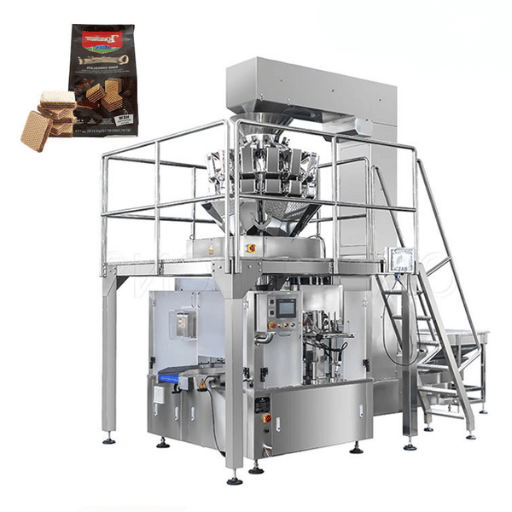
| Packaging | Primary pack, count, barrier need and shelf-life test plan | Feed arrangement, moisture exposure and packaging-machine handoff |
Water vapour may soften a crunchy biscuit or influence its breakage behaviour. These risks increase as soon as cooling conditions and the package barrier are included as late packaging decisions.
Product Details That Define Process and Machine Fit
Use this input table prior to comparison of a wafer production line or wafer biscuit production line. Rows are project data supplied from an end buyer and may not reflect UD machine specifications published previously.
| No. | Input | What to send | Why it changes the route |
|---|---|---|---|
| 01 | Product identity | Common name, local name, photo and physical sample | Separates a food wafer from a semiconductor wafer and resolves naming overlap |
| 02 | Geometry | Drawing or measured length, width, height, diameter and layer count | Sets sheet, roll, fold, cone, cup or mould tooling needs |
| 03 | Batter context | Flour/starch family, sugar context, water constraints and recipe ownership | Guides deposit, release and hot-form testing |
| 04 | Surface and colour | Pattern, golden colour target and crisp or tender texture | Defines visual and sensory acceptance |
| 05 | Forming action | Flat, rolled, folded, pressed or deep-formed result | Separates the core machine route |
| 06 | Filling and coating | Centre, layer, enrobing, topping and cooling needs | Adds modules and temperature interfaces |
| No. | Input | What to send | Why it changes the route |
|---|---|---|---|
| 07 | Allergen matrix | Milk, nuts, gluten and other recipe-changeover combinations | Drives separation, access, cleaning and verification questions |
| 08 | Good-piece output | Target saleable pieces with reject definition and run conditions | Makes production capacity comparisons meaningful |
| 09 | Site inputs | Available space, ambient conditions and utility capacities | Changes line arrangement and facility interface |
| 10 | Automation boundary | Manual, semi-automatic or automatic handoffs from mixing to packing | Defines included machinery and labour points |
| 11 | Package format | Count, orientation, wrapper, tray/carton and barrier need | Sets conveyor and packaging interface |
| 12 | Destination and acceptance | Installation country, required documents, trial recipe and sign-off evidence | Sets project scope and review criteria |
Product Trials, Allergen Cleaning, Hygiene and Acceptance
Each line trial needs a product target for evaluating the run conditions. Record sheet or shell features, physical characteristics, filling or coating, breakage, saleable yield and pack appearance together with the acceptable operating parameters.
Product trial pack
- Buyer-approved recipe or controlled trial formulation
- Reference sample and geometry drawing
- Good-piece and reject definitions
- Run conditions, sample plan and sign-off record
Equipment evidence pack
- Food-contact material evidence and accessible product zones
- Guarding for heated, pinch, cutting and moving hazards
- Emergency-stop and process-control checks
- Manuals, maintenance points and agreed test records
Shared-equipment allergen control
Shared equipment creates a cross-contact risk because residues can remain in product zones. Codex CXC 80-2020 supports documented cleaning validation and verification; a defined recipe matrix helps the buyer map products that share equipment.
For projects serving the United States, FDA 21 CFR 117.40 is a useful buyer checkpoint for cleanability, installation access, food-contact surfaces and control instruments. For a UD Company project, use these checkpoints as inputs to agreed acceptance criteria, not as a certification claim for this page or a specific machine.
Get a UD Company Profile and Project Proof Pack
UD Company was established in 2003 and reports nearly RMB 200 million of investment. UD Company operates in the Xinyu High-tech Development Zone in Jiangxi Province with a 130-acre footprint, two production bases and a food-equipment factory focus.
Food automation focus
Our work centres on the research and development of automation technology for food production. We independently developed fully automatic egg roll machine series and independently developed fully automatic phoenix roll machine series.
Company-stated intellectual property and markets
Our supplied profile reports multiple invention patents and sales in domestic and overseas markets. A project proof pack can pair the relevant patent identifiers, model records and market-country evidence with the buyer’s review scope.
When One Wafer Line Is Not the Right Fit
Situation
Why it works against the project
Better next step
Several incompatible geometries
A flat sandwich, hollow roll and cone do not share one forming action
Split the project into route families, then compare shared downstream modules
Recipe has not produced a stable sample
Machine selection cannot settle release, hot flexibility or finished texture
Run controlled product trials before fixing the production route
Low-volume artisan product
A small wafer biscuit machine or automatic line can add setup and cleaning work beyond the production need
Compare manual or semi-automatic steps before buying a full line
Packaging is undecided
A fragile wafer can fail at transfer or wrapper feed even when baking is stable
Freeze pack orientation, count and barrier need with the product route
Wafer Biscuit Production Solutions & Tools
01
Wafer Product Brief Builder
Turn five buyer inputs into a copyable starting brief. Empty fields remain visible so the supplier can see what still needs confirmation.
Access Tool ➔02
Wafer Quote Readiness Check
Tick the inputs already available. The score measures brief completeness only; it is not a machine-fit or commercial approval score.
Access Tool ➔03
Wafer Route Selector
Choose the finished geometry first. This tool suggests a discussion route; it does not select a machine model or promise output.
Access Tool ➔Wafer Biscuit Type and Production Questions
Useful production groups include flat sheets, layered cream wafers, hollow or filled wafer rolls, cones and cups, folded rolls and moulded shells. The final geometry and forming action matter more than the market name alone.
A flat wafer sheet can cool before spreading, stacking or cutting. A rolled wafer is shaped while it is still formable, so rolling timing, tube geometry and handling are part of the core route.
They can be either. State the tube diameter, whether the filling is added before or after cooling, the cut length and whether chocolate coating or a topping follows.
The names overlap across markets, but the finished pieces can be rolled, fluted, folded or fan-shaped. A photo and sample prevent a familiar snack name from sending the project toward the wrong machinery.
Chocolate, vanilla, hazelnut, caramel, strawberry and fruit flavours are recipe variants. They can change filling, colour, taste, allergen cleaning and packaging, but flavour alone does not define the forming family.
Do not assume it can. These shapes use different post-bake actions, so the supplier must confirm the exact tooling, forming section and changeover for the named products.
Compare packed good pieces under an agreed recipe, size, reject rule, run duration and downstream condition. A raw baking count is not a substitute for packed good-piece output because it can hide breakage, cooling or packaging losses.
Start with the recipe matrix and shared product-contact zones. Codex CXC 80-2020 supports documented cleaning validation and verification rather than relying on a visual clean alone.
For trial planning, treat moisture exposure as a texture variable. Define cooling conditions, time before wrapping and the required package barrier as part of the finished-product test.
Send the product photo or sample, geometry, batter context, filling/coating plan, allergen matrix, good-piece output, utilities, floor space, package format, destination and acceptance scope.