Trehalose in food is a mildly sweet sugar used to balance or adjust product characteristics, with some potential usage in formulations. However, replacing sucrose in a recipe can lead to reduced cake expansion and/or a less desirable cake texture. It should be used only after a controlled recipe test.
Updated October 2026
Five checks before replacing sugar
- Separate sweetness from the mass of sugar powder.
- Confirm the ingredient form and the basis of every percentage.
- Match the published evidence to your product.
- Measure texture and storage performance separately.
- Compare the food-grade lot, label requirements and trial cost.
Just because one element of a recipe, e.g. incorporating trehalose, has led to a favorable result, it doesn’t mean the entire recipe has been optimized. The studies below describe the results of including trehalose in a recipe, as well as the questions that remain for a bakery.
What is trehalose in food?
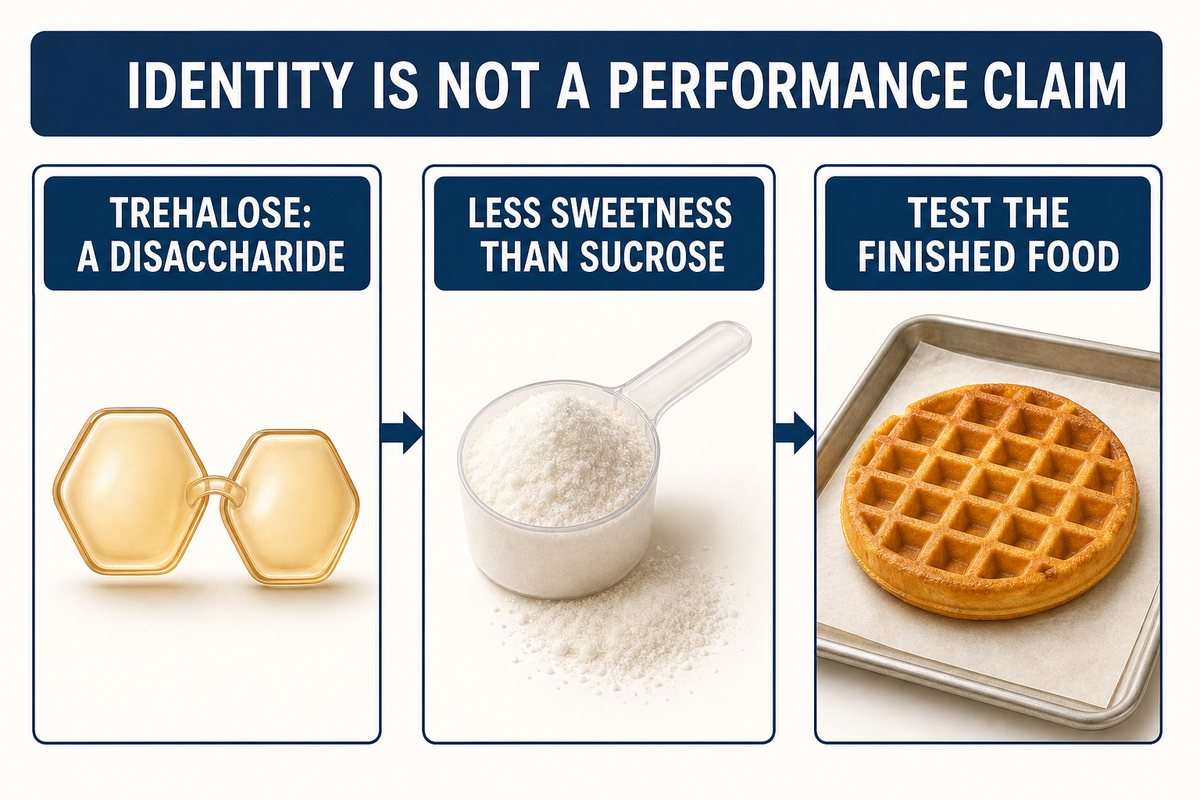
Trehalose is a disaccharide made up of two glucose units. As a food ingredient, it provides sugar solids with less sweetness than sucrose. There are differences between natural occurrence and manufactured ingredient grades. A bakery has to have a legitimate reason to modify its formulation.
Trehalose is a naturally occurring sugar found in several organisms including yeast and mushrooms. Trehalose is found in these foods as a sugar, not one of the sugar alcohols. A mushroom is a fungus, but commercial trehalose manufacturing need not start with mushrooms. The Health Canada assessment describes an enzyme process that converts starch to produce trehalose. That use of enzymes in the food ingredient process concerns a specified manufacturing route to synthesize trehalose. Its assessment concerns the submitted ingredient, rather than every powder sold under the same chemical name.
Trehalose is hydrolysed during digestion. The enzyme trehalase metabolizes trehalose by converting trehalose into glucose; Health Canada reports about 4 kcal/g. Less sweetness, therefore, doesn’t make the consumption of trehalose calorie-free.
Is trehalose a reducing sugar?
Trehalose is a sugar, specifically a non-reducing sugar, because its two glucose units are joined through their anomeric carbons. Sucrose is also non-reducing as explained in the Chen and Gibney review. Neither of the labels means a finished cake won’t brown. A recipe has many ingredients, and heating can change the sugars present.
In the context of trehalose and glucose, glucose is a reducing monosaccharide and table sugar is a disaccharide. Don’t rely on that chemical distinction to explain a cake’s pale surface. Check the rest of the formula and bake. According to our baking ingredients guide, sugars are present alongside other ingredients that build a product.
Properties of trehalose: sweetness, solids and browning
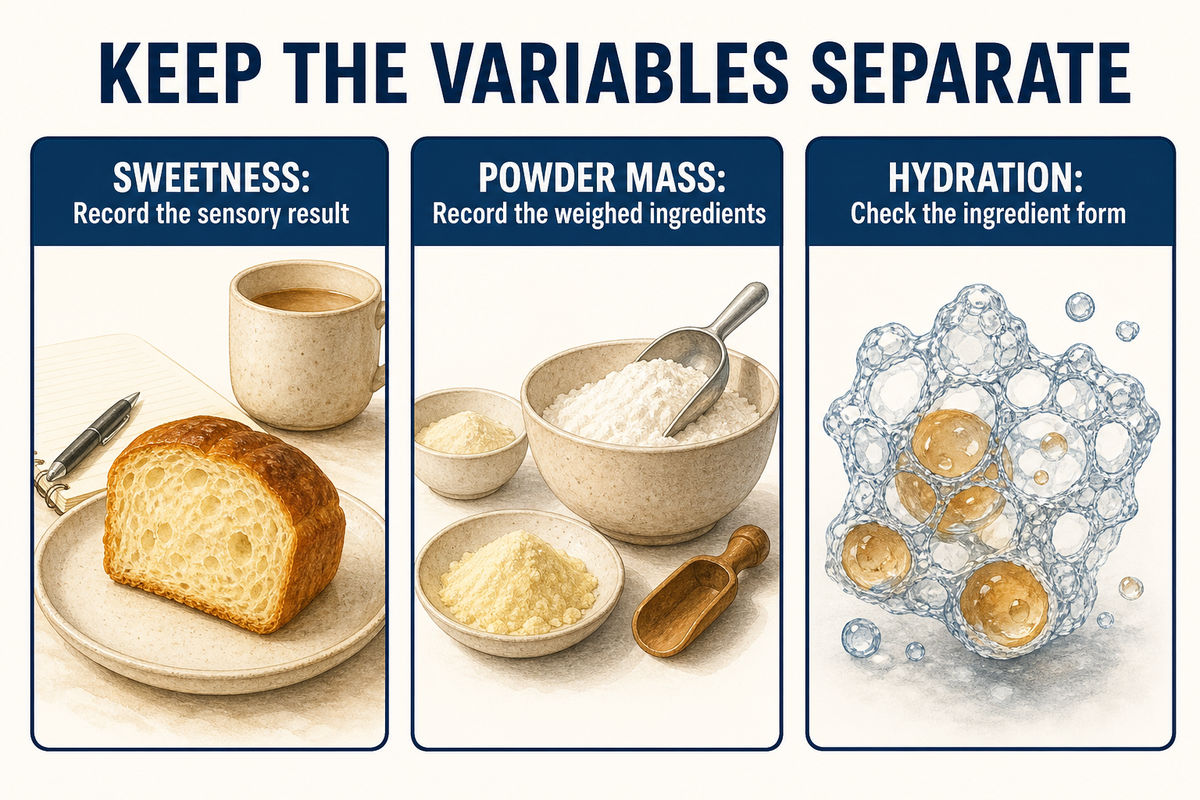
Sugars and other ingredients contribute mass, but differ in sweetness. Therefore, replacing sugars by weight changes more than just the taste. Observe sweetness, ingredient mass, ingredient water and finished-product color separately; a correction made for one property can obscure a problem for another.
“with a relative sweetness of 40-45% of that of sucrose.”
The range shows that trehalose isn’t as sweet as table sugar; it’s a starting reference, not a prediction of your panel’s score. The evaluation of sweetness in completed foods must be assessed in that completed food. Likewise, the commercial dihydrate described in the JECFA trehalose specification shows that this form of trehalose contains water of crystallization. Since trehalose in this form carries crystal water, equal powder weight is not automatically equal anhydrous sugar mass.
Sweetness, Solids Separation Trial
Use this editorial trial record to keep the first comparison interpretable. The filled amounts below are a fictional sugar portion, not a tested recipe or a suggested replacement amount. Keep the rest of the recipe and processing conditions unchanged for that first comparison. Then adjust for any sweetness differences as a separate trial.
| Record field | Control / trial entry | Limitations |
|---|---|---|
| Sucrose powder | 100 g / 75 g | Sugar portion only, not the full recipe |
| Trehalose powder | 0 g / 25 g | Illustrative choice, not an established optimum |
| Total sugar-powder mass | 100 g / 100 g | Equal mass does not establish equal dry solids |
| Replacement denominator | 25 g out of the original 100 g sugar portion | Not 25% of flour or total batter |
| Ingredient form | Record sucrose grade and trehalose hydration form | Do not assume both certificates use the same basis |
| Approximate sweetness calculation | 100 g / 85–86.25 g sucrose-equivalent | Simplified arithmetic; sensory response is not necessarily additive |
| Added recipe water | Hold the recorded control amount for the first comparison | A later water adjustment creates another variable |
| Bake and cooling history | Match setpoints, product size and cooling conditions | Matching settings does not prove identical product temperatures |
| Release and texture | Record sticking, breakage and sensory observations | No pass result has been measured in this example |
| Decision | Compare with criteria declared before tasting | Reject or retest if an important attribute worsens |
Estimated trial sweetness: 75 g + (25 g × 0.40 to 0.45) = 85 to 86.25 g sucrose-equivalent. The calculation retains powder weight at 100 g. It doesn’t solve for matched sweetness, correct the hydration basis, or predict how a baked sample will be rated.
Trehalose vs sucrose and glucose
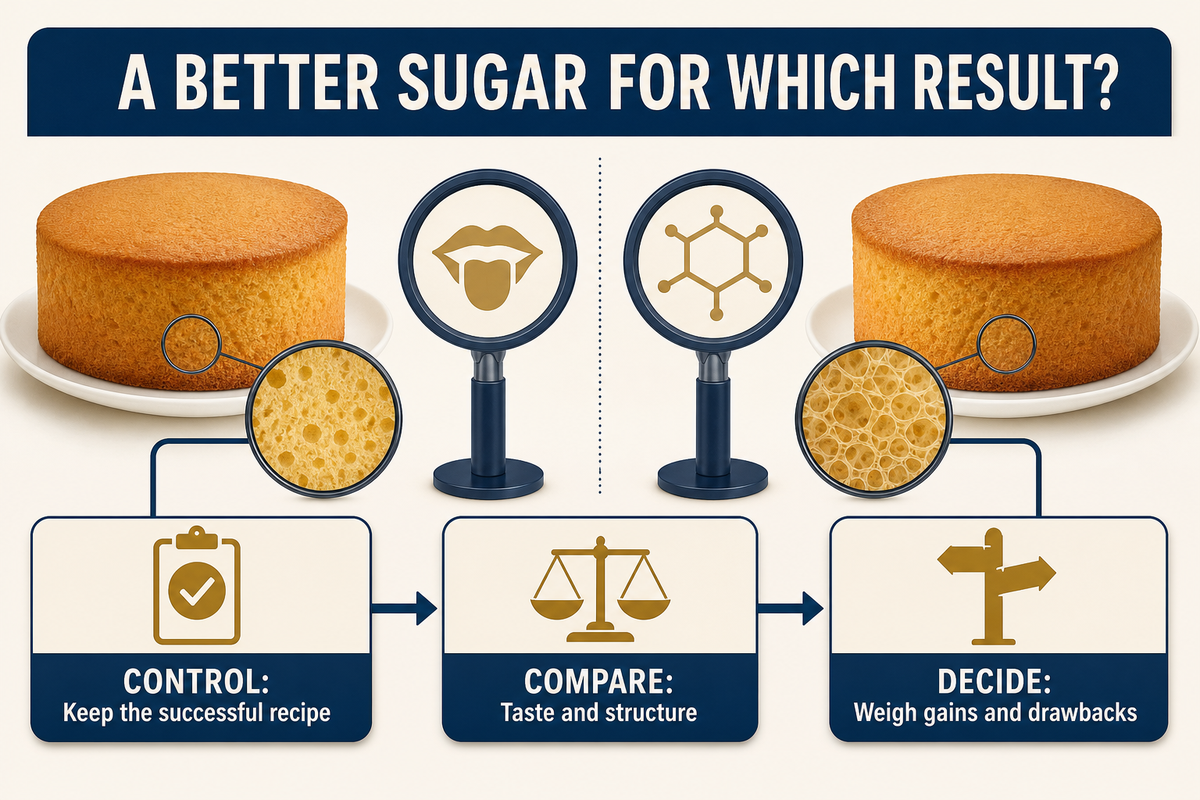
When sucrose is part of a successful recipe, it can be used as a good control. Trehalose has a different relationship between mass and sweetness; glucose has a different molecular structure. Identify the product attribute to be changed, then assess the consequences. Comparing trehalose directly to the control is more helpful than ranking the sugars as generally better or worse.
The role of trehalose is easiest to assess when the problem is specified. Across a range of foods, the contribution of trehalose should be judged against the specified endpoint. For example, if the goal of a cake project is to make a less sweet cake, check sweetness while retaining acceptable height and mouthfeel. For the project to make a crisp snack, the endpoint may be determined by the texture after it’s cooled.
Published results resist a simple winner. Darikvand and colleagues examined cake with 0%, 25%, 50%, 75% and 100% trehalose relative to total sugars. Their public abstract indicated that trehalose led to less expansion; as the proportion of trehalose increased, the texture became firmer and less porous. Moderate replacement improved sensory scores in that particular study; the accessible abstract doesn’t establish an exact best percentage for your product.
The other study, a 2021 sponge-cake study by Marzec and colleagues, showed that trehalose gave a porous structure but high adhesiveness and poor sensory quality. The result suggests that trehalose requires further sensory testing and a structural assessment. Again, appearance alone would have missed the objection. Compare the intended benefit with the attribute that a customer would use to reject the product.
Trehalose in baking: cake and waffle trials
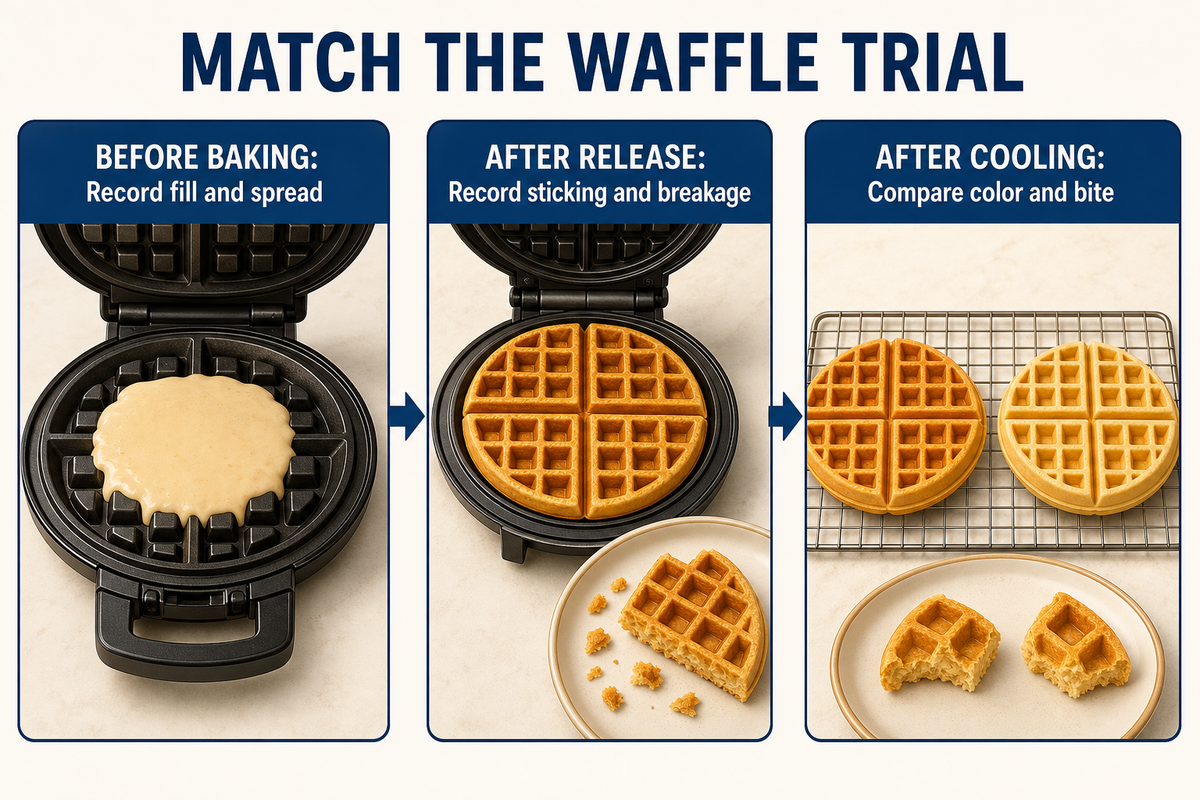
Trehalose should be tested against a control, and the percentage basis should be explicit in waffle research. Expansion, adhesiveness and taste should be tested concurrently in cake research. Waffle research also should test release and texture after cooling. A published sponge-cake result doesn’t answer those product-specific questions.
The Marzec experiment shows that there’s a lot behind a given result. Their use of trehalose was described in terms of a specific recipe and a specific method of preparation. The recipe contained 150 g of egg white, 100 g of sweetener, 75 g of yolk, 72 g of wheat flour, and 25 g of potato starch. Sweeteners were ground to 5–10 µm, mixing took 8 min, and samples were baked at 210 °C for 10 min before 30 min of cooling. Those are the reported lab conditions, not a waffle recipe.
In a similar waffle trial, a formulation team might decide to use a partial replacement because the control tastes too sweet. Record the fill mass, spread, release, the surface color, and the bite, after the same cooling interval. If the release becomes poorer, but the sweetness has reduced, the result is mixed. A change in sugar, water, bake time and cooling all together would make troubleshooting difficult. The batter and texture troubleshooting guide helps to organize the observations.
Once the recipe and target product are defined, compare the relevant waffle production equipment formats with UDTECH. That equipment reference doesn’t provide assurance of a given trehalose formula. The recipe and acceptance criteria are taken to the machinery test; a paper on ingredients doesn’t forecast line output.
When not to replace the sugar
Keep the control when it’s already meeting the requirements of the brief and the change being proposed has no measurable purpose. The two cake studies in Resources provide reason for caution. Reduced expansion, firm crumb, stickiness and/or poor sensory quality can outweigh a decrease in sweetness. The benefits of trehalose need to address the actual issues affecting the product and not just sound good on a data sheet.
Don’t use trehalose for every soft waffle. A product that leaves the iron crisp and then softens may need a cooling or packaging investigation; see why waffles become soggy. This should be the first thing looked into before modifying the recipe. Trehalose could be worth testing after the problem has been defined, but the presence of trehalose doesn’t define the problem or identify the cause.
Hold off on the substitution when the food-grade lot can’t be traced, the percentage has no stated denominator, or the team hasn’t agreed what constitutes an acceptable result. These are real world constraints for delaying a trial. None requires an arbitrarily set, universally enforceable maximum dose.
Trehalose in frozen foods and sweet snacks
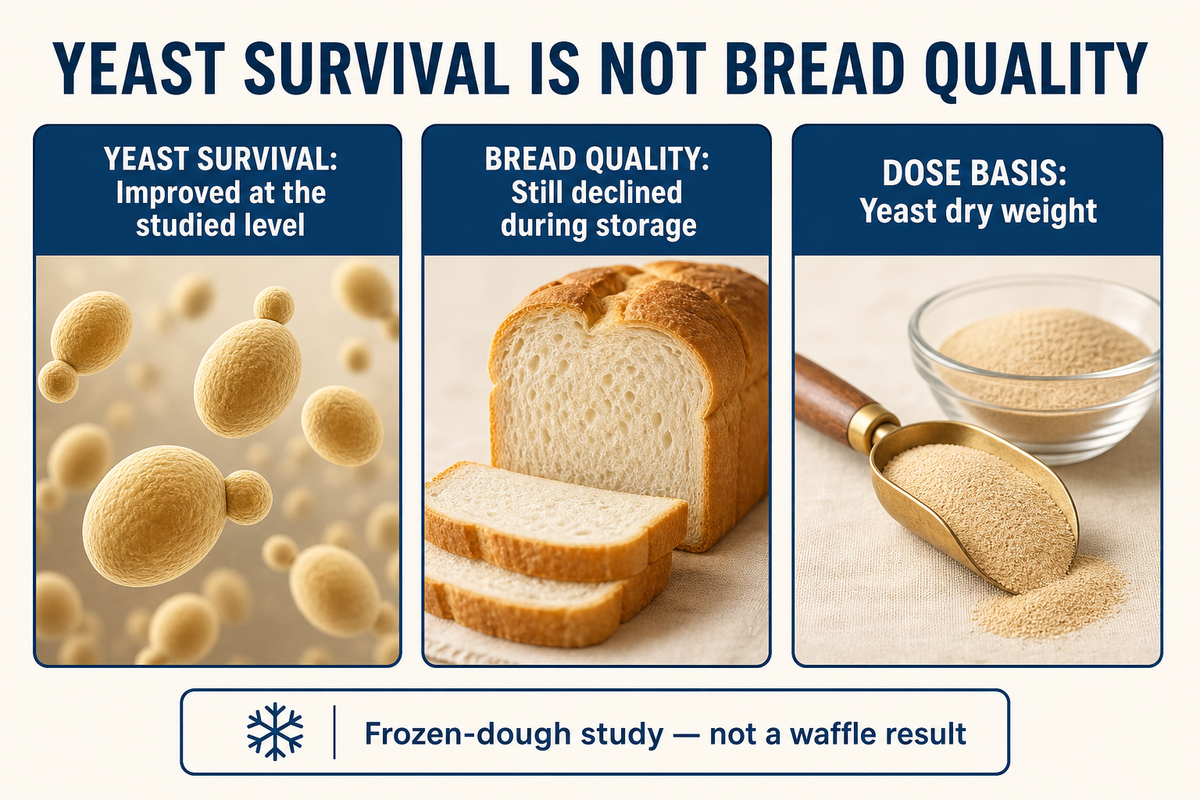
Trehalose has also been studied in actual frozen bread dough as well as isolated yeast cells. Evidence is in support of limited, case-by-case uses and not a broad, sweeping application to all frozen foods. Match the recipe, percentage basis, freezing history, and measured endpoint prior to using a result in a different baked snack food.
In a 2003 frozen-dough experiment, Salas-Mellado and Chang used trehalose at 5% or 10% of yeast dry weight. The dough was frozen in air at −30 °C until its center reached −15 °C, then stored at −15 °C for 45 days. The 10% level improved yeast survival, while frozen storage still reduced bread volume and quality scores and increased crumb hardness. Gluten level and yeast type also affected results.
That 10% isn’t 10% of flour, total sugars or the final recipe. A 1999 yeast-cell preservation study used another experimental system. Neither study assessed the crispness of a reheated waffle. Research on trehalose is applicable only when the endpoint travels with the number.
Evidence-to-Application Record
This record differentiates a published observation from a proposed product test. The last column tells the reader what each row can’t prove. It’s the result of an editorial synthesis of the cited works and not a collection of UDTECH trials.
| Evidence or question | Useful record | Limitations |
|---|---|---|
| Sweetness reference | Health Canada: 40–45% relative to sucrose | Not a finished-recipe sensory score |
| Partial cake replacement | Darikvand: 0%, 25%, 50%, 75%, 100% of total sugars | Public abstract; no universal best waffle ratio |
| Full sponge-cake replacement | Marzec: 100 g sweetener in the reported recipe | Porous structure did not ensure good mouthfeel |
| Frozen dough dose | Salas-Mellado and Chang: 5% or 10% of yeast dry weight | Different denominator from sugar replacement |
| Frozen dough storage | −15 °C for 45 days in that experiment | Study duration is not a commercial shelf-life claim |
| Isolated yeast cells | 1999 preservation study: survival after storage | No finished-food texture endpoint |
| Ingredient identity | JECFA: commercial dihydrate, molecular weight 378.33 | Identity does not certify the delivered lot |
| Ingredient assay | JECFA: at least 98% on a dry basis | Not the same measurement as crystal water |
| Reader’s waffle trial | Record recipe, release, cooling and bite | Proposed method; no outcome claimed here |
Judge shelf life with measurements, not ingredient claims
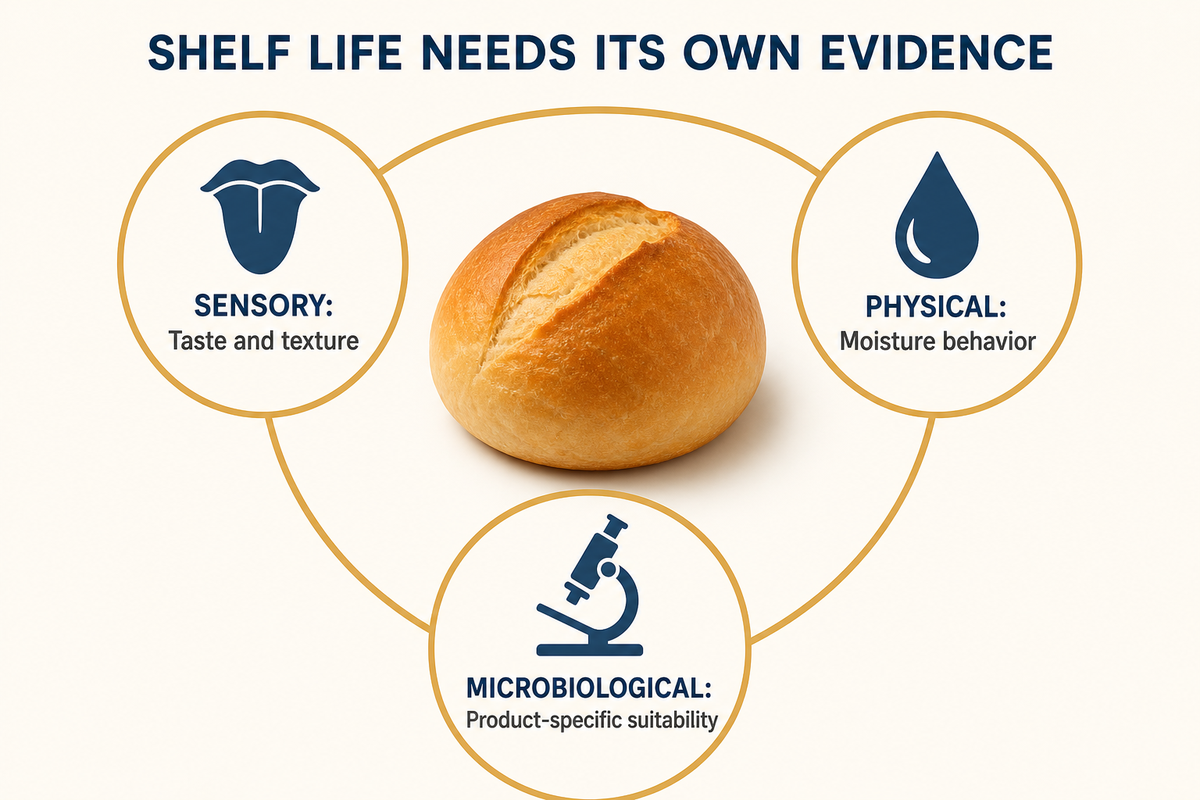
Trehalose related textural results don’t establish a finished food’s shelf life. Sensory quality, moisture behavior and microbiological suitability are different endpoints. Various food products need separate evaluations for storage using their own product, packaging and handling conditions. A claim that trehalose causes a shelf-life improvement needs that product-specific evidence.
Consider an illustrative frozen snack project. The quality team can compare control and study samples of the same storage age and after the same reheating procedure. Record the package and temperature history, and note the texture results. A better count of yeast answers only its own question. The Baking Texture and Moisture Guide provides the context to the process.
Do
- Keep control and trial storage conditions comparable.
- Record sensory and physical results separately.
- Assess the actual package and handling route.
Don’t
- Turn a study duration into a product expiry date.
- Use a yeast-survival result as a crispness result.
- Assume one acceptable attribute proves the whole product acceptable.
Buying food-grade trehalose
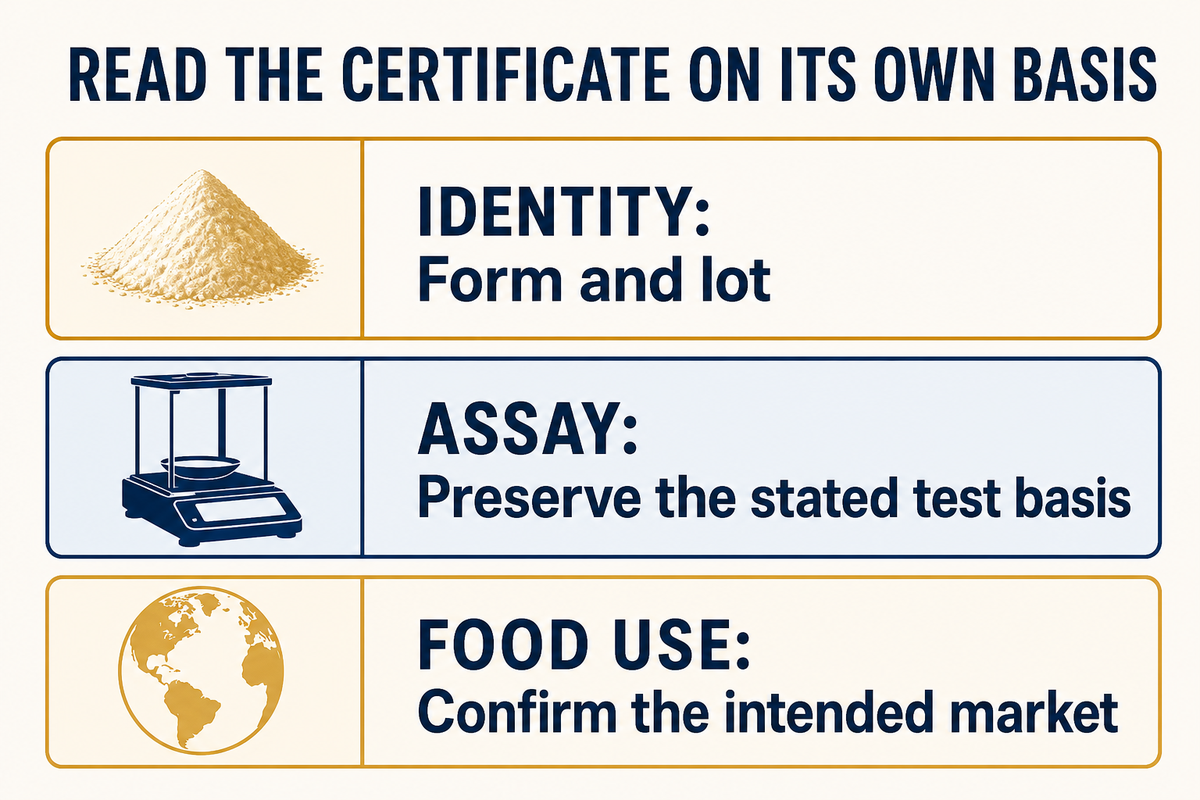
Information on purchasing food-grade trehalose requires the exact food substance, certificate and the targeted market. Be sure to obtain the form of trehalose, assay basis, lot identity and food use pertinent information. Just having a high purity number for a laboratory listing doesn’t confirm that the product belongs in a food formulation.
The JECFA specification describes commercial trehalose as a dihydrate and sets the assay at not less than 98% on a dry basis. It states that the loss on drying is no more than 1.5% at 60 °C over a period of 5 hours, the total ash is no more than 0.05% and lead is no more than 1 mg/kg. When evaluating a certificate, preserve the test conditions and don’t subtract the crystal water from the assay as though they both are the same thing.
A food-use record does not indicate a free-for-all trehalose use. The FDA’s GRN 45 entry includes Hayashibara International and a “no questions” letter dated October 5, 2000. This does not mean blanket approval of trehalose for food use from any supplier. National food authorities assess specified uses and evidence, and the safety of trehalose in that assessment is not a certificate for an unverified lot. The supplier should be requested to provide the intended use and label information for the destination market, including the exact ingredient name to be declared.
Where can I buy trehalose?
Buy trehalose from a food ingredient manufacturer or distributor who can confirm the grade and lot. Request a sample and current product documents before comparing delivered prices. Laboratory reagents and supplements fulfill different customer needs. A food service customer also requires a food grade product. UDTECH’s machinery offer shouldn’t be confused with a supply of raw material.
When requesting a quote, include the sample quantity, pack size, delivery destination and intended food application. The delivery terms and form of the ingredient should be compared on the same basis. The production of trehalose belongs to the ingredient supplier and the baking process is a separate responsibility. Each of these should be clarified prior to a trial becoming a purchase order.
Decide whether the trial earns a production change
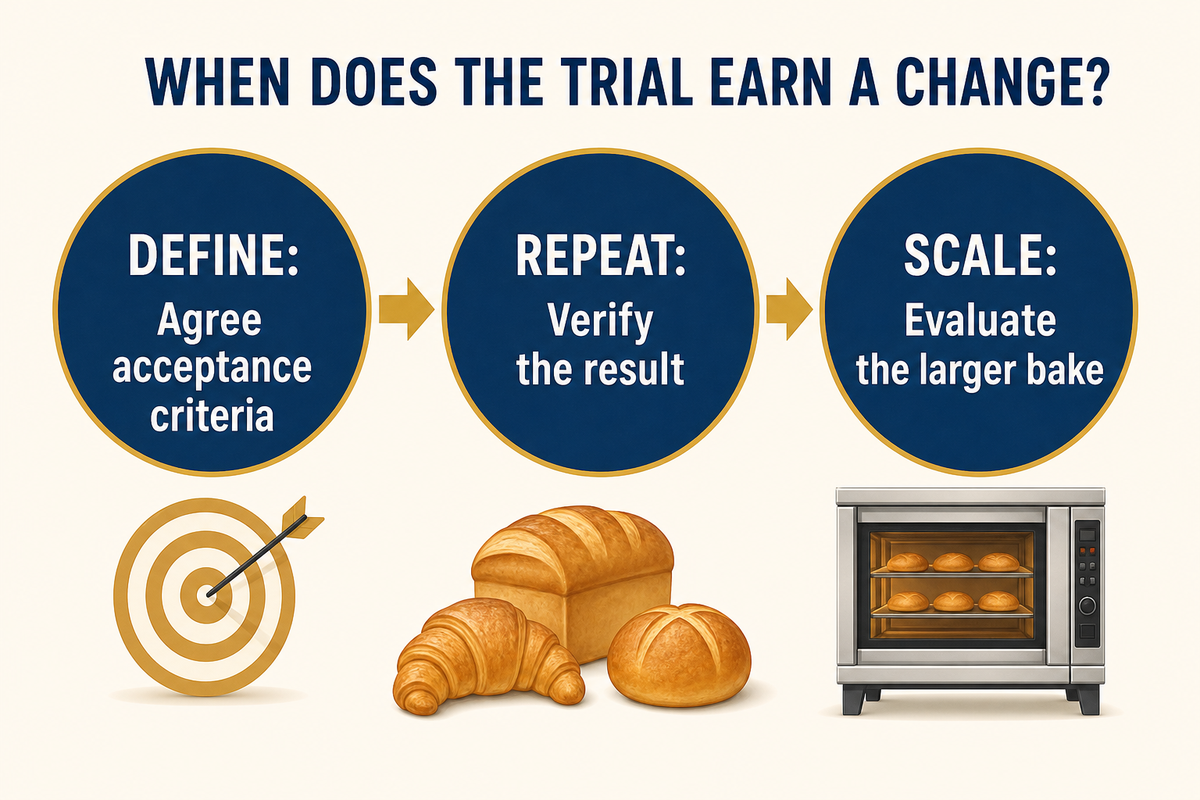
A trehalose substitution should result in a change in process if it improves the chosen attribute of a product without causing an unacceptable quality or cost penalty. Determine the acceptance criteria prior to sampling. Formulation, quality and purchasing teams should review the same recipe version and the same recorded results. The cake replacement study illustrates why sensory and structural outcomes need separate checks.
In the illustrative less-sweet cake project, the formulation team compares taste and structure and the quality team checks lot and storage evidence. The delivered cost of the ingredient is evaluated by the purchasing team. If increasing trehalose worsens the attribute that matters most, retain the control or revise the trial. An improvement associated with trehalose in one sample must be repeatable. A successful small bake still needs evaluation in a large bake; it does not prove identical behavior.
Key takeaway
Trehalose changes the relationship between sweetness, ingredient mass and product performance. Keep the percentage basis and the measured endpoint beside every result before applying it to a different food.
Frequently asked questions
What foods contain trehalose?
Trehalose occurs naturally in foods such as mushrooms and can be added as a manufactured ingredient.
Trehalose can be found naturally or added during manufacture. Eating foods containing trehalose does not tell you the amount consumed without product-specific information. Trehalose may appear in different products for a particular purpose; the variety of food applications does not make its use universal within a category. Check the ingredient information for that specific food instead of treating the category name as a reliable declaration of its composition.
What is trehalose used for in food?
Trehalose is used in food to adjust sweetness and other formulation properties.
Bakery research has examined sugar replacement in cakes and yeast survival in frozen dough. The effects of trehalose depend on the recipe and treatment, and a benefit in one measurement can accompany a worse result elsewhere. Its use in a wide variety of food products would still require product-specific evidence. Use a control batch and select the measurements that answer your own product question before deciding whether to keep the ingredient.
Is trehalose a food additive?
Trehalose can be used as a food ingredient; its treatment and labeling depend on the market and intended use.
An ingredient’s function, the applicable category of food additives and the name shown on the finished food label are related but distinct questions. The US and Canadian records discussed here cover particular assessed contexts. Obtain current information for the exact grade and destination market, rather than describing an ingredient as approved everywhere because one authority reviewed it.
What is TREHA trehalose?
TREHA is a commercial trehalose brand, not a separate sugar molecule.
A brand name does not replace the grade specification or the lot certificate. Compare the supplied product’s form, intended application and test basis. UDTECH’s equipment work and the ingredient supplier’s trehalose product are separate offerings, with separate responsibilities.
Can I replace all the sucrose in a waffle recipe?
Full replacement needs testing and cannot be justified by the cake studies alone.
The sponge-cake experiment found that a porous structure could coexist with high adhesiveness and poor sensory quality. A waffle adds its own release, surface and cooling questions. Begin with a recorded control and a defined purpose for the substitution. Keep the replacement denominator explicit, observe the same product attributes in each sample, and treat any later water or process adjustment as another trial variable rather than assuming the sugar swap was the only change.
Does trehalose make every baked food crispier?
No. The evidence reviewed here does not support a universal crispness claim.
Crispness in your product needs its own evaluation after cooling, storage and serving or reheating. Cake structure and yeast-cell survival measure different things. Record the package and handling conditions before assigning a texture change to the ingredient alone.
What should I record in a trehalose trial?
Record ingredient identity, recipe weights, percentage bases, processing conditions and the results needed for a decision.
Start with the supplier, grade, lot and hydration form, then list every recipe weight. State whether a percentage refers to total sugars, flour, yeast dry weight or the whole formula. Keep the control recipe and identify exactly what changed. Record mixing, product size, bake conditions, cooling and packaging so the samples can be compared fairly. For a waffle, include release, breakage, surface appearance and bite at the chosen evaluation time. For a frozen product, add storage and reheating history. Agree the acceptance criteria before examining the results, and retain both favorable and unfavorable observations. Mark a failed measurement as missing rather than entering a guessed value. The record should let another person repeat the comparison and understand why the team accepted, rejected or repeated it.
Related Articles
References & Sources
- Novel food information: Trehalose Health Canada
- Trehalose specification JECFA, prepared 2000
- Dietary Trehalose as a Bioactive Nutrient Chen and Gibney, 2023 review
- Cake containing trehalose: physical, sensory and other properties Darikvand and colleagues, online 2022; public abstract
- Sponge-cake sugar substitution experiment Marzec and colleagues, 2021
- Effect of formulation on the quality of frozen bread dough Salas-Mellado and Chang, 2003
- Yeast-cell freezing and freeze-drying study 1999, PMID 10516583
- GRAS Notice 45: Trehalose US FDA
How this ingredient guide relates to machinery
UDTECH supplies food production equipment. This trehalose guide draws on published ingredient research to help readers define bakery trials; the studies belong to their authors. The sample trial record is an editorial planning aid, not measured factory performance. Ingredient selection and machine testing need their own evidence.