Jasonxue
I contribute content about machinery for snack and bakery production, from smaller forming units to continuous lines. The site covers egg rolls, waffles, crackers, sachima, and related products. I aim to explain the information a prospective buyer can prepare, such as recipe, desired output, heat source, and available plant utilities.
Cream of Tartar in Baking: What It Does and When to Use It
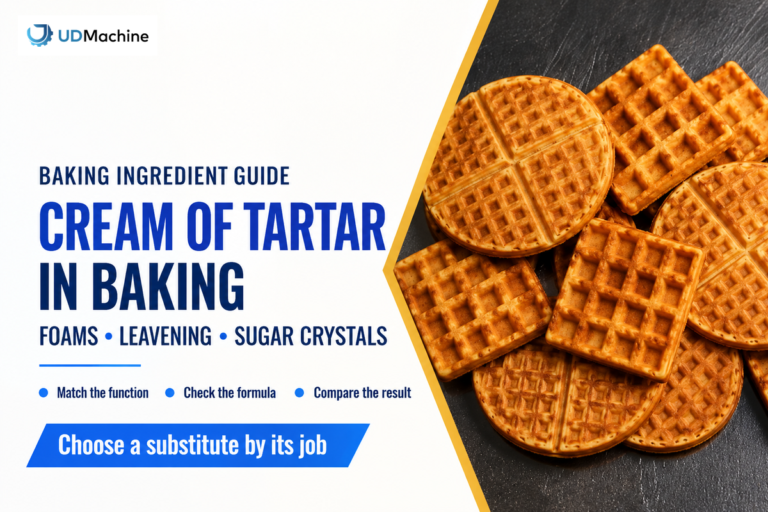
Updated October 2026 Cream of tartar in baking stabilizes egg whites, helps control sugar crystallization, and reacts with baking soda to release carbon dioxide. It’s an acidic powder, not dairy cream. The right substitute depends on what job the recipe…
Falling Number in Flour: Understanding Alpha-Amylase Activity
Falling Number in Flour: Alpha-Amylase Activity A falling number on a flour certificate is a measure of time in seconds. It describes how a heated flour-and-water paste behaves, and bakers use it as an indirect indicator of alpha-amylase activity. The…
Flour Moisture Content: 3 Checks Before Adjusting Water
Flour moisture content is the water fraction of flour, expressed as a proportion of the total mass. Verify the identity, reporting basis, and measurement method of the sample prior to altering a recipe. Checks of that nature indicate if two…
How to Temper Chocolate for a Reliable Set
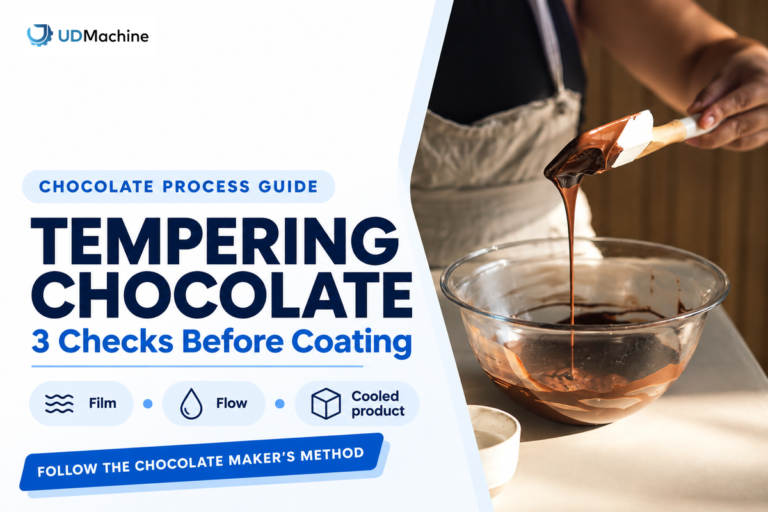
Tempering chocolate lets cocoa butter crystals set with a glossy coat and a crisp snap. Melt the chocolate, develop suitable crystals through a complete cooling or seeding method, and work at the chocolate maker’s specified temperature. Test a thin sample…
Trehalose in Food: Functional Uses in Bakery and Sweet Snacks
Trehalose in food is a mildly sweet sugar used to balance or adjust product characteristics, with some potential usage in formulations. However, replacing sucrose in a recipe can lead to reduced cake expansion and/or a less desirable cake texture. It…
Dextrinization in Baking: Starch Changes Beyond Surface Color
Dextrinization is the conversion of starch to dextrins as a result of the application of heat. It’s observed during the heating of flour, breads, and cereal products in the presence of relatively dry conditions. A brown crust is a useful…
How Hydrocolloids in Food Control Texture and Stability
When creating a recipe using hydrocolloids, the starting point is typically the expected end result. Choosing hydrocolloids in food starts with the result you need: a sauce that pours evenly, a filling that holds its shape, or a batter that…
Maltodextrin in Baking: Solids, Texture and Formula Balance
Maltodextrin in baking is a bulk-forming, flavor-carrying ingredient made by partial hydrolysis of starch. Long chains of glucose get broken down to smaller sizes. The main question remains: which grade fits a given recipe and process? Updated October 2026. Maltodextrin…